









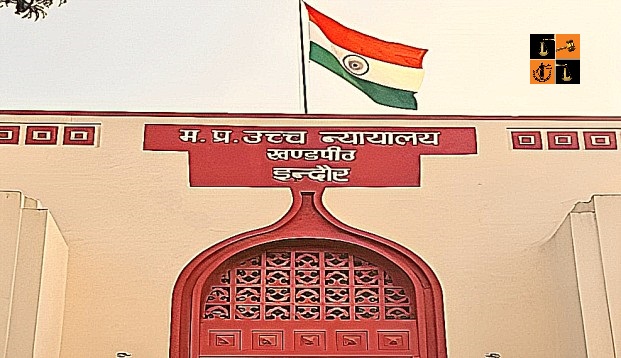
The High Court of Madhya Pradesh at Indore, in a noteworthy order passed on 5th June, 2026, disposed of a habeas corpus petition filed by a 20-year-old man claiming to be the husband of the corpus, while drawing a clear legal distinction between a major woman's right to personal liberty and the legal validity of a marriage contracted below the prescribed marriageable age. The Court held that while the corpus — being a major — cannot be illegally detained by the police, she cannot be sent to reside with the petitioner as his wife, since the petitioner is not of marriageable age.
The petitioner, Ritesh Katara, filed a writ petition in the nature of habeas corpus under Article 226 of the Constitution of India before the Indore Bench, claiming to be the husband of the corpus and alleging that she was being illegally detained by the police authorities. He sought her release and her custody as his wife. In compliance with the Court's earlier order dated 01.06.2026, the corpus was produced before the Court by lady Constable Ms. Kavita Bhatia and Thana Incharge, Khachrod, Shri Dhan Singh.
The petitioner claimed that he had validly married the corpus and that her continued detention by police amounted to illegal confinement, warranting the Court's intervention by way of habeas corpus. He sought that she be released and permitted to live with him.
The respondent/State did not dispute the production of the corpus and complied with the Court's direction to present her before the Bench.
Upon personal inquiry by the Court, the corpus stated that she wishes to go with the petitioner. However, the division bench of Justice Pranay Verma & Justice Jai Kumar Pillai of Madhya Pradesh High Court made the following crucial observations:
- The petitioner, being only 20 years of age, is below the marriageable age prescribed for males under law; therefore, the alleged marriage cannot be granted legal recognition.
- Since the petitioner is not of marriageable age, the corpus cannot be permitted to reside with him as his wife, regardless of her expressed willingness.
- However, being a major, the corpus has an undeniable right to live as per her own wishes and cannot be illegally detained by police authorities.
- The Court balanced both considerations by directing that the corpus shall be free to reside wherever she wishes, but that freedom does not extend to residing with the petitioner in the capacity of a wife.
- The corpus was directed to be escorted by the same police officers who brought her to Court, to the place of her choice.
The order reflects a careful judicial balancing act — upholding the personal liberty of a major woman under Article 21 while simultaneously refusing to legitimise a legally unrecognised marriage. The court further said that it is well-established legal position that a marriage where the bridegroom is below 21 years of age is not valid under the Prohibition of Child Marriage Act, 2006, and that habeas corpus jurisdiction cannot be used to enforce rights flowing from an invalid marriage.
Case Details
Case No.: Writ Petition No. 19587 of 2026
Bench: Justice Pranay Verma & Justice Jai Kumar Pillai
Petitioner: Ritesh Katara
Respondent: State of Madhya Pradesh and Others
READ ORDER
Picture Source :



















