









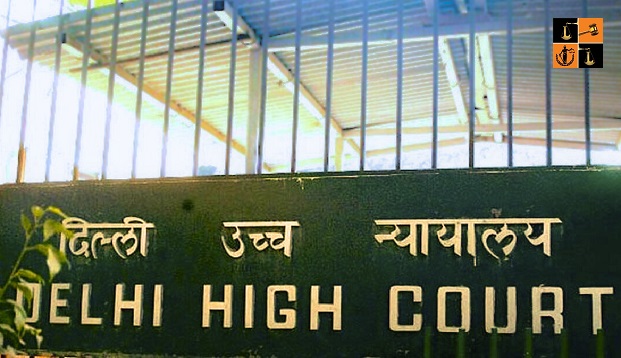
In a case arising from a marital dispute, the Delhi High Court was called upon to interpret the financial obligations of a spouse in the context of interim maintenance under matrimonial law. The case involved a divorce petition and a counterclaim for maintenance under Section 24 of the Hindu Marriage Act, 1955. Emphasising the primacy of statutory duties, the Court remarked, “Voluntary financial obligations cannot override the statutory duty to maintain a dependent spouse and child.”
Brief facts:
The case concerns a marital dispute between Subhash (appellant) and Mamta @ Raksha (respondent), who were married according to Hindu rites and have a son currently in the respondent’s custody. Due to irreconcilable differences, the parties have been living separately. Subhash filed a divorce petition under Sections 12(1)(c), 13(1)(ia), and 13(1)(iii) of the Hindu Marriage Act, 1955, (HMA) before the Family Court. In response, the respondent sought interim maintenance of ₹30,000 per month for herself and the child under Section 24 of the HMA. Based on the appellant’s income affidavit, bank statements, and tax records, the Family Court assessed his monthly income at ₹47,128 and awarded ₹15,000 per month as interim maintenance-₹8,000 for the respondent and ₹7,000 for the child. Dissatisfied with this order, the appellant challenged it before the High Court under Section 19 of the Family Courts Act, 1984.
Contentions of the Appellant:
The appellant contended that the Family Court’s order was based on conjectures and failed to consider his genuine financial liabilities, including EMIs for a property loan, a personal loan, and another loan. He also pointed out that the court overlooked his annual Mediclaim premium, which covers both the respondent and their child. Emphasising that the respondent is well-qualified and capable of earning, he argued that she should not be granted maintenance under Section 24 of the HMA merely to extract benefits. Additionally, the appellant, being a contractual employee, claimed the court erroneously presumed him to have substantial financial means.
Contentions of the Respondent:
The respondent sought interim maintenance of ₹30,000 per month under Section 24 of the HMA to support herself and the minor child in her custody. She submitted that her medical condition, coupled with the sole responsibility of raising the child, restricts her capacity to pursue gainful employment.
Observation of the Court:
Division Bench comprising Justice Navin Chawla and Justice Renu Bhatnagar, observed, “It is trite law that while computing the income of a spouse for the purpose of determining the quantum of maintenance under matrimonial statutes, only statutory and mandatory deductions such as income tax and compulsory contributions to provident fund or similar schemes, are to be considered as permissible deductions.”
“Deductions such as house rent, electricity charges, repayment of personal loans, premiums towards life insurance, or EMIs for voluntary borrowings do not qualify as legitimate deductions for this purpose. These are considered to be voluntary financial obligations undertaken by the earning spouse, which cannot override the primary obligation to maintain a dependent spouse or child”, added the Bench.
The Court carefully reviewed the Family Court’s assessment of the appellant’s income and found this assessment, grounded in income affidavits, bank statements, and tax records, to be accurate and consistent with the guidelines in Rajnesh v. Neha.
Addressing the appellant’s claim that his financial obligations, including EMIs for loans and a Mediclaim premium, should reduce his maintenance liability, the Court relied on Kulbhushan Kumar (Dr) v. Raj Kumari, stating, “Income tax would certainly be deductible and so would contributions to the provident fund which have to be made compulsorily. No deduction is permissible for payment of house rent or electricity charges…”
Further, while addressing the appellant’s claim that the respondent’s qualifications bar her from receiving maintenance, the Court referred to Manish Jain v. Akanksha Jain, (2017) stating, “It is no answer to a claim of maintenance that the wife is educated and could support herself.” It further relied on Shailja v. Khobbanna, (2018) observing, “Whether Appellant 1 is capable of earning or whether she is actually earning are two different requirements. Mere capacity to earn is not, in our opinion, sufficient reason to reduce the maintenance awarded by the Family Court.”
The Court clarified that “the concept of being capable of earning and actually earning are distinct,” and potential earning capacity cannot substitute for actual income. The respondent’s medical condition and her role in raising the minor child were deemed significant, with the Court noting, “The physical, emotional, and financial responsibilities, coupled with the burden of single-handedly raising a child, particularly while managing one’s own health constraints, place an additional burden upon the respondent.” These circumstances justified her inability to engage in gainful employment, making maintenance not only a statutory right but a necessity.
The Court also addressed the appellant’s contractual employment status, rejecting the claim that it exempted him from maintenance obligations, stating, “A husband, even if employed on a contractual basis, cannot shirk his statutory responsibility under the pretext of financial liabilities voluntarily undertaken.”
The decision of the Court:
Under the light of the foregoing discussion, the High Court dismissed the appeal, finding it devoid of merit. The Court upheld the Family Court’s order, directing the appellant to pay interim maintenance of Rs. 15,000/- per month (Rs. 8,000/- for the respondent and Rs. 7,000/- for the minor child) to the respondent.
Case Title: Subhash Vs. Mamta @ Raksha
Case No.: MAT.APP.(F.C.) 195/2025
Coram: Justice Navin Chawla and Justice Renu Bhatnagar
Counsel for Appellant: Advocates Ravi Kumar, Shailesh Kumar Sinha, Suman Kumar, Rajeev Ranjan, Shubhanshu Singh and Nisha
Picture Source :




















