









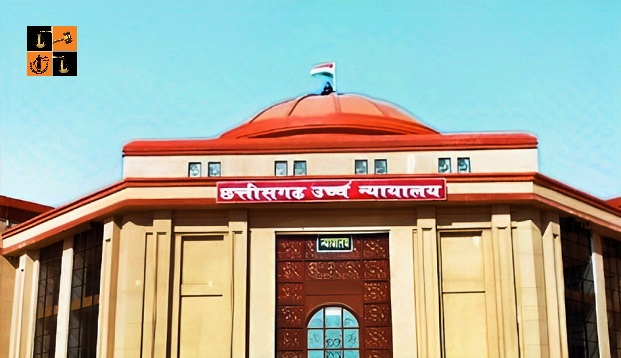
The Chhattisgarh High Court allowed the criminal appeal filed by Shiv Kumar Bhoy and Jitendra Bhoy, setting aside their conviction under Sections 302/34 and 201/34 IPC. The Court observed that if even one link in the chain is broken, the accused must get the benefit thereof; the chain of circumstantial evidence is not so complete as to implicate the appellants to the exclusion of any other persons.
Brief Facts:
The complainant, Saroj Kumar Bhoi, lodged a missing report regarding his father, who had gone to bathe at a pond the previous evening but did not return. Two days later, the deceased was found hanging from a cashew tree. Initially registered as a case of unnatural death, the proceedings took a turn when a written report was lodged by the deceased's wife, leading to registration of an FIR under Section 302 IPC. The postmortem confirmed that the death was homicidal in nature due to rupture of the windpipe from strangulation. Subsequently, the accused were arrested and, based on their memorandum statements, more blood-stained cloth was recovered from their homes. The trial court convicted them under Sections 302/34 and 201/34 IPC, sentencing them to life imprisonment and seven years’ rigorous imprisonment respectively. Consequently, the present appeal.
Contentions of the Appellants:
The appellants argued that the entire prosecution case rested on circumstantial evidence and that there was no eyewitness to the crime. They contended that key prosecution witnesses such as Saroj Kumar Bhoi and Narayan Bhoi did not support the case, and that the supposed motive, a land and loan dispute, was vague and unsubstantiated. It was also contended that the trial court erred in relying on the tracking evidence of a sniffer dog, which lacks evidentiary value. Additionally, the recovered articles failed to establish any conclusive forensic link between the accused and the murder.
Contentions of the Respondent:
The State submitted that the deceased was the cousin of the appellants and had been involved in a property dispute with them. Witnesses, including the deceased’s daughter and wife, had testified to threats issued by the appellants. It was contended that the circumstantial chain comprising motive, discovery of the body, postmortem findings, and recovery of incriminating material was sufficient to uphold the conviction.
Observations of the Court:
The Court reaffirmed that in a case based solely on circumstantial evidence, the law mandates that “the chain of circumstances must be complete, conclusive, and incapable of explanation on any other reasonable hypothesis than that of the guilt of the accused.” Referring to Sharad Birdhichand Sarda v. State of Maharashtra, it reiterated that “if even one link is broken or missing, the accused is entitled to the benefit of doubt.”
The Court found that while the prosecution proved the homicidal nature of death, “merely establishing the homicidal nature of death is not enough to connect the accused to the offence unless the other evidentiary links are also firmly established.” On the issue of motive, the Court held that “no supporting document or any concrete evidence has been brought on record to substantiate the claim of land dispute or financial quarrel,” rendering the motive vague and unsubstantiated.
Crucial prosecution witnesses turned hostile, and thus “the last seen theory could not be established,” as “no witness has seen the appellants committing the crime.” The Court emphasized that in such cases, the remaining circumstantial evidence must be scrutinized more closely. Regarding recoveries, the Court observed, “The prosecution has failed to prove that the bloodstained lungi seized at the instance of the appellant matched the blood group of the deceased,” and therefore, “the recovery does not establish the appellant’s involvement in the offence beyond doubt.”
As for the dog squad evidence, the Court, relying on Dinesh Borthakur v. State of Assam, clarified that “tracking by dog cannot be treated as substantive evidence and at best, may be used only for investigative purposes.” The Court also found that the alleged threats made by the accused were vague and unsupported by any prior complaint or independent evidence. “Threats made on unspecified occasions in the past… do not amount to compelling circumstantial evidence sufficient to convict.”
Summing up, the Court held that “strong suspicion, however grave, cannot substitute for legal proof in a criminal trial,” and “every link must be proved, and the conclusion must flow inescapably from the established facts.” Accordingly, it set aside the conviction, extending the benefit of doubt to the appellants.
The decision of the Court:
The Chhattisgarh High Court, allowing the appeal, set aside the conviction and sentence imposed on the appellants under Sections 302/34 and 201/34 IPC. The appellants were acquitted by extending the benefit of doubt.
Case Title: Shiv Kumar Bhoy & Anr. vs. State of Chhattisgarh
Coram: Hon’ble Chief Justice Ramesh Sinha and Hon’ble Justice Bibhu Datta Guru
Case No.: CRIMINAL APPEAL NO: 2042/2024
Advocate for the Appellants: Mr. Sanjay Agrawal and Mr. Vivekanand Samaddar
Advocate for the Respondent: Mr. Sangarsh Pandey, Government Advocate
Read Judgment @LatestLaws.com
Picture Source :




















