









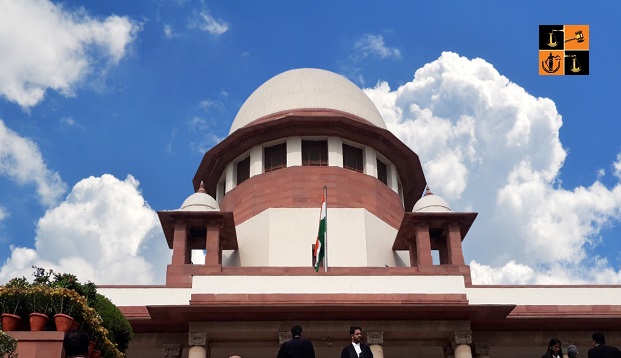
Recently, the Supreme Court quashed criminal proceedings in a dispute dating back to 1991, emphasizing the role of voluntary compromise. The Court reiterated its power under Article 142 of the Constitution to go beyond the limitations of Section 320 CrPC, noting that in personal disputes with minimal public impact, quashing proceedings promotes justice and harmony. The Court found the invocation of Section 307 IPC unjustified, considering the nature of the offence and injuries.
Brief Facts:
The matter involved a Complaint pending before the Additional Chief Judicial Magistrate, Moradabad. The dispute pertained to an offence under Section 326 IPC. Over time, the parties reached an amicable settlement and sought the quashing of the criminal proceedings. The High Court had rejected their plea under Section 482 CrPC, leading to the present appeal before the Supreme Court.
Contentions of the Petitioner:
The counsel for the petitioner contended that the dispute was personal in nature and that the complainant had voluntarily agreed to a settlement. It was argued that continuing the criminal proceedings would serve no meaningful purpose as the parties had reconciled, and quashing the case would promote peace and harmony.
Observations of the Court:
The Apex Court, while considering the present case, relied on its earlier judgment in Ramgopal v. State of M.P . It reiterated the principles governing the exercise of its extraordinary powers under Article 142 of the Constitution and Section 482 of the Criminal Procedure Code (CrPC). The Court emphasised that the powers granted under Article 142 were not limited by the provisions of Section 320 CrPC, which governs the compounding of offences. In this context, the Court remarked, “While Section 320 CrPC governs the compounding of offences, the High Court under Section 482 CrPC and the Supreme Court under Article 142 can exercise inherent powers to quash criminal proceedings, even beyond the statutory framework.”
The Court also referred to the principles outlined in Laxmi Narayan and clarified that the mere mention of Section 307 IPC in the FIR or charge sheet should not be the sole basis for adopting a hands-off approach. The Court stated that it was within the High Court's discretion to assess whether the invocation of Section 307 IPC was justified based on the evidence, the nature of the injury, the weapon used, and the circumstances of the case. This exercise, however, should only be carried out once the evidence is collected post-investigation, and not during the pre-investigation stage.
In the present case, the Court observed that the allegations of attempted murder under Section 307 IPC were not substantiated by the evidence. It noted that the specific act of firing was attributed to one accused, who had since passed away, and that the allegations against the appellants were vague. The Court held that the injuries sustained, which included a fracture of the distal phalanx of the left ring finger, did not justify the charge under Section 307 IPC. The nature of the weapon and the injury were not severe enough to indicate an attempt to commit murder. The Court concluded that, at best, the offence could be categorized under Section 326 IPC, which deals with voluntarily causing grievous hurt.
Furthermore, the Court emphasised that the offence did not have a significant impact on the public conscience, and the dispute was personal in nature. The parties had reconciled voluntarily and had expressed their mutual desire to resolve the matter. The dispute dated back to 1991, and there had been no further criminal activity reported between the parties since then. The complainant and accused lived in close proximity, and the Court noted that quashing the proceedings would promote social harmony within their community. The Court concluded that continuing with the trial under the charge of Section 307 IPC would be futile and an abuse of the legal process.
The decision of the Court:
Considering the above factors, the Top Court allowed the appeal and set aside the High Court's order. The criminal proceedings pending before the Additional Chief Judicial Magistrate, Moradabad, were quashed. The Court reiterated that when a dispute is settled amicably and there is no substantial evidence to support the charge of a serious offence like Section 307 IPC, the ends of justice would require that the proceedings be quashed.
Case Title: Naushey Ali & Ors. vs. State of U.P. & Anr
Citation: 2025 Latest Caselaw 130 SC
Coram: Justice K.V. Viswanathan, Justice S.V.N. Bhatti
Advocate for Petitioner: Adv. Anupam Mishra (AOR), Jenis V. Francis
Advocate for Respondent: Adv. Garima Prashad (Sr. A.A.G.), Sudeep Kumar (AOR), Manisha, Rupali, Harikumar V. (AOR)
Read Judgment @LatestLaws.com, click here
Picture Source :



















