









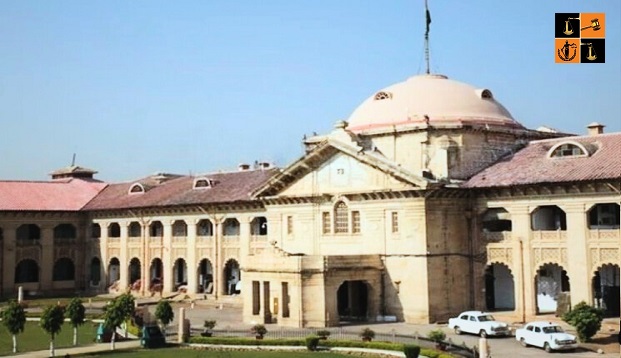
Recently, the Allahabad High Court, in a significant ruling, held that a welfare state cannot assert a claim of adverse possession over the land of its citizens which has been occupied without following due legal procedures.The Court was dealing with a case where land was forcibly taken over by the Rural Development Department without compensation or acquisition. Emphasizing the importance of constitutional safeguards, the Court observed that the State cannot perfect its title over land through illegal possession that violates citizens' rights.
Brief facts:
The case revolved around a piece of land originally owned by one Namdaar Jan. Upon his death, ownership passed to his legal heirs, the appellants. The land in question was taken over by the Rural Development Department around 1958–59 for constructing a Block office in Bandipora, without initiating any formal acquisition proceedings or providing compensation to the lawful owners.
In 2013, the appellants submitted a representation to the Deputy Commissioner, seeking compensation for the land. The matter was later considered by the Assistant Commissioner, who also wrote to the Director requesting the release of necessary funds. However, the request was rejected, prompting the appellants to file a writ petition demanding compensation and restoration of land not in actual use. When the writ petition was dismissed, the appellants challenged the decision through an intra-court appeal.
Contentions of the Appellants:
The appellants contended that the State's refusal to provide compensation and its continued occupation of the land without following the land acquisition process was illegal and violative of their constitutional rights. They argued that the land was taken without consent, and despite repeated efforts, the State failed to regularize the acquisition or provide any monetary remedy. Thus, they sought compensation at prevailing market rates and the return of the unused portion of the land.
Observations of the Court:
The Division Bench comprising Justice Sanjeev Kumar and Justice Sanjay Parihar, relying on the precedent laid down in Vidya Devi v. State of Himachal Pradesh, made strong observations against the conduct of the State.
The Court held, “The State being a welfare State cannot be permitted to raise the plea of adverse possession over the property of its citizens occupied forcibly without following due process of law. The State cannot be permitted to perfect its title over the land by invoking the doctrine of adverse possession to denude its owner of his right qua the property.”
The Court further elaborated that the plea of delay or laches is inapplicable in cases where the cause of action continues daily, as long as the State remains in unauthorized possession. The judicial conscience of a Constitutional Court can override procedural delays when fundamental or constitutional rights are infringed. In a significant observation, the Court noted, “The land was forcibly taken in 1958–59, a time when the right to property was still a fundamental right under the Constitution. The act of dispossession without recourse to acquisition proceedings violated not only then-existing fundamental rights but also, after the Forty-Fourth Amendment, the constitutional right under Article 300-A.”
The Court also clarified that inaction by the citizens over time cannot be construed as a waiver of their rights, especially when the State itself failed in its constitutional obligations. Citizens’ silence cannot justify the illegality of the State’s acts.
The decision of the Court:
In light of these findings, the Court allowed the appeal, ruling that the appellants were entitled to compensation for the deprivation of their land. The State was directed to address the illegality and provide due remedy for the prolonged unauthorized occupation.
Case Title: Mushtaq Ahmad Jan V. Govt. of J&K
Coram: Justice Sanjeev Kumar and Justice Sanjay Parihar
Case No.: LPA No. 55/2024
Advocate for the Appellant: Mohd Younus Hafiz, Abdul Rashid Malik (Sr. AAG)
Picture Source :



















