









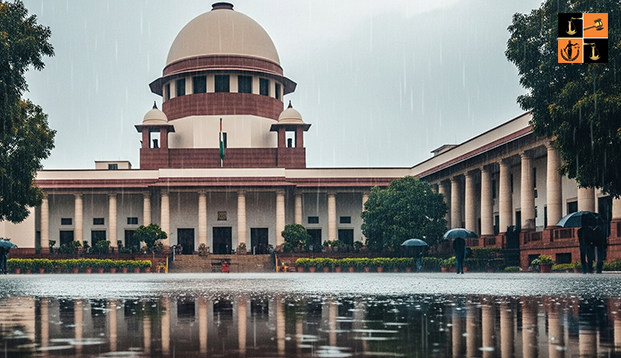
In a landmark public interest litigation addressing India’s escalating road safety crisis, the Supreme Court confronted systemic failures in pedestrian infrastructure, traffic enforcement, and public awareness. The key issue before the Court was whether the persistent rise in pedestrian and two-wheeler fatalities, despite existing laws and guidelines, warranted comprehensive judicial intervention to protect the right to life under Article 21 of the Constitution of India. The Court’s observations on unsafe footpaths, reckless driving, and hazardous road practices lay the groundwork for far-reaching directions on road safety and public accountability. Read on to discover the detailed measures and directives issued to safeguard citizens and ensure compliance.
Brief Facts:
The case stemmed from a public interest litigation filed by Dr. S. Rajaseekaran, a noted orthopaedic surgeon, expressing grave concern over the alarming rise in road accidents across India and the continued apathy of State authorities despite existing laws and court directives. The petitioner highlighted that the majority of such accidents occur due to poor enforcement of traffic regulations, where every violation poses a potential risk to life. Emphasising the urgent need for concrete action beyond policy formulation, he invoked global commitments on road safety and national data reflecting massive fatalities, including a surge in pedestrian and two-wheeler deaths linked to non-compliance with helmet rules. The Supreme Court, treating the issue as a matter of public safety, examined deficiencies in pedestrian infrastructure, such as encroached footpaths, faded crossings, and inadequate design, alongside statutory obligations under the Motor Vehicles Act and relevant safety guidelines. The Court also addressed concerns over helmet enforcement, wrong-lane driving, and the misuse of strobe lights and hooters, leading to comprehensive directions for strict implementation and continuous monitoring of road safety measures.
Contentions of the Petitioner:
The petitioner urged the Union Government to declare road safety a national emergency and establish an empowered Apex body to coordinate stakeholders on safer roads, licensing, enforcement, emergency care, and victim compensation. It was sought that expert recommendations and the National Road Safety Policy be implemented through a core group with periodic monitoring and progress reports. The petitioner also called for insurance reforms to ensure prompt medical aid, Government accountability for accidents caused by official negligence, biometric-based licensing, stricter penalties including imprisonment for fatal drunken or rash driving, and inclusion of single-vehicle accidents due to defective road conditions under the Motor Vehicles Act to protect innocent victims.
Contentions of the Respondent:
In response, the Government of India submitted that the Indian Roads Congress (IRC), under the aegis of the Ministry of Road Transport and Highways, has issued comprehensive Guidelines for Pedestrian Safety (Second Revision), 2022 (IRC 103-2022), prescribing detailed standards for pedestrian infrastructure, including accessible footpaths and safe crossings, to ensure uniform implementation of road safety measures across the country.
Observation of the Court:
The Court, addressing the escalating crisis of road accidents in India, observed that "Road accidents are a human tragedy. They involve high human suffering and monetary costs in terms of untimely deaths, injuries and loss of potential income. Although we have undertaken many initiatives and are implementing various road safety improvement programmes, the overall situation as revealed by data is far from satisfactory."
Highlighting the 2023 MoRTH report, the Court noted 1,72,890 deaths, with 35,221 pedestrians (20.4%), marking a 7.3% rise from 2022, and emphasized the alarming trend of pedestrian fatalities increasing from 10.44% in 2016 to 20.4% in 2023, disproportionately affecting males (79.1%), the 18-45 age group (51%), and National Highways (11,180 deaths). The Court emphasised that pedestrians face dangers from various vehicles, with breakdowns showing 28.26% from two-wheelers and 24.78% from cars/taxis/vans/LMVs. It stressed the urgent need for safe footpaths and crossings, attributing deaths to insufficient infrastructure, forcing pedestrians onto streets and unsafe crossings.
Invoking Section 138, Section 198A, Section 210C, Section 210D of the MV Act and Rule 166 of Central Motor Vehicles Rules, the Court affirmed binding IRC Guidelines (2022) for design, construction, and maintenance, including minimum footpath widths (4-6.5m), height (150mm), anti-skid surfaces, tactile pavers, bollards, and at-grade crossings like tabletops over grade-separated ones for accessibility.
Recognizing safe footpaths as a fundamental aspect of the right to life under Article 21 of the Constitution, the Court emphasized that no individual is entitled to encroach upon footpaths, pavements, or any area reserved for public use. Footpaths and streets are public property designed to serve the convenience of all citizens, and parking or obstructing these spaces is strictly prohibited.
Lastly, the Court directed regular audits, timely remedial measures, effective grievance redressal, and oversight by appropriate authorities. Highlighting road safety concerns, it noted the high number of two-wheeler fatalities due to non-use of helmets and invoked relevant provisions of the Motor Vehicles Act to mandate protective headgear. Unsafe driving practices, including wrong-lane driving and reckless overtaking, were addressed through references to road regulations, with an emphasis on the “3E Framework”, Engineering, Education, and Enforcement. The Court also warned against hazards from dazzling LED lights, unauthorized red-blue strobes, and excessive hooter use, urging strict checks and public awareness to prevent confusion, disorientation, and accidents.
The decision of the Court:
In the light of the foregoing discussion, the Apex Court directed audits, retrofitting, removal of encroachments, grievance redressal, additional crossings, and compliance with IRC/MOHUA standards under DRSC supervision, mandatory helmet use with e-enforcement, strict lane discipline via cameras, fines, and markings, a ban on unauthorized dazzling lights, red-blue strobes, and hooters with penalties and awareness, and framing of rules under Section 138(1A) and Section 210D MV Act within six months. The matter was listed after seven months to review compliance, with the Court acknowledging the amicus curiae’s assistance.
Case Title: S. Rajaseekaran Vs. Union Of India And Ors.
Case No: Writ Petition (C) No. 295 Of 2012
Coram: Justice J.B. Pardiwala, Justice K.V. Viswanathan
Picture Source :



















