









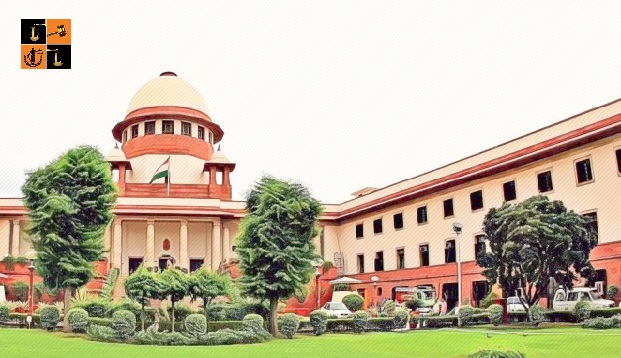
The apex court bench comprising of hon’ble Chief Justice of India N.V Ramana, Justice Krishna Murari, and Justice Hima Kohli in the case of B.L.A Industries Private Limited Vs. Union of India and Another stated that is a case where a private party followed all the rules and the law, as applicable, before investing large sums of money to undertake business. In fact, it appears from the facts of the case that it was the union of India that did not follow the letter of the law. But ultimately, it was the private party that had to suffer the consequences of the careless and callous approach of respondent no. 1 – UOI.
BRIEF FACTS
The factual matrix of the case is that the petitioner filed a complaint with this court under Article 32 of the Indian Constitution, accusing the respondent of including its name and mining lease area in the Schedules attached to the Coal Mines (Special Provisions) Ordinance, 2014, despite the fact that the Screening Committee set up by the Ministry of Coal, Union of India, had not assigned it any coal blocks.
Before that, a group of petitions in the nature of public interest petition before this court with an issue that coal blocks allocated between the years 1993 to 2011 were without adhering to the mandatory legal procedure given under the MMDR act and in breach of the relevant provisions of the coal mines (nationalization) act, 1973 to favor ineligible companies tainted with mala fides and corruption. After that, the said petitions were decided by a three-judge bench in the case of Manohar Lal Sharma v. Principal Secretary and Others in which the court directed that the entire allocation of coal block, as per the recommendations made by the screening committee constituted by the union of India from 14th July 1993 onwards and the allocation made through the government dispensation route after 1993 suffered from the vice of arbitrariness and were illegal.
The result of the illegal allocation is that the court divided the coal block allotments into two categories on the basis of the document that was furnished by the union of India. The first category consisted of allotments that weren't listed by the union of India in its submitted Annexure-1 and Annexure-2. The second group included the 46 coal blocks listed in Annexures 1 and 2 that might be "saved" from cancellation if specific conditions were put in place. The Court completely invalidated the first category of allotments since it was obviously unlawful and capricious. The second group of coal block allotments that had begun production or were anticipated to do so remained.
The learned counsel appearing on behalf of the petitioner contended that the lease that was legitimately awarded in the petitioner's favor has been canceled or quashed as a result of the erroneous inclusion of its name in the list of 46 allottees of coal blocks and its mining lease area in the Schedule annexed to the Ordinance. Also, the petitioner was neither the beneficiary of the screening committee route nor of the government dispensation rule. It had followed the correct procedure prescribed under the MMDR Act/MC rules by submitting an application for the grant of a lease directly to the state government and only after the latter had processed the application and recommended the same for the approval to the union of India, was the mining lease granted in the favour of the petitioner. At last, the counsel for the petitioner contended that the opportunity of hearing is granted to the petitioner, the above position would have been clarified but no such opportunity was given.
The learned counsel appearing on behalf of the respondent contended that the levy has been imposed in principle on the beneficiaries of illegal allocation just like the petitioner herein. The additional levy is imposed as a penalty or compensation for the loss caused to the public exchequer. Further, the counsel rebutted the contentions of the petitioner by stating that the petitioner was not given a chance to be heard, and she had called this Court's attention to the observations made in the Second Judgment to the effect that all parties who were adversely affected were duly given a hearing before the First Judgment was issued. As a result, the principles of natural justice have been violated in the present case. He claimed that after the petitioner and numerous other allottees had a chance to be heard, first and second judgments were finally handed down.
Further, even the rejoinder was passed by the learned counsel appearing on behalf of the petitioners that the fact that the mining lease was granted in favor of the petitioner in the same manner and sequence as was approved by this Court in the First Judgment and therefore the petitioner’s case did not fall foul of the said judgment. Also, the counter affidavit filed by the state government supports the plea of the petitioner that the State Government's choice to grant a mining lease in its favor was not based on any allocation letter issued by the Central Government and/or the Screening Committee but rather was the result of its own independent analysis carried out strictly in accordance with the MMDR Act read with the MC Rules.
COURT’S OBSERVATION
The court find force in the submission made by the learned counsel for the petitioner that the mining lease granted in favor of the petitioner was not tainted by mala fides, as was the case of the other allottees. It was the State Government that had undertaken a diligent exercise to examine the petitioner’s application before recommending its case to the union of India for grant of the mining lease. Founded on the said recommendations, the union of India had issued the letter allocating the coal block to the petitioner and not the other way round. Given the aforesaid position, the UOI ought not to have included the name of the petitioner and the coal blocks allotted to it in Annexure – 1 filed before this Court that forms a part of the Second Judgment. Taking the contents of the said Annexures – 1 and 2 filed by the UOI as true and correct, this Court passed the consequential order directing payment of compensation as an additional levy. The fact that the petitioner did not get an opportunity to inform the Court about the error on the part of respondent No. 1 – UOI of including its name in Annexure – 1 can be discerned from the observations made in para 24 of the Second Judgment to the effect that the Court had not dealt with any individual case but only with the process of allotment of coal blocks which was found to be fatally flawed.
The hon’ble court, therefore, held that the allocation of coal block made in form of the petitioner didn’t run foul of the procedure prescribed in the MMDR act and the MD rules. The union of India is not entitled to claim payment of an additional levy for the coal extracted by the petitioner from the subject mine. The apex court further stated that a private party followed all the rules and the law, as applicable, before investing large sums of money to undertake business. In fact, it appears from the facts of the case that it was the UOI that did not follow the letter of the law. But ultimately, it was the private party that had to suffer the consequences of the careless and callous approach of the UOI. At last, the court directed the respondent to pay Rs 1,00,000 to the petitioner as the litigation cost.
CASE NAME- B.L.A Industries Private Limited Vs. Union of India and Another
CITATION- WRIT PETITION (CIVIL) NO. 63 OF 2015
DATE- 17.08.2022
CORUM- Chief Justice of India N.V Ramana, Justice Krishna Murari, and Justice Hima Kohli
Read Judgment @Latestlaws.com
Picture Source :



















