









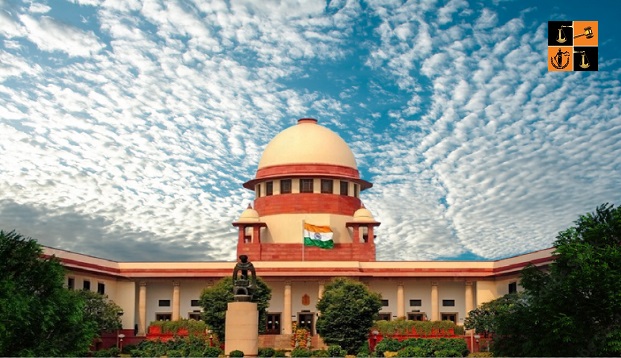
In a significant ruling on the misuse of criminal law in matrimonial disputes, the Supreme Court examined whether vague and generalized allegations, particularly against distant in-laws, are sufficient to proceed with criminal charges under Section 498A Indian Penal Code, 1860 (IPC). The case also invited scrutiny on limitations under the Criminal Procedure Code, 1973 (CrPC), the credibility of delayed complaints, and the role of professional status in assessing bias or victimhood. Read on to explore how the Court tackled these sensitive and legally complex questions.
Brief facts:
The case arose from a complaint by the wife, a Sub-Inspector with Delhi Police, against her husband, also a Sub-Inspector, and his family, leading to an FIR under Sections 498A, 406, and 34 of the IPC. Married under Buddhist rites, the wife claimed she bore the ceremony costs but was soon harassed for dowry by the appellant and his family, including demands for money, a car, and a separate house. Allegations included physical assault by the husband and his mother, threats with a dagger, and being thrown out of the matrimonial home. While pregnant, she reported further assault, which she later withdrew. After giving birth without support from her husband’s side, she filed a formal complaint, resulting in charges under Sections 498A and 34 IPC, with Section 406 dropped. The Sessions Court discharged the accused, citing delay and potential false implication due to the wife’s police background. The Delhi High Court later reversed the discharge, leading to an appeal before the Supreme Court, along with a plea for quashing of the FIR under Article 142 of the Constitution.
Contentions of the Appellant:
The appellants argued that the High Court erred in overturning the Sessions Court’s well-reasoned discharge order. They contended that the case was time-barred under Section 468 CrPC, as the alleged incidents occurred in 1999, but cognizance was taken on 27.04.2004, beyond the three-year limitation period. They asserted that the Magistrate lacked the authority to condone this delay under Section 473 CrPC at the charge-framing stage and that no valid explanation for the delay in filing the FIR in 2002 was provided. Additionally, they claimed the allegations were false, lacking specific evidence, and that no prima facie case existed against the appellant or his family.
Contentions of the Respondent:
The complainant argued that her complaints could not be dismissed as false merely because she was a police officer. She emphasized specific allegations of physical and mental cruelty by the appellant, asserting that the Sessions Court’s discharge was premature without a trial. She contended that the complaints filed on 06.12.1999 and 03.07.2002 were within the three-year limitation period under Section 468 CrPC, as the last offence occurred on 06.12.1999. She further argued that Section 498A of the IPC involves a continuing offence, and serious allegations persisted beyond 1999, justifying the FIR and cognizance.
Observations of the Court:
Justice B.V. Nagarathna and Justice Satish Chandra Sharma, while carefully examining the allegations and legal issues, emphasized the need for caution in matrimonial dispute cases and observed, “The Courts should be careful in proceeding against the distant relatives in crimes pertaining to matrimonial disputes and dowry deaths. The relatives of the husband should not be roped in on the basis of omnibus allegations unless specific instances of their involvement in the crime are made out.”
The Court found the complainant’s allegations against the appellant’s family, including five sisters-in-law and a tailor, to be vague, lacking specific incidents or supporting evidence, and therefore “implausible and unreliable.” The Court observed, “It is rather unfortunate that the complainant, being an officer of the State, has initiated criminal machinery in such a manner, where the aged parents-in-law, five sisters, and one tailor have been arrayed as accused. Notwithstanding the possibility of truth behind the allegations of cruelty, this growing tendency to misuse legal provisions has time and again been condemned by this Court.”
Regarding the appellant, the Court observed that the allegations were “obscure in nature” and lacked corroborative medical records, injury reports, or witnesses to substantiate “cruelty” under Section 498A IPC, as highlighted in precedents like Jaydedeepsinh Pravinsinh Chavda & Ors. v. State of Gujarat (2024) and Rajesh Chaddha v. State of Uttar Pradesh (2025).
The Court noted that the absence of charges under the Dowry Prohibition Act further weakened the complainant’s claims of dowry demand. It criticized the Sessions Court’s reliance on the complainant’s profession as a police officer to infer false implications, emphasizing that judicial decisions must rest on evidence and merits. However, the Apex Court concurred with the High Court’s sensitive view that even a police officer can be a victim of cruelty. On the issue of limitation, the Court, relying on Bharat Damodar Kale & Anr. v. State of Andhra Pradesh, clarified that “for the purpose of computing the period of limitation, the relevant date must be considered as the date of filing of the complaint or initiating criminal proceedings, and not the date of taking cognizance by a Magistrate or issuance of process.”
Despite this, the Court found no prima facie case due to insufficient evidence and noted that the party’s divorce decree had attained finality, making a trial unjust given the elapsed time since 1999.
The decision of the Court:
In the light of the foregoing discussion, the Top Court allowed both criminal appeals, for quashing and setting aside FIR and the chargesheet, while exercising its powers under Article 142 of the Constitution of India.
Case Title: XYZ Vs. State (Govt. of NCT of Delhi) and Anr.
Case No.: Criminal Appeal No. 2894 Of 2025
Coram: Justice B.V. Nagarathna and Justice Satish Chandra Sharma
Counsel for Appellant: AOR Yusuf
Counsel for Respondent: ASG Vikramjeet Banerjee, AOR Mukesh Kumar Maroria and Jasmeet Singh, Advocates Anita Sahani, Vanshaja Shukla, B K Satija, Kamlendra Mishra, Udai Khanna, Siddharth Sinha, Tathagat Sharma, Raman Yadav, Sunanda Shukla, Saif Ali, Pushpendra Singh Bhadoriya, Vijay Sharma, Pranav Menon, Saurav
Read Judgment @ Latestlaws.com
Picture Source :



















