









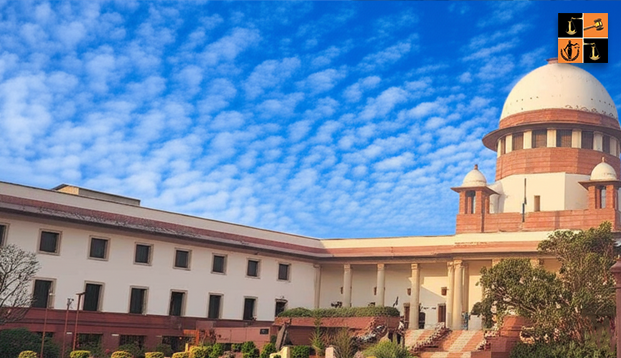
Recently, the Supreme Court dealt with a significant question on whether insolvency proceedings can be used as a shortcut for enforcing a money decree. The Court took a firm stance on the misuse of the Insolvency and Bankruptcy Code (IBC), emphasising its true purpose.
Brief Facts :
The case arose when the Respondent, a money lender, had advanced loans amounting to Rs.4.5 crore to the Appellant company in 2010 with agreed interest rates. When cheques issued as security were dishonoured, proceedings under Section 138 of the Negotiable Instruments Act were initiated. Over time, multiple settlements and payments took place, and eventually, a summary suit was filed before the Delhi High Court, resulting in a decree of over Rs.4.38 crore with 24% interest. This decree attained finality after dismissal of appeals up to the Supreme Court. Instead of executing the decree, the respondent initiated insolvency proceedings under Section 7 of the IBC before the NCLT, claiming that the decretal amount constituted a “financial debt.” The NCLT dismissed the plea, but the NCLAT reversed this decision and admitted the insolvency application.
Contentions of the Appellant:
The counsel for the Appellant company argued that the insolvency proceedings were a clear abuse of the IBC framework. It contended that the Respondent was merely attempting to recover money through the insolvency route instead of pursuing execution proceedings. The Appellant emphasised that it was a solvent and operational company, with substantial revenue and profits, and had already made significant payments, even depositing large sums before the Court. It also pointed out serious discrepancies in the Respondent’s computation of the alleged outstanding dues across different proceedings, raising doubts about the very existence and quantum of the debt.
Contentions of the Respondent:
The counsel for the Respondent, on the other hand, argued that the decretal amount constituted a valid financial debt under the IBC, as it arose from loan transactions involving interest and repayment obligations. Relying on judicial precedents such as Dena Bank v. C. Shivakumar Reddy and Kotak Mahindra Bank v. A. Balakrishnan, The Respondent contended that a decree gives rise to a fresh cause of action, enabling initiation of insolvency proceedings within limitation. The respondent maintained that the Appellant had defaulted in payment of the decretal amount, justifying the invocation of CIRP under Section 7 of the IBC.
Observation of the Court :
The Supreme Court delivered a sharp and principled reminder of the true objective of the Insolvency and Bankruptcy Code. It clarified that the core issue was not merely whether money was owed, but whether insolvency proceedings could be used as a substitute for execution of a decree.
The Court emphatically reiterated that the IBC is not a recovery tool. In one of the most striking observations, it held that “The Code is thus a beneficial legislation… not being a mere recovery legislation for creditors.” Going further, the Court strongly deprecated the conduct of invoking insolvency proceedings for coercive recovery that “IBC must not be used as a tool for coercion and debt recovery by individual creditors.”
Applying these principles, the Court noted that the respondent, despite holding a final decree, deliberately bypassed execution proceedings and instead invoked Section 7 of the IBC. This, according to the Court, was a clear misuse of the statutory mechanism. The Court also gave considerable weight to the factual matrix particularly that the appellant was a solvent, running company that had already deposited substantial amounts and expressed willingness to pay whatever was lawfully due. It observed that this was not a case of insolvency but of dispute over computation.
In a crucial finding, the Court held that “The initiation of CIRP is nothing more than the use of the IBC as a recovery mechanism… we will term it as an abuse of the process.” The Court also highlighted serious inconsistencies in the respondent’s claims across different forums, observing that such contradictions undermine the very foundation required to trigger insolvency proceedings.
Decision of the Court:
The Supreme Court allowed the appeal and set aside the NCLAT’s order which had admitted the insolvency application. It restored the NCLT’s decision dismissing the Section 7 petition, holding that the initiation of CIRP in the present case was unjustified and amounted to an abuse of process. The Court made it clear that the respondent is free to pursue execution of the decree through appropriate civil remedies, but cannot use the IBC as a shortcut for recovery. Additionally, costs of Rs.5,00,000 were awarded in favour of the appellant.
Case Title: Anjani Technoplast Ltd. v. Shubh Gautam
Case No.: Civil Appeal No. 8247 of 2022
Coram: Hon’ble Mr. Justice Pamidighantam Sri Narasimha and Hon’ble Mr. Justice Alok Aradhe
Advocate for the Appellant: Sr. Adv. Mukul Rohatgi
Advocate for the Respondent: Adv. Gaurav Singh
Read Judgment @Latestlaws.com
Picture Source :



















