









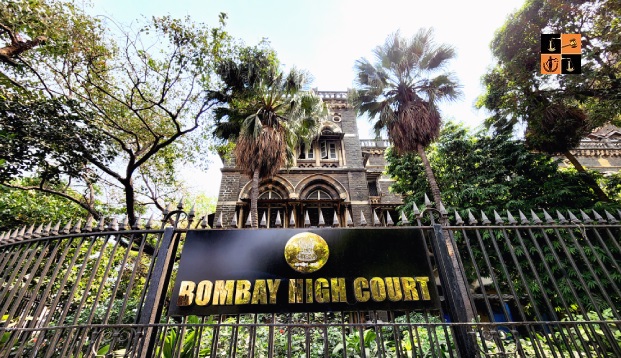
The Bombay High Court noted that Section 138 of the Negotiable Instrument Act, 1881 (hereinafter referred to as “NIA”) gives rise to different causes of action, starting from the deposit of a cheque and ending with a failure to make payment within 15 days from the receipt of the notice. There is no need for criminal intent in Section 138. Further, the bench observed that the presumptions under NIA can only be drawn when the pre-conditions are satisfied. The fact that the Complainant unilaterally put the dates on the cheques without the authority of the Accused and without informing him, amounts to material alterations. In such case, the Negotiable instrument becomes void and the requirement of a valid cheque cannot be said to be fulfilled.
Brief Facts:
The Complainant in the capacity as a Partner on behalf of the firm filed a complaint under Section 138 of the NIA. The Appellant and Respondent No.1 had the relationship of a Financer and Developer. A loan of Rs. 1 Crore was given by the Complainant to the Accused and a memorandum of understanding was entered into.
The Accused wanted to pay a considerable amount to the owner of a property and the same was entrusted for development to the Accused. The Accused could not complete the construction of the building. Out of various options, the Complainant asked for a refund of the amount of Rs 1 Crore with interest. 2 cheques were issued by the Accused and they could not be completed and were returned by the Drawee Bank for the reason ‘refer to drawer’.
A notice was sent to the Accused demanding payment, however, the accused denied and therefore, 2 complaints were filed before the Metropolitan Magistrate. The Accused was acquitted in both cases. Hence, the present appeals have been filed.
Contentions of the Appellant:
It was argued that the Trial Court has failed to consider Sections 138 and 139 of NIA. It was contended that for prosecution under Section 138 NIA, intent to cheat is not an essential ingredient and that action for recovery of money and Section 138 NIA proceedings can happen simultaneously.
Contentions of the Respondent:
It was contended that there was no criminal intent on part of the Accused to cheat the Complainant. The date and name of the payee were left blank. Moreover, the Accused by way of a civil suit asked for more time to repay the Complainant.
Observations of the Court:
The primary issue to be determined in the present case is whether the presumptions under Section 139 NIA can be drawn and whether the Accused has rebutted the said presumptions.
The Court firstly observed that it is the rule of prudence and no law to not interfere in the judgment of acquittal as once the Accused is acquitted, the presumption of innocence gets strengthened. The Prosecution of Section 138 NIA is quasi-criminal, implying that the burden lies on both the Complainant and the Accused. Therefore, it cannot be said that there is limited scope for interference in the judgment of acquittal, especially in Section 138 NIA cases.
It was noted that Section 138 NIA gives rise to different causes of action, starting from the deposit of a cheque and ending with a failure to make payment within 15 days from the receipt of the notice. There is no need for criminal intent in Section 138.
Concerning the cheques issued by the Accused, the Bench noted that the issuance of cheques denote that there was a liability of Rs 1 Crore between the Financer and Developer.
It was pointed out that the cheques were drawn in favour of the Financer, even though the date and name of the payee were not mentioned. The cheques were handed over to the Financer which means that the Complainant is the possessor of the 2 cheques. Moreover, Section 20 of NIA gives authority to the holder to make the inchoate stamped instrument complete. Therefore, even if Complainant filled in the blanks by putting the name of the payee, it cannot be held to be objectionable.
Further, the High Court observed that the presumptions under NIA can only be drawn when the pre-conditions are satisfied. The fact that the Complainant unilaterally put the dates on the cheques without the authority of the Accused and without informing him, amounts to material alterations. In such case, the Negotiable instrument becomes void and the requirement of a valid cheque cannot be said to be fulfilled.
The decision of the Court:
Therefore, finding no merits in the Appeals, the Appeals were accordingly, dismissed.
Case Title: M/s. Pinak Bharat and Company v. Shri Anil Ramrao Naik & Anr.
Coram: Hon’ble Mr. Justice S.M. Modak
Case No.: Criminal Appeal No. 1630 of 2011
Advocates for Appellant: Advs. Shri A.S. Khandeparkar, Prerak A. Sharma, Apoorva A. Khandeparkar, Rohit Mahadik, Nihir U. Dedhia, Rushikesh Bhagat, Saurabh Mittal, Vaibhav Kulkarni i/by Prerak A. Sharma
Advocates for Respondent: Advs. Ms. Megha Bajoriya, Shri H.J. Dedhia (APP)
Read Judgment @LatestLaws.com
Picture Source :



















