









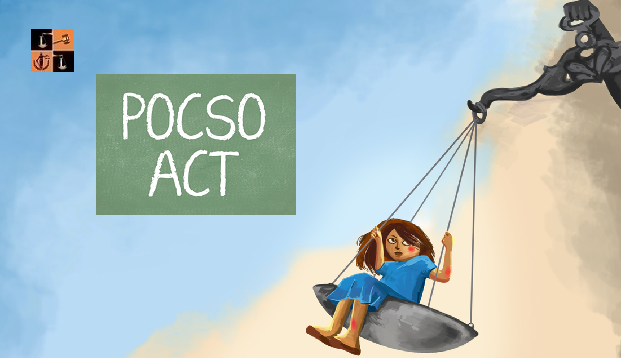
The Patna High Court held that as per Section 34(2) of the POCSO Act, the age of the victim must be determined by the trial court. The victim had stated that she had studied up to 7th standard but no effort was made by the learned trial court to ascertain the age of the victim on the basis of educational certificates as required under Section 94 of the Juvenile Justice Act.
Brief Facts of the Case
The factual matrix of the case is that the dance programme was organized in the house of the Appellant and both the prosecutrix and her cousin sister went to the house of Appellant to see the dance performance. When they were returning, the appellant and co-accused (nephew of the appellant), came there and the appellant caught hold of her and committed rape upon her and when they raised alarm, the accused persons fled away. Both the victims told the entire incident to their parents.
Thereafter, the FIR was registered under Sections 376, 506 of the IPC, Section 4 of the POCSO Act and Section 3 (XII) of the SC/ST Act. The trial court convicted the appellant.
Contentions of the Appellant
The learned counsel appearing on behalf of the Appellant contended that the prosecution has failed to prove that the victim was a child within the meaning of Section 2(1)(d) of the POCSO Act. It was furthermore contended that no efforts were taken to determine the age of the victim as per requirement of Section 34(2) of the POCSO Act as well as Section 94 of the Juvenile Justice (Care and Protection of the Children) Act, 2015 and it is a mandatory provision. It was also contended that based on radiographic and ossification tests, the Medical Board, which examined the victim, determined her age to be around 16 years old. He stated that an ossification test or any other test is not reliable proof of a person's age.
The learned counsel relied upon the judgment titled Jyoti Prakash Rai @ Jyoti Prakash versus State of Bihar.
Contentions of the State
The learned counsel appearing on behalf of the State contended that if the prosecution's evidence is deemed above board, the conviction may be rendered even on the strength of a single piece of evidence. The prosecutrix's and her parents' evidence does not contain any information that would cast doubt on this witness. It was furthermore contended that because of the delay in the medical examination, no sign of rape could be detected.
Observations of the Court
The High Court observed that the trial court is required by Section 34(2) of the POCSO Act to ascertain the victim's age. The learned trial court disregarded this mandatory provision.
It was furthermore observed that while the prosecutrix asserted in her statement to have completed her studies up to the seventh grade, the learned trial court failed to use the victim's educational records to determine the victim's age, as is required by Section 94 of the Juvenile Justice Act.
It was noted that the presumption under Sections 29 and 30 of the POCSO Act will not apply as the prosecution has not established that the victim was a child as defined by Section 2(d) of the POCSO Act.
Decision of the Court
The Supreme Court in the case of Jyoti Prakash Rai @ Jyoti Prakash vs. State of Bihar had made it clear that ossification or other test was not the exact proof of age of a person and two years flexibility may be given either side by the court. Based on these considerations, the order of conviction passed by the trial court was set aside.
Case Name: Radheyshyam Sah @ Radhe Shyam Sah vs. The State of Bihar
Case No.: CRIMINAL APPEAL (DB) No.587 of 2021
Coram: Hon’ble. Justices Nawneet Kumar Pandey and. Chakradhari Sharan Singh
Advocate for the Appellant: Mr.Ashok Kumar Chaudhary, Sr. Adv. Mr.Akshansh Ankit, Adv.
Advocate for the Respondent: Mr.Sujit Kumar Singh, APP
Read Judgment @Latestlaws.com
Picture Source :




















