









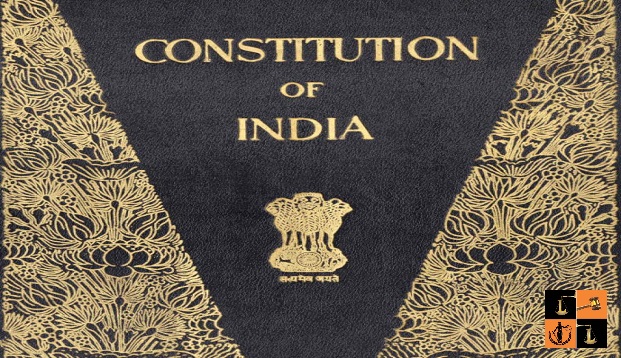
The Supreme Court ruled that Governor's notification would not be necessary for applying Central and State Acts in Scheduled Areas.
The Apex Court opined that while the Governor has the power to issue notifications that a particular legislation will not apply to a Scheduled Area or that a particular Act will apply with certain modifications, the absence of such notifications does not mean that the laws cannot be applied in Scheduled Areas.
Brief Facts:
On December 31, 1977, the President of India declared the entire District of Sundargarh in the State of Orissa as a Scheduled Area under Clause 6(2) of the Fifth Schedule to the Constitution of India.
Brief Background:
The Aappellant, a registered society, filed a writ petition under Article 226 of the Constitution of India, arguing that in the Scheduled Area, only members of Scheduled Tribes had the right to settle down, and all others were unlawful occupants and not entitled to vote in any constituency in the Scheduled Area. Additionally, the appellant contended that the Representation of the People Act, 1950 and the Delimitation Act, 2002 were not applicable to the Scheduled Area without a specific notification from the Hon’ble Governor of the State applying those laws. The High Court of Orissa dismissed the writ petition, and the appellant appealed to the Supreme Court of India.
Contentions of the Appellants:
It was argued that under Clause 5(1) of the Fifth Schedule to the Constitution of India, no law made by the Central or State Legislature can be applied to a Scheduled Area unless there was a specific notification issued by the Hon'ble Governor declaring that law to be applicable.
It was submitted that only the laws made under the Constitution in the exercise of power under the Fifth Schedule would apply to Scheduled Areas.
Further, it was argued that the Hon'ble Governor of the State must first decide which Acts of the Parliament or the State Legislature should apply to Scheduled Areas of the State and then issue a notification making them applicable. Until a specific notification was issued by the Hon'ble Governor incorporating the title and other particulars of every Act of the Parliament and the State Legislature that will be applied to the Scheduled Area, no Act of Parliament or State Legislature applied to a Scheduled Area.
Observations of the Court:
The Supreme Court analysed that the Governor has the power to issue notifications that a particular Central or State legislation will not apply to a Scheduled Area in the State or that a particular State or Central Act will apply to a Scheduled Area subject to certain modifications. However, the Court rejected the argument that the Central and State laws will not apply to a Scheduled Area without a specific notification from the Governor.
The Court also rejected the argument that non-Tribals have no right to settle down in a Scheduled Area. The Court found that under sub-clause (e) of Clause (1) of Article 19 of the Constitution of India, every citizen has a right to reside and settle in any part of the territory of India. Lastly, the Court found that non-Tribals have the right to vote in a Scheduled Area. The 1950 Act would be applicable to the Scheduled Area. Therefore, the appellant cannot contend that only a person belonging to Scheduled Tribe can cast a vote in elections of the constituencies in the Scheduled Area.
The decision of the Court:
The Supreme Court dismissed the appeal, stating that the High Court was correct in its analysis.
Case Title: Adivasis for Social and Human Rights Action v Union of India & Ors.
Case No.: Civil Appeal No. 2202 of 2023
Citation: 2023 Latest Caselaw 461 SC
Coram: Hon'ble Justice Mr. Justice Abhay S. Oka and Hon'ble Justice Mr. Justice Rajesh Bindal
Advocates for Petitioner: Advs.Mr. A. P. Mohanty, Mr. D.K. Singh, Mr. Ram Narayan Mohanty, Mr. Dinesh S. Badiar, and Mr. Samindra Kumar Tripathi
Advocates for Respondent: Advs. Mr. Sibo Sankar Mishra, Mr. Umakant Mishra, Ms. Apoorva Sharma, Mr. Sunil Mung, Mrs. Anil Katiyar, Mr. Amit Sharma, Mr. Dipesh Sinha,Ms. Pallavi Barua, Ms. Aparna Singh, and Ms. Sakshi Upadhyaya,
Read Judgement @LatestLaws.com
Picture Source :




















