









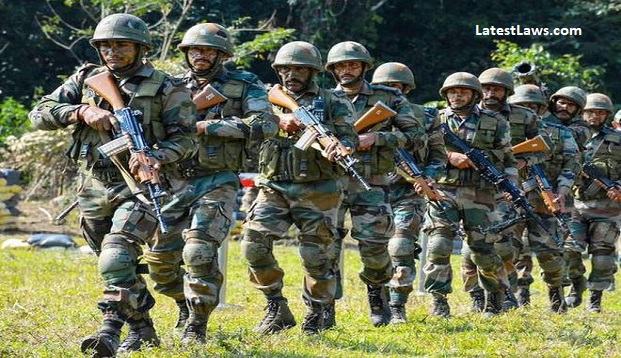
The Delhi High Court has ruled that Members of Force not expected to take unsanctioned leaves serving in the Force and are held to a higher standard and are expected to adhere to established protocols and diligently obey orders from their authorities.
It was emphasised that members of the Force have a responsibility to maintain discipline and demonstrate respect for the chain of command.
Brief Facts:
In February 2018, the Petitioner requested earned leave for a specific period due to personal engagement, but the competent authority instructed them to apply for casual leave instead. The petitioner modified their application and booked a flight for their planned leave period. However, the authority directed the petitioner to attend a parade before applying for leave and later instructed them to apply for leave after a certain date.
Despite these instructions, the petitioner received no confirmation of leave. They reapplied for leave, requested a personal hearing, and informed their superiors about their travel plans. The petitioner was asked to report for duty immediately, but they complied only after their engagement.
Subsequently, the petitioner faced disciplinary charges for being absent from duty. The enquiry found the charge proven, and the Disciplinary Authority declared the petitioner guilty, reducing their pay for a year.
Hence, the present Writ Petition has been filed before the High Court challenging the impugned orders passed by Respondent No.4- Senior Commandant, Respondent No.3-Deputy Inspector General (hereinafter referred to as “DIG”) and passed by Respondents No. 2-Inspector General (hereinafter referred to as “IG”) of the Central Industrial Security Force (hereinafter referred to as “CISF”).
Contentions of the Petitioner:
It was argued that the charge of being absent from duty was false, as the Petitioner had timely applied for leave and informed senior officers in writing before leaving the place of duty. It was also highlighted that the petitioner's absence during that period was considered "Absent without Leave" and "No leave salary" based on Rule 25 of Central Civil Services (Leave) Rules, 1972 (hereinafter referred to as “CCS Rules”) which applies when leave granted is utilized for a longer period than approved.
It was also argued that since the leave application was not rejected, the accusation of the petitioner proceeding on leave despite the refusal of leave was unfounded. Further, that the Petitioner followed the proper channel and procedure to apply for leave, but the Respondents delayed sanctioning the leave.
Contentions of the Respondents:
It was argued that by taking unsanctioned leave, the Petitioner committed serious misconduct and disobeyed the orders of superiors. Therefore, a Charge Memorandum was issued leading to a departmental inquiry against the petitioner.
Observations of the Court:
It was stated that the Enquiry Report, the decision of the Disciplinary Authority, and the order of the Appellate Authority all provided reasons for imposing the penalty of termination of service, as the charges were proven against the Petitioner. Even the appeal and revision against the termination of service were dismissed, but the High Court reversed the termination order, and the Supreme Court affirmed the High Court's decision, allowing the Union of India to reconsider the punishment with a minor penalty.
In this case, the leave itself was not sanctioned, and the Petitioner went on leave for a period other than what was permitted.
The Bench concluded that an employee, especially a member of the Force, is expected to follow protocols and obey orders from authorities. The Petitioner's failure to abide by the orders of the competent authority and being absent from duty from the 20th of February 2018 to the 6th of March 2018 amounts to gross indiscipline, misconduct, and dereliction of duty. The penalty imposed on the petitioner was deemed just and appropriate in the case.
The decision of the Court:
The Delhi High Court upheld the impugned orders and accordingly dismissed the petition.
Case Title: Raju Jat v Union Of India & Ors.
Case No.: Writ Petition Civil 3713 of 2022
Coram: Hon'ble Mr. Justice Suresh Kumar Kait and Hon'ble Ms. Justice Neena Bansal Krishna
Advocates for Petitioner: Advs. Ms. Eshna Kumar, Mr. Udit Gupta, Mr. Anup Jain & Mr. Aditya Maheshwari
Advocates for Respondent: Advs. Mr. Vikrant N. Goyal, Ms. Ayushi Garg & Ms. Tesu Gupta
Read Judgement @LatestLaws.com:
Picture Source :




















