









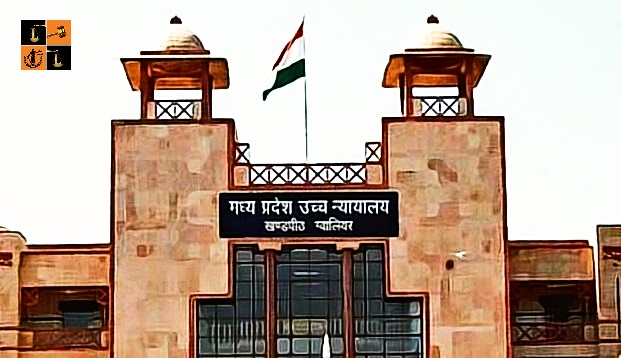
Recently, the Madhya Pradesh High Court held that the Railways cannot deny compensation by branding a bona fide passenger’s fall from an overcrowded train as a “criminal act”. The Court delivered this ruling in an appeal arising from the rejection of a compensation claim by the Railway Claims Tribunal, Bhopal. In a significant observation, the Court remarked that passengers standing near the coach gates due to congestion cannot be faulted when systemic shortcomings of the Railway Administration create unsafe travel conditions.
Brief Facts:
The case arose from an incident where a man, travelling with his family on the Dakshin Express from Amla to Bhopal with a valid ticket, found himself in an overcrowded general coach. As the train approached Habibganj Station, heavy crowd pressure pushed him near the entrance. Unable to maintain balance, he fell from the moving train, resulting in the amputation of both legs above the knee.
The victim later approached the Railway Claims Tribunal seeking compensation, but the Tribunal dismissed his claim, holding that he had attempted to get down from a moving train and that such conduct amounted to a criminal act.
Contentions:
Counsel for the appellant argued that the Tribunal had erred in equating the incident with any criminal act. It was contended that the appellant was a bona fide passenger who suffered a grievous injury due to crowd pressure in an overcrowded coach, and not due to any deliberate attempt to alight from a running train. The appellant maintained that his fall squarely constituted an “untoward incident”, entitling him to statutory compensation.
Whereas, the counsel for the Railway Administration supported the Tribunal’s decision, submitting that the appellant had endangered his own safety by positioning himself at the coach entrance before the train halted. According to the Railways, no interference by the High Court was warranted.
Observations of the Court:
The Court disagreed with the Railways’ defence and criticised the findings of the Tribunal. The Court noted that there was no dispute regarding the appellant’s valid ticket or the fact that he fell from the moving train. The Court rejected the Railways’ claim that the appellant attempted to get down before the train reached the platform, describing the explanation as “wholly unsatisfactory and deserving of strong rebuke.”
The Court then made several important observations on systemic concerns within the Railways. It highlighted that in long-distance trains, both doors of each coach serve as common points for entry and exit, with no separate gates for boarding or de-boarding and no timely announcements informing passengers about the platform side. The bench noted that the Railways’ long-standing design and operational practices naturally compel passengers to move toward the gate well before the train arrives, particularly at busy stations where congestion is a genuine concern.
In such circumstances, the Court held that a passenger positioning himself near the door cannot be branded negligent. Instead, it emphasised that it is the responsibility of the Railways to ensure a safe environment inside the coach and to regulate passenger movement effectively.In a strongly worded remark, the Court stated, “The value of human life does not vary with the class of ticket purchased. Every passenger is entitled to the same standard of safety and care.”
The Court further held that the plea of “own negligence” or “criminal act” was untenable, as the Railways failed to demonstrate any misconduct by the claimant. Instead, the Court termed the incident a direct consequence of systemic failure, noting deficiencies in managing gate congestion, overcrowding, and passenger movement. The Court concluded that the Railways could not escape its statutory liability under Section 124-A of the Railways Act.
The decision of the Court:
Allowing the appeal, the Court set aside the Tribunal’s order and held that the claimant is entitled to full statutory compensation with interest. The matter was remanded to the Railway Claims Tribunal, Bhopal, directing it to assess and award compensation in accordance with the applicable schedule and legal provisions.
Case Title: Raju Dhurvey Vs. Union of India
Case No.: Misc. Appeal No. 648 of 2017
Coram: Justice Himanshu Joshi
Advocate for Petitioner: Adv. Shafiqullah, Mohd. Riyaz
Advocate for Respondent: Advs. Ranajna Agnihotri, Om Prakash Agnihotri
Read Judgment @Latestlaws.com
Picture Source :




















