









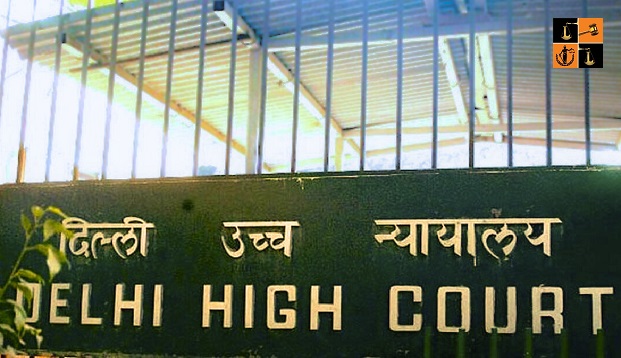
In a landmark consideration on the tort of Alienation of Affection (AoA), the Delhi High Court examined whether civil remedies can be pursued by a spouse against a third party alleged to have intentionally interfered in a marital relationship. The Court’s observations probe the delicate balance between personal autonomy, marital expectations, and emerging civil claims derived from Anglo-American “heart-balm” jurisprudence. The decision sets the stage for understanding how Indian civil law may address intentional interference in marriage beyond traditional matrimonial remedies.
Brief Facts:
The case arose when the plaintiff, married since March 2012, sought damages for the alleged tort of Alienation of Affection (AoA). The plaintiff claimed that a third party, aware of her existing marriage, developed a close personal relationship with her husband, accompanied him on work trips, and gradually became his exclusive companion. The plaintiff discovered letters and intimate communications confirming the extramarital relationship in March 2023, which led to public humiliation and ultimately prompted her husband to file for divorce in April 2025. Against this backdrop, the plaintiff instituted the present civil suit seeking compensation for wrongful interference in her marital relationship.
Contentions of the Plaintiff:
The plaintiff contended that she suffered substantial emotional distress, humiliation, and disruption of her marital life as a direct consequence of the acts of a third party. She asserted that the continuous interaction and relationship cultivated between the third party and her husband intentionally resulted in the withdrawal of affection and companionship from her, thereby causing tangible harm. The plaintiff maintained that the interference was deliberate and wrongful, constituting the tort of alienation of affection, and that Indian civil courts could recognize such a claim for damages. She emphasized that the relief sought was independent of any ongoing matrimonial proceedings and aimed specifically at holding the third party accountable for their actions.
Contentions of the Respondent:
The husband argued that the suit was not maintainable under Section 7 of the Family Courts Act, 1984, asserting that the pending divorce proceedings already encompassed issues arising from the alleged adultery. He contended that his personal choices and autonomy could not give rise to a civil action against a third party. The third party maintained that they owed no legal duty to refrain from interacting with the husband, and that the suit constituted parallel proceedings to the matrimonial dispute. Both respondents relied on statutory provisions and case law to submit that civil courts lacked jurisdiction over tortious claims arising from marital relationships, particularly where the alleged acts involved consensual interactions between adults, and that the Family Courts Act and Section 9 Code of Civil Procedure, 1908 (CPC) barred the maintainability of such suits.
Observation of the Court:
The Court carried out a detailed examination of the emerging doctrine of alienation of affection under Indian civil law, acknowledging that “Indian legislation does not expressly recognise the tort of AoA. The concept is one fundamentally derived from Anglo-American Common Law and belongs to the category of so-called “heart-balm” torts. In the common law tradition, a heart-balm action is a civil claim, whereby a party seeks monetary compensation for the termination or disruption of a romantic or marital relationship.”
Further, the Court explained that “Alienation of affection by a stranger, if proved, is an intentional tort i.e., interference in the marital relationship with intent to alienate one spouse from the other. Alienation of affection is known as ‘Heart Balm’ action.” It noted that while civil remedies for AoA remain nascent in India, jurisprudence has begun to engage with the concept, although “no procedure or enforcement mechanism has been formalized.
The Court clarified that for a claim of AoA to succeed, there must be intentional and wrongful conduct by the defendant aimed at alienating marital affection, a clear causation linking the conduct to a legally cognisable injury, and a demonstrable loss capable of rational assessment. The Court distinguished civil AoA claims from traditional matrimonial remedies such as maintenance, custody, or restitution of conjugal rights, emphasizing that these claims arise independently from tortious conduct.
Referring to the case Joseph Shine v. Union of India, the Court observed that, “the State has no role in criminalising the private lives and intimate choices of individuals, and that neither the State nor its executive ought to interfere in such domains. In fact, there does not lie an absolute right upon any individual to maintain intimate relations outside marriage, without consequences. The decision in Joseph Shine decriminalised adultery; it did not create a license to enter into intimate relationships beyond marriage, free from civil or legal implications.”
The Court further observed, “Treating marriage analogously to a contract, this norm may be viewed as one of its essential terms; a breach thereof by either spouse, particularly where it is alleged that a third party, with mala fide intent, facilitated or contributed to such breach, can result in serious injury to the other spouse and may ultimately lead to the irretrievable breakdown of the relationship.” The Court emphasized that although the plaintiff does not seek relief against her husband, a civil action against the third party is not excluded in the absence of statutory bars.
The decision of the Court:
In light of the foregoing discussion, the Court held that the plaintiff’s suit for damages on the basis of alienation of affection is not barred at the threshold stage. Summons are to be issued to the defendants, and the suit is maintainable before the Civil Court. The ultimate merits, including the establishment of intentional interference and resulting harm, will be adjudicated during the trial.
Case Title: Shellay Mahajan v. Ms. Bhanushree Bahl & Anr.
Case No: CS(OS) 602/2025
Coram: Justice Purushaindra Kumar Kaurav
Advocate for Plaintiff: Advs. Malavika Rajkotia, Purva Dua, Mayank Grover
Advocate for Defendant: Advs. K.C. Jain, Prabhjit Jauhar, Tulika Bhatnagar, Sehaj Kataria
Picture Source :




















