









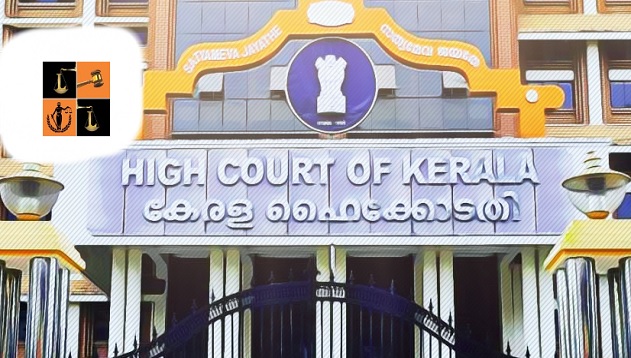
In a judgment with wide implications for labour standards in the healthcare sector, the Kerala High Court has declined to interfere with an order directing a private hospital and its outsourced facility management contractor to pay statutory minimum wages under the higher wage category applicable to hospital housekeeping staff. While dismissing the petition, Justice Viju Abraham held that the classification of workers merely as “cleaners” does not override the substantive nature of their employment as comprehensive housekeeping staff in a clinical environment.
The petitioners had approached the High Court challenging an order of the Deputy Labour Commissioner, issued under the Minimum Wages Act, 1948. The order directed payment of ₹7.31 lakh as wage arrears and an equal amount as compensation to 34 workers engaged during October 2015 to March 2016.
The core contention advanced by the petitioners was that the staff in question were “cleaners,” and hence governed by a general wage notification for sweeping and cleaning, which prescribed a lower daily wage. However, the Court rejected this submission on the basis of the express terms of the agreement between the hospital and the contractor, which stated that the contractor would provide “proper House Keeping Conservancy Services of the Establishment and for orderly conduct of day-to-day House Keeping activities of the Hospital.”
Quoting directly from the agreement, the Court highlighted the nature of the services required, which included maintenance of hygiene, deployment of trained staff in sensitive areas like operation theatres and ICUs, and supervision of cleanliness within tight timeframes. These elements, the Court found, rendered the engagement akin to the “house keeper” category enumerated in the special wage notification for private hospitals.
Justice Viju Abraham observed that “A reading of Ext.P1 would clearly reveal that the agreement was for orderly conduct of the House Keeping activities of the 1st petitioner hospital. In view of the detailed discussions and finding in Ext.P8, only for the reason that in the table shown in Ext.P8 the employees are termed as 'cleaners', I am not inclined to accept the contentions of the petitioners that the workers were employed as cleaners.”
Another line of argument advanced by the hospital was that, since the workers were deployed by the second petitioner-contractor, the hospital could not be held liable. This too was rejected. Referring to the statutory definition of “employer” under Section 2(e) of the Minimum Wages Act, 1948, and citing Hindustan Sanitary ware and Industries Limited and Others v. State of Haryana, the Court reaffirmed that principal employers are liable for ensuring statutory wage compliance even for contract workers.
In concluding that the wages paid fell short of the statutory entitlement, the Court also invoked the binding precedent in State of Punjab and Others v. Jagjit Singh and Others, reiterating the constitutional principle that similarly placed workers cannot be discriminated against in terms of pay:
“It is fallacious to determine artificial parameters to deny fruits of labour. An employee engaged for the same work cannot be paid less than another who performs the same duties and responsibilities. Certainly not, in a welfare State. Such an action besides being demeaning, strikes at the very foundation of human dignity. Anyone, who is compelled to work at a lesser wage does not do so voluntarily. He does so to provide food and shelter to his family, at the cost of his self-respect and dignity, at the cost of his self-worth, and at the cost of his integrity. For he knows that his dependants would suffer immensely, if he does not accept the lesser wage. Any act of paying less wages as compared to others similarly situate constitutes an act of exploitative enslavement, emerging out of a domineering position.”
The petitioners’ claim that they had also sought review of the Labour Commissioner’s order was found untenable. The Court clarified that the Minimum Wages Act, 1948 contains no provision for review, and the rejection of the review petition had not been challenged independently.
Accordingly, the Court held that “Taking into consideration the above facts and circumstances, I find no reason to interfere with Ext.P8 order and the writ petition is accordingly, dismissed. However, it is made clear that any amount deposited by the petitioners shall be given due credit.”
The judgment fortifies the statutory mandate that minimum wage entitlements must be based on the actual nature of work performed, rather than the nomenclature used by employers or contractors. It also affirms the obligation of principal employers to ensure that even outsourced workers are paid in accordance with the applicable wage classification.
Case Title: Korambayil Hospital & Diagnostics Centre (P) Ltd. & Anr. Vs. State Of Kerala & Ors.
Case No.: WP(C) NO. 34023 of 2022
Coram: Justice Viju Abraham
Advocate for Petitioner: Advs. Naveen.T, Kum.Chithra Chandrasekharan, V.S.Abhishek, Biji A Manikoth, Shibu Joseph Kottayil
Advocate for Respondent: Government Pleader Asok M.Cherian, Addl. Advocate General Smt.Sabeena P.Ismail
Picture Source :



















