









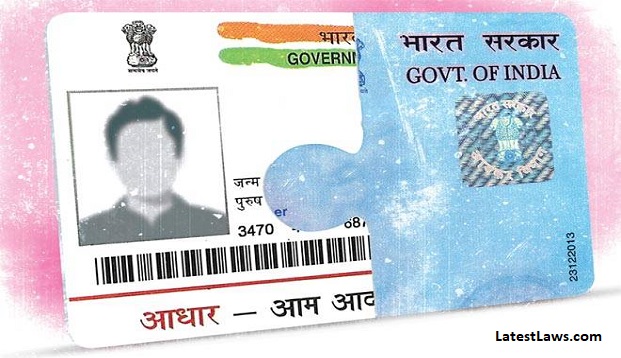
The Kerala High Court opined that to ascertain age under the Juvenile Justice (Care and Protection of Children) Act, 2015 (hereinafter referred to as “JJA”), the Aadhar Card cannot be treated as a document of proof as the Act has not sanctioned Aadhaar Card as valid proof.
Brief Facts:
The bail application is filed under Section 439 of the Criminal Procedure Code, 1973 (hereinafter referred to as “Cr.P.C.”). The issue is concerning the method adopted for ascertaining the age of the Accused.
Contentions of the Petitioner:
The Petitioner contended that being only 16 years old, the Petitioner should not have been arrested and thus, should be released on bail immediately. The argument of the Petitioner is based upon JJA. It was argued that the Petitioner should be treated as a child. To prove the age of the Petitioner, the Aadhaar Card has been relied on wherein the date of birth is 2006 and hence, it was contended that the Petitioner is a child in conflict with the law. It was also argued that the date of birth certificate issued by the Department of health services, State of Assam has the same date of birth as the Aadhaar Card, and the Investigating Officer has ignored these documents.
Contentions of the Respondent:
The Respondent argued that the Investigating Officer had relied on a transfer certificate issued by the school according to which the age of the Petitioner is 19 years and hence, the Petitioner cannot be treated as a child. It was argued that the Aadhaar Card cannot be relied on to determine age under JJA as the certificate from the school specifying the date of birth is the main document.
Observations of the Court:
The Court noted that the Petitioner is alleged to have committed rape on a victim aged 13 years. It was noted that the Petitioner is a married man and is alleged to have kidnapped the accused from the custody of her mother and subjected her to aggravated penetrative sexual assault.
The High Court remarked that if the age is in dispute, then the child must be produced before the Juvenile Justice Board as per Section 94 of JJA. If the Board decides that the age of the child is doubtful, then there are 3 modes vide which age may be ascertained of the child in conflict with the law.
The first mode is by referring to the certificate issued by the school or the matriculation certificate specifying the date of birth. If this is not available, then the second mode is a reference to the birth certificate issued by a local authority. If this is not available, then the third way is to conduct an ossification test or the latest medical age determination test.
The Bench opined that if the certificate from school is available and presented on the record, then that document alone should be sufficient to ascertain the age of the child. The Act nowhere recognizes Aadhaar Card as the document of proof of the date of birth of an Accused.
The decision of the Court:
Therefore, based on the above reasons and document on record i.e., transfer certificate from school, the Kerala High Court ruled that the accused is above 18 years and will be treated as an adult. The Bail application was accordingly dismissed considering the gravity and nature of the offence committed.
Case Title: Sofikul Islam v. State of Kerala
Coram: Hon’ble Mr. Justice Bechu Kurian Thomas
Case No.: Bail APPL. No. 7321 of 2022
Advocates for Petitioner: Advs. Sri Vishnu Babu, Aswini Shankar, Shri P. Yadhu Kumar, Smt. Swetha K.S.
Advocates for Respondent: Public Prosecutor Smt. M.K. Pushpalatha
Read Judgment @LatestLaws.com
Picture Source :



















