









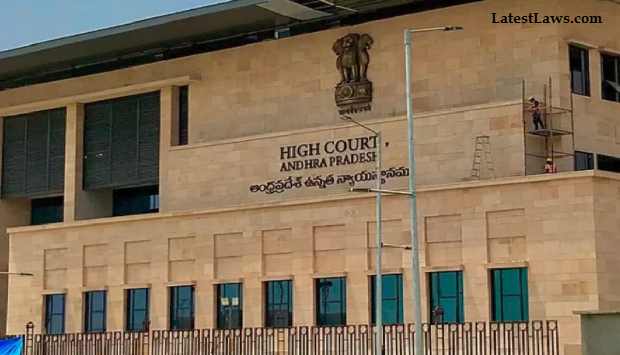
The division judge bench of the Andhra Pradesh High Court held that the credibility of a witness has to be tested on the touchstone of truthfulness and trustworthiness. When all the dying declarations are consistent and inspire confidence, there is no difficulty in maintaining a conviction basing on the same without there being any corroboration.
Brief facts
The factual matrix of the case is that the accused being the husband of the deceased is addicted to drinking alcohol and developed illicit intimacy with another lady and then, came home intoxicated and pick a quarrel with her, became wild, poured kerosene on her, and set her ablaze, and subsequently, she died while undergoing treatment and the statement of the deceased was also recorded by the head constable in the presence of the doctor. Thereafter, on the basis of the said statement recorded the case was registered for the offence punishable under for the offences punishable under Sections 498A and 307 IPC. Later on, after death, Section 307 IPC was converted into 302 IPC. The trial court convicted the accused for the offense punishable under Section 302 of the Indian Penal Code, 1860. Aggrieved by this, the present appeal is filed.
Contentions of the Appellant
The Appellant contended that all the material witnesses didn’t support the case of the prosecution and the entire case of the prosecution totally rested on the dying declaration. It was furthermore contended that all the dying declarations of the deceased were inconsistent and therefore, they can’t be safe to rely upon. Also, a dying declaration can’t be the sole basis for conviction.
Contentions of the State
The state contended that a dying declaration can be relied upon to base a conviction if it is proved that the same is true and trustworthy and not an outcome of tutoring or prompting by any of the relatives or interested persons of the deceased and if the deceased is in a fit state of mind to give the statement.
Observations of the court
The Hon’ble Court observed that under Section 32 (1) of the Indian Evidence Act, 1872, a statement made by an individual, either in writing or verbally, regarding the reason of their death or any circumstances leading up to it, is admissible in evidence where the cause of their death is in question.
The Court furthermore observed that it is well-settled law that when a dying declaration is verified as true and trustworthy and not the result of pressure or influence from the deceased's family or other interested parties, it can be adopted and convictions upheld even in the absence of any corroborating evidence.
The court noted that all the dying declarations made by the accused were consistent to the point that they pointed the finger at the accused.
The court furthermore noted that the credibility of a witness has to be tested on the touchstone of truthfulness and trustworthiness. When all the dying declarations are consistent and inspire confidence, there is no difficulty in maintaining a conviction based on the same without there being any corroboration.
Based on these considerations, the court was of the opinion that the trial court rightly convicted the accused under Section 302 of the IPC.
The decision of the court
With the above direction, the court dismissed the criminal appeal.
Case Title: Vodde Narayanappa, Anantapur Dst. V. The State of AP Rep PP
Coram: Hon’ble Mr. Justice K Suresh Reddy, and Hon’ble Mr. Justice K Sreenivasa Reddy
Case No.: CRIMINAL APPEAL NO: 806/2016
Advocate for the Appellant: N Ranga Reddy
Read Judgment @Latestlaws.com
Picture Source :



















