









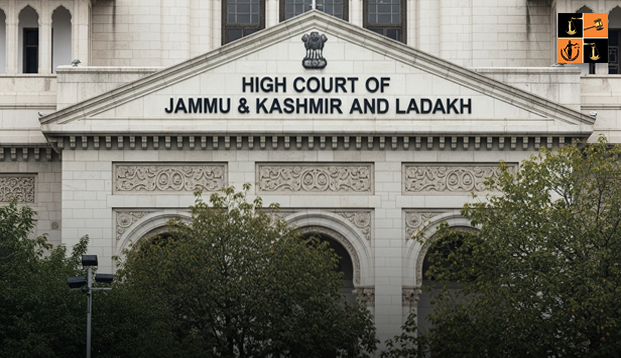
Recently, the High Court of Jammu & Kashmir and Ladakh examined the scope of its writ jurisdiction under Article 226 of the Constitution in a dispute arising out of inheritance and mutation of land. The case raised important questions on whether purely private succession disputes between family members can be adjudicated in writ proceedings.
Brief Facts:
The case arose from a challenge to Mutation, relating to land measuring 4 Kanals and 5 Marlas situated in Tehsil Pattan, District Baramulla. The petitioners, claiming to be legal heirs of the original owners, alleged that the mutation was attested without associating all rightful heirs and in violation of succession law. Their revision petition before the Financial Commissioner (Revenue) was dismissed on the ground of limitation, and a subsequent review petition also met the same fate. Aggrieved, the petitioners approached the High Court under Article 226 seeking quashment of the mutation as well as the revisional and review orders.
Contentions of the Petitioner:
The counsel for the Petitioners contended that the dismissal of the revision petition solely on the ground of limitation was illegal, as the issue of delay was neither raised by the respondent nor argued during the hearing. The counsel argued that the limitation is a mixed question of law and fact, and deciding the matter on this ground without giving them an opportunity to explain the delay violated principles of natural justice. It was further urged that inheritance mutations allegedly contrary to personal law stand on a different footing and can be questioned at any stage. The petitioners also maintained that the revisional powers of the Financial Commissioner are not circumscribed by any statutory limitation period and that the mutation had deprived them of their lawful share in ancestral property.
Contentions of the Respondents:
The respondent raised a preliminary objection to the maintainability of the writ petition, asserting that the dispute was purely private in nature involving inheritance and family settlement, with no public law element. It was argued that a writ under Article 226 cannot be maintained against a private individual, particularly when no State authority or statutory duty is involved. The respondent also pointed out the inordinate delay of nearly 25 years in challenging the mutation, contending that the petitioners were fully aware of and had acted upon earlier settlements. Additionally, it was submitted that the case involved disputed questions of fact relating to possession, settlement, and prior litigation, which could not be adjudicated in writ jurisdiction.
Observation of the Court:
The Court held that the writ petition was not maintainable, as the dispute was purely private in character. The Court observed that “the dispute sought to be projected by the petitioners essentially pertains to inheritance, private settlement and mutation of land between family members,” and therefore “falls outside the purview of writ jurisdiction.” It emphasised that “the writ jurisdiction is not intended to supplant civil or statutory remedies, nor can it be invoked for adjudication of private property disputes in the absence of any public duty or statutory violation attributable to the private respondent.”
On the issue of impleadment and the nature of parties, the Court categorically stated that “a writ petition where the respondent is a private individual and no public authority is involved is inherently not maintainable.” It further held that “an order cannot be effectively challenged unless the authority which passed the order is arrayed as a party,” adding that “in the absence of the decision-making authority, no effective adjudication can take place, and any order passed by this Court would be rendered unenforceable.”
Dealing with limitation and delay, the Court rejected the petitioners’ contention that the issue could not be examined suo motu. It ruled that “the question of limitation is a pure question of law, which goes to the very root of the maintainability of the proceedings,” and that a court or statutory authority is “duty-bound to examine the issue of limitation suo motu.” The Court warned that “entertaining such a stale claim would have resulted in unsettling settled rights and would have caused grave prejudice to the opposite party,” and consequently declined to exercise its discretionary jurisdiction under Article 226.
The decision of the Court:
The High Court dismissed the writ petition, holding it not maintainable as the dispute was purely private in nature. The Court also noted inordinate delay and procedural defects, and found no ground to interfere with the revenue authorities’ orders.
Case Title: Abdul Gani Ganai Vs Habibullah Ganai
Case No.: WP(C) 1303/2025
Coram: Hon’ble Mr Justice Wasim Sadiq Nargal
Counsel for the Petitioner: Adv. S.H Thakur,
Counsel for the Respondent: Adv. Mir Majid Bashir,
Read Judgement @LatestLaws.com
Picture Source :




















