









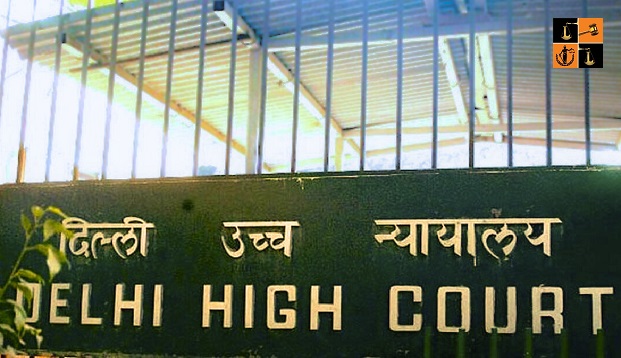
Recently, in a case testing the boundaries of matrimonial law, the Delhi High Court confronted an unusual plea where both parties jointly sought to nullify their own Arya Samaj marriage on the ground that the essential Hindu rite of Saptapadi had never been performed. The case raises a compelling question, can a marriage alleged to be unsolemnised be declared void under the Hindu Marriage Act, 1955 (HMA), or does such a petition lie beyond the ambit of the law? Read on to uncover the court’s insights and reasoning.
Brief Facts:
The case stemmed from a joint petition before the Family Court seeking a declaration that the partie's marriage, allegedly solemnised in January 2024 at Arya Samaj Mandir, Delhi, and registered before the District Magistrate in February 2024, was null and void under Section 7 of the HMA. Both claimed that the essential Hindu rite of Saptapadi was never performed and that the registration was done solely to facilitate visa formalities, as the husband resided in London. Following the differences and cancellation of their proposed formal wedding in April 2024, they sought a declaration that no valid marriage existed. The Family Court dismissed the plea as not maintainable under the HMA and held it barred by estoppel since the parties had earlier affirmed, under oath, that their marriage was performed in accordance with Hindu rites. Aggrieved, they jointly appealed before the Delhi High Court.
Contentions of the Appellant:
The Appellant contended that a Hindu marriage acquires legal validity only when duly solemnised under Section 7 of the HMA, and since the essential ceremony of Saptapadi was never performed, no marriage came into existence in the eyes of law. It was submitted that both parties had affirmed on oath before the Family Court and the High Court that Saptapadi did not take place, thereby dispensing with the need for independent corroboration. The Appellant argued that the Arya Samaj ceremony was merely symbolic, conducted to facilitate the wife’s visa process rather than as a genuine marriage, and that mere registration under Section 8 or issuance of a certificate by the Arya Samaj could not substitute the mandatory solemnisation ceremonies prescribed under Section 7. Reliance was placed on the Supreme Court’s decision in Dolly Rani v. Manish Kumar Chanchal to assert that registration without proper solemnisation cannot confer marital legitimacy. It was further urged that the parties never cohabited as husband and wife, which negated the existence of a valid marriage.
Contentions of the Respondent:
The Respondent argued that while Saptapadi was admittedly not performed, the Family Court failed to appreciate that the petition was maintainable under Section 11 of the HMA, read with Section 23(1)(c), which permits a joint petition for declaration of nullity. It was submitted that the Family Court wrongly applied the doctrine of estoppel, as the statements made before the Registrar were merely administrative and not intended to mislead. The respondent contended that the court placed undue reliance on presumptions arising from registration without insisting on proof of actual solemnisation. Relying on the Supreme Court’s decision in Dolly Rani v. Manish Kumar Chanchal, the respondent maintained that the absence of essential rites such as Saptapadi renders a Hindu marriage invalid even if registered. It was further urged that by refusing the declaration, the impugned order effectively compelled both parties to remain bound by a marriage that never attained legal validity.
Observation of the Court:
The Division Bench of Justice Anil Kshetrapal and Justice Harish Vaidyanathan Shankar clarified that “the statutory scheme of the HMA only provides reliefs in the form of a declaration of a marriage as being “Void”, decree of annulment as being voidable on the grounds mentioned in Section 12 or a decree of dissolution on the grounds set out in Section 13(1) or (2) or a decree by mutual consent under Section 13B of the HMA as also for a decree of “judicial separation” only if there is an existing solemnised marriage.” It held that a petition based on the assertion that no valid marriage ever came into existence owing to non-fulfilment of Section 7 requirements was not maintainable.
On the applicability of Section 11 of the HMA, the Court reasoned that the provision presupposes a marriage that has been duly solemnised but violates any of the conditions enumerated in Section 5(i), (iv), or (v). Therefore, a declaration of nullity under Section 11 cannot be sought where the marriage itself is alleged to be unsolemnised.
Addressing the principle of estoppel, the Court affirmed the Family Court’s finding that the parties were bound by their prior sworn statements and affidavits, stating, “Both parties had themselves submitted sworn affidavits before the competent authority, making unequivocal admissions that their marriage had been solemnised in accordance with Hindu rites and ceremonies. In addition, they produced supporting documents, including proof of age, affidavits, address proof, marriage photographs, and witness documents. On the basis of these averments and materials, a marriage certificate was duly issued in their favour” Hence, "any prayer now seeking a declaration that such a marriage, as well as the marriage certificates obtained on the basis of the documents, voluntarily executed, is squarely barred by the doctrine of estoppel embodied in Section 121 of the BSA", added the Bench.
Regarding the reliance on Dolly Rani v. Manish Kumar Chanchal (2025) 2 SCC 587, the Court held that the precedent was “wholly misconceived” and inapplicable. It explained that “the directions issued under Article 142 do not constitute a binding precedent unlike Article 141 of the Constitution of India. They are direction issued to do proper justice and exercise of such power, cannot be considered as law laid down by the Supreme Court”
The Bench also pointed out the lack of evidence to substantiate the parties claim that Saptapadi was not performed. It observed that “mere assertions by the parties are insufficient... The presumption of a valid marriage is not weakened merely due to the absence of direct evidence proving that the Saptapadi was performed.”
Deploring the parties conduct, the Court remarked that their “sham marriage purely for the purpose of convenience and to ensure the procurement of an early VISA” not only violated statutory norms but also risked bringing disrepute to the institution of marriage registration in India. It warned that permitting such disavowal “would be to lend this Court’s imprimatur to an act which, from the very inception, appears to be tainted by malafide.”
The decision of the Court:
In the light of the foregoing discussion, the Court held that the appeal was devoid of merit and that both the petition before the Family Court and the appeal before the High Court were “the product of sheer ingenuity, a complete misadventure, and a misguided attempt to turn the settled law on its head.” Finding no infirmity in the Family Court’s judgment, the Court dismissed the appeal with no order as to costs.
Case Title: A Vs. B
Case No: MAT.APP.(F.C.) 222/2025
Coram: Hon’ble Mr. Justice Anil Kshetarpal, Hon’ble Mr. Justice Harish Vaidyanathan Shankar
Advocate for Appellant: Advs. Peeyoosh Kalra, Ashok Kumar Nagrath
Advocate for Respondent: Advs. Meghna Nair, Yashwant Singh Baghel, Anshika Sharma, Prosenjeet Banerjee, Amicus Curiae
Read Judgment @LatestLaws.com
Picture Source :




















