









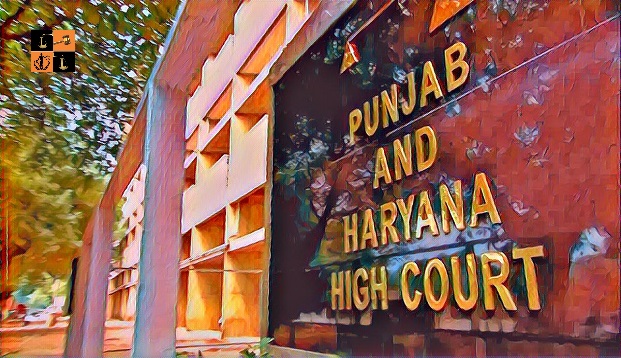
The single judge bench of the Punjab and Haryana High Court quashed the order passed by the state authorities in which the state authorities rejected the case of the Petitioner for pre-mature release and directed that the petitioner shall remain in jail till his last breath. The court determines that life convicts should be eligible for release into society once they have served sufficient period of time in prison to mark the seriousness of their offences. The law provides for executive remissions, which is completely based on discretion. Discretion is based on the basis of guidelines framed at the state level.
Brief facts
The factual matrix of the case is that the order was passed by the State authorities (Respondent no. 1) in which the prayer for grant of premature release has been rejected and passed an order that the petitioner shall remain in jail till his last breath. Aggrieved by this, the present petition under Article 226 of the Constitution of India read with Section 482 of the Code of Criminal Procedure, 1973 has been filed by the Petitioner in order to quash the impugned order.
Contentions of the Petitioner
The Petitioner submitted that as per para 2 (aa) (iv) of the Premature Release Policy, the Petitioner has to undergo 20 years of actual sentence and 25 years of total sentence with remission whereas, in the present case the Petitioner has undergone more than 24 years of actual imprisonment and 29 years of total imprisonment including remission till date. It was furthermore submitted that after 2002 no other was lodged against the Petitioner. The Petitioner relied upon the judgment titled Pohlu @ Polu Ram Vs. State of Haryana and others.
Contentions of the State
The state submitted that the Petitioner is a hard-core criminal and is involved in various other cases of similar nature.
Observations of the court
The Hon’ble Court observed that premature release is primarily used to protect society from criminal activity while also assisting in the reformation of offenders and their rehabilitation and reintegration into society. These are two strongly related aspects. The way inmates act, behave, and perform while incarcerated is incidental to the same. These impact their capacity for rehabilitation and their chances of being released due to their own earned remission or an order allowing them an early release. The fact that a prisoner has matured into a harmless and valuable member of society is the primary factor in their premature release.
The court furthermore observed that as per para 2 (aa) (iv) of the aforesaid policy, the petitioner has to undergo 20 years of the actual sentence and 25 years of total sentence with remission whereas, in the present case the petitioner has undergone more than 24 years of actual imprisonment and 29 years of total imprisonment including remission till date, meaning thereby, his case is fully covered under the said policy.
The court relied upon the judgments titled Rashidul Jafar @ Chota Vs. State of Uttar Pradesh & Anr, Raj Kumar Vs. The State of Uttar Pradesh, Gurbax Singh Vs. State of Haryana, Union of India Vs. V. Sriharan @ Murugan, and Savitri Vs. State of Haryana and others.
The court noted that when life convicts have served enough years in jail to reflect the enormity of their crimes, they ought to be qualified for release in society. Executive remissions are allowed by law; nonetheless, they are entirely discretionary in nature. The ground for discretion is established by the guidelines issued at state level.
Based on these considerations, the court is of the view that the case of the petitioner is fully covered under Para 2 (aa) (iv) of the policy.
The decision of the court
With the above direction, the court allowed the Petition.
Case Title: Aftab @Sakil V. State of Haryana and others
Coram: Hon’ble Mr. Justice Sandeep Moudgil
Case No.: CRWP-834-2024
Advocate for the Petitioner: Mr. Rahul Deswal, Advocate for the petitioner.
Advocate for the Respondent: Mr. Chetan Sharma, DAG, Haryana.
Read Judgment @Latestlaws.com
Picture Source :



















