









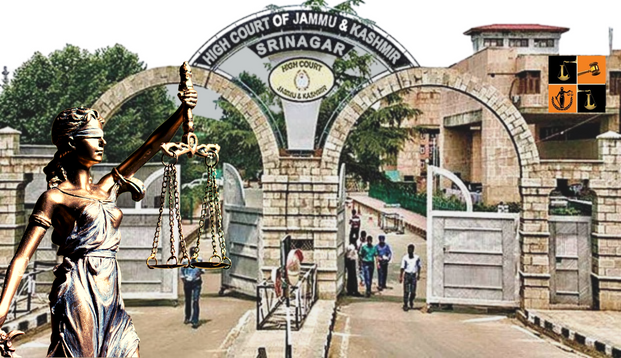
The Jammu & Kashmir and Ladakh High Court noted that except for grounds mentioned in Section 6(2) of the Passport Act, 1967, the request for a Passport cannot be denied on any other grounds.
It was expounded by the High Court that the police verification report cannot override statutory provisions of Section 6 of the Passport Act, 1967. The Passport Officer cannot shut his eyes and act on the report without application of mind.
The Decision of the Appellant authority and Passport Officer was found to be misplaced. Further, the Bench opined that some other facts and circumstances have to be considered along with the report while deciding the issuance of a Passport. The Passport Officer does not have to act as the mouthpiece of the nodal agency.
Brief Facts:
The present writ petition is preferred as the Petitioner was refused issuance of Passport on the ground that Section 6(2)(c) of the Passport Act, 1967 was attracted in her case.
Background of the Case:
It was submitted that Petitioner is a senior citizen who had applied for a fresh passport before Respondent No. 5. A police verification was sought from Respondent No.4 and 6. It was submitted that the police verification report was not submitted for more than 3 months and therefore, Petitioner had to file a representation before Respondent No.6 to forward the police verification report to Respondent No.5 at the earliest.
Later, a writ petition was filed by the Petitioner seeking the issuance of a Passport. Respondents No. 3, 4, and 6 submitted that it was informed that the issuance of a passport to the Petitioner was refused as the same was a “not recommended passport case” by the Nodal Agency J&K CID.
The said writ petition was dismissed and the dismissal order was challenged before the Division Bench which granted the liberty to the Petitioner to approach appropriate authority for availing proper remedy. The concerned authority was also directed to consider the matter on merits and not based on observations made in the writ petition which was dismissed.
Thereafter, an appeal was preferred before Respondent No. 2. However, it was contended by the Petitioner that Respondent No. 2 chose not to decide the appeal because of which Petitioner had to approach the Court through a writ petition. The Court directed Respondent No. 2 to consider and finally dispose of the appeal.
Petitioner then filed a contempt petition against Respondent No. 2 for non-compliance with the order of the Court directing Respondent No. 2 to dispose of the appeal. However, the petition was rejected by the Respondent-Appellate Authority.
Therefore, the present writ petition has been preferred.
Contentions of Respondent No. 1, 2, and 5:
It was submitted that the Petitioner had applied for a re-issue of the Passport. Due to security clearances, the report contained “not recommended for issuance of Passport”. On basis of the said report, the Respondent-Passport Officer issued a refusal order under Section 6(2)(c) of the Passport Act, 1967.
Contentions of Respondent No. 4:
It was contended that Respondent No. 4 should not have been impleaded as a party because CID is an intelligence wing of the Government and plays a limited role to the extent of verifying the character of persons as required by the Passport authorities. When the report is forwarded to the Passport Authority, the role of CID gets completed. Whether to issue or not to issue the Passport is not a decision that falls in the domain of CID. It was argued that the role of CID is only assistive and not decisive in such instances.
Contentions of the Petitioner:
It was contended that in the CID report, there were no allegations against the Petitioner. It was further submitted that Petitioner is 80 years old and there was possibly no security threat in issuing her the passport. It was contended that the right to travel abroad is a part of a person’s liberty as provided under Article 21 of the Constitution of India and the same cannot be denied.
Contentions of the Learned DSGI:
It was contended that the issuance of a Passport is decided based on the police verification report. CID recommendations are significant for the issuance of a Passport. In case of a negative report, a Passport cannot be issued in favour of a person.
Observations of the Court:
It was noted that the police verification report indicated security angles for the passport clearance of Petitioner’s daughter Ms. Mehbooba Mufti only. There was nothing in the report to suggest any security concerns concerning the Petitioner. The only aspect indicated in the report was an investigation conducted by Enforcement Directorate and CID CIK about some transactions in bank accounts maintained by the Petitioner either separately or jointly with her daughter.
The High Court found nothing in the report based on which Passport could be denied to the Petitioner. The Bench opined that the right to travel abroad inheres to the right to life and liberty under Article 21 of the Constitution of India. The right can be curtailed by the Passport Officer and the decision have to be taken strictly in accordance with the Passport Act of 1967.
The Court noted that except for grounds mentioned in Section 6(2) of the Passport Act, 1967, the request for a Passport cannot be denied on any other grounds. In the present case, there was nothing on record to suggest that there are security concerns because of which a Passport cannot be issued in favour of the Petitioner.
It was expounded by the High Court that the police verification report cannot override statutory provisions of Section 6 of the Passport Act, 1967. The Passport Officer cannot shut his eyes and act on the report without application of mind.
The decision of the Appellant authority and Passport Officer was found to be misplaced. Some other facts and circumstances have to be considered along with the report while deciding the issuance of a Passport. The Passport Officer does not have to act as the mouthpiece of the nodal agency.
The decision of the Court:
Based on the abovementioned reasons, the High Court set aside the orders rejecting the issuance of a Passport to the Petitioner and directed the Respondent to consider the matter afresh.
Case Title: Gulshan Nazir v. Union of India
Coram: Hon’ble Mr. Justice M.A. Chowdhary
Case No.: WP(C) 1793/2022
Advocates for Appellant: Advs. Mr. Jehangir Iqbal Ganai, Mr. Muzaffar Nabi Lone
Advocates for Respondents: Mr. T.M. Shamsi (DSGI), Ms. Asifa Padroo (AAG)
Read Judgement @LatestLaws.com
Picture Source :



















