









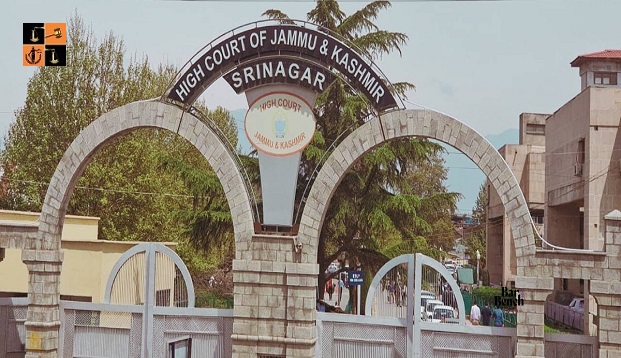
Recently, the Jammu & Kashmir High Court delved into an important question concerning the interplay between special statutes and general limitation laws. The case revolved around an appeal filed under the Payment of Wages Act, 1936, where the employer sought condonation of delay by invoking Section 5 of the Limitation Act. The Court was called upon to decide whether such an extension of time could be granted when the special statute itself prescribes a fixed limitation period without any enabling provision for condonation. In doing so, the Bench examined the self-contained nature of the Payment of Wages Act and the mandatory conditions it imposes for filing an appeal, setting the stage for a significant ruling on the limits of judicial discretion in statutory interpretation.
Brief Facts:
The case arose from an award passed by the authority under the Payment of Wages Act, 1936, in favour of the workman for the delayed payment of wages. Aggrieved by the award, the employer preferred an appeal under Section 17 of the Payment of Wages Act, 1936, accompanied by an application seeking condonation of delay under Section 5 of the Limitation Act, 1963. The Appellate Court not only condoned the delay but also proceeded to allow the appeal on the merits. Challenging this course of action, the workman approached the High Court under Article 226 of the Constitution, seeking to set aside the order of the Appellate Court.
Contentions of the Petitioner:
The petitioner argued that the Appellate Court erred in law by condoning the delay in filing the appeal, as Section 5 of the Limitation Act, 1963 does not apply to proceedings under the Payment of Wages Act, 1936, which prescribes a strict limitation period of thirty days. It was further submitted that the Appellate Authority decided the appeal without calling for or examining the original record and without affording the petitioner an opportunity to be heard on merits, thereby violating the principles of natural justice. The petitioner also pointed out that under Section 17 of the Payment of Wages Act, 1936, an appeal must be filed within thirty days from the date of the order before the competent court, leaving no scope for extension of time.
Observation of the Court:
The Court observed that Section 17 of the Payment of Wages Act, 1936, which lays down the statutory mechanism for filing appeals, prescribes a specific limitation period of thirty days from the date of the order or direction passed under Section 15 of the Payment of Wages Act, 1936. It noted that the provision does not contain any enabling clause empowering the Appellate Court to condone delay beyond this period, nor does it incorporate by reference the provisions of the Limitation Act, 1963. The Court reiterated that when a special statute prescribes a specific period of limitation for filing an appeal or application and does not provide for its extension, the general provisions of the Limitation Act cannot be invoked.
The Court further observed that “the Payment of Wages Act, being a beneficial and self-contained legislation, prescribes not only the manner and mode of appeal but also the conditions precedent for its maintainability, including the mandatory requirement under Section 17(1A) of furnishing a certificate of deposit of the amount payable under the direction appealed against. This requirement is not directory but mandatory in nature, as it seeks to protect the rights of the workman and ensure that the employer does not frustrate the benefit of the award by filing dilatory appeals.”
The Court noted that the respondent had failed to file the mandatory certificate from the Authority certifying the deposit of the awarded amount as required under Section 17 of the Payment of Wages Act, 1936. Despite this, the Appellate Court proceeded to entertain the appeal on the basis of a mere receipt of a cheque issued by the Assistant Labour Commissioner, which, the Court held, could not be equated with the statutory requirement of a certificate of deposit.
The Court further held that the Appellate Court, while allowing the application for condonation of delay, simultaneously decided the main appeal on merits in a single composite order without affording the petitioner an opportunity of being heard. Such a course, the Court remarked, was contrary to the fundamental principles of natural justice. It emphasised that the petitioner was denied a fair opportunity to contest the appeal on merits and that the Appellate Court’s undue haste in deciding both matters together amounted to a gross procedural irregularity.
The decision of the Court:
In light of the above discussion, the Court held that the impugned order was legally unsustainable and accordingly quashed it, declaring the appeal non-maintainable for being time-barred and for non-compliance with the mandatory deposit requirement under Section 17(1A) of the Payment of Wages Act.
Case Title: Barket Ali Vs Divisional Manager SFC Division
Case No.:WP(C) No. 2021/2022
Coram: Hon'ble Justice Wasim Sadiq Nargal
Advocate for the Petitioner: Adv. Hashmi
Advocate for the Respondent: None
Read Judgment @Latestlaws.com
Picture Source : twitter.com



















