









“An arbitrator cannot go beyond the terms of the contract between the parties. In the guise of doing justice he cannot award contrary to the terms of the contract.”
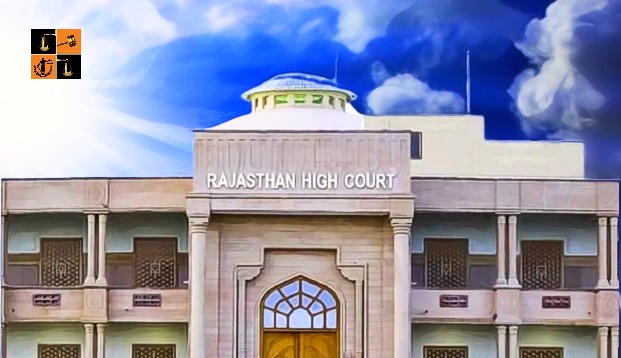
In a pivotal ruling on a long-standing Build-Operate-Transfer (BOT) project dispute, the Rajasthan High Court revisits the delicate balance between arbitral autonomy and judicial oversight. The core question before the Court was whether the arbitrator exceeded his authority by granting reliefs beyond the clear terms of the concession agreement, particularly concerning the commencement of the concession period, toll collection rights, and compensation for non-closure of a railway crossing. Read on to uncover how the Court navigated these complex issues and reshaped the contours of arbitral intervention.
Brief facts:
The case concerns a BOT project for constructing the Pali Bypass awarded to Sanwariya Infrastructure Pvt. Ltd. Disputes arose due to delays in handing over the project land, affecting the commencement and duration of the concession period. Although construction and toll collection began after partial land handover and completion of a Railway Over Bridge, issues persisted regarding the period's start and compensation for delays, including the non-closure of a Level Railway Crossing. Arbitration proceedings culminated in an award favoring the respondent, allowing toll retention and compensation for losses. The State’s challenge to the award was dismissed by the Commercial Court, prompting this appeal before the Rajasthan High Court.
Contentions of the Appellant:
The appellant argued that the claim was time-barred, as the cause of action arose with the delayed land handover. It contended that the arbitrator wrongly fixed the later land handover date as the commencement of the concession period, despite earlier construction, leading to an unwarranted extension of toll collection. The State maintained that the concession agreement did not allow cash reimbursement or compound interest, rendering the award illegal. It also disputed the damages awarded for the non-closure of the Level Railway Crossing, citing lack of obligation or evidence, and challenged the interest granted for delayed toll collection before the eligible period.
Contentions of the Respondent:
The respondent argued that the limitation plea lacked merit, as the delay issue was continuously raised, with the concession period extended and further extensions considered. It maintained that the commencement date required full site handover, and partial possession or early construction did not affect this. Claims on damages and interest violating the agreement were not raised before the arbitrator or under Section 34 of the Arbitration and Conciliation Act, 1996. Citing Construction and Design Services vs. DDA (2015), it asserted that liquidated damages were valid. The non-closure of the Level Railway Crossing (LRC) was admitted by the appellants, and interference under Section 37 of the Arbitration and Conciliation Act, 1996 was unwarranted due to concurrent findings.
Observations of the Court:
The Court meticulously analyzed the arbitration dispute, focusing on the interpretation of the concession agreement and the scope of arbitral awards under the Arbitration and Conciliation Act, 1996.
The Court upheld the arbitrator’s determination that the commencement date was 23.03.2006, when the entire project site was handed over, as per the agreement’s unambiguous clause, “‘Commencement date’ means the date on which the physical possession of the Project site is delivered by GOR to the concessionaire.”
Further, the Court rejected the appellants’ argument that partial handover on 18.10.2004 sufficed, stating, “Acceptance of the argument of the counsel for the appellants that major portion of the land was handed over on 18.10.2004 and construction was started on the same day would amount to adding words to the definitions quoted above and this is not permissible.”
The Court noted that the respondent’s grievances were consistently raised, negating the limitation plea, as “the arbitral proceedings commenced from the date the respondent received request for resolution of dispute through arbitration.”
However, the Court found the arbitrator’s award of Rs.14,12,54,682 for losses due to non-closure of the LRC and related interest to be patently illegal. It observed, “No clause in the concession agreement is shown under which for non compliance of obligation as per concession agreement, compensation in cash can be claimed.”
The Court emphasized that in a BOT contract, compensation typically involves extending the concession period, which had already been done, allowing toll collection for over 65 months.
Citing State of Rajasthan vs. Nav Bharat Construction Co. (2006), the Court held, “An arbitrator cannot go beyond the terms of the contract between the parties. In the guise of doing justice he cannot award contrary to the terms of the contract. If he does so he will have misconducted himself. Of course if an interpretation of a term of the contract is involved then the interpretation of the arbitrator must be accepted unless it is one which could not be reasonably possible. However where the term of the contract is clear and unambiguous the arbitrator cannot ignore it.”
Similarly, the Court relied upon Delhi Metro Rail Corporation Ltd. vs. Delhi Airport Metro Express Pvt. Ltd. to stressed that an award is perverse if it adopts an implausible view or ignores contract terms.
The Court also addressed severability, referencing Gayatri Balasamy vs. M/s. ISG Novasoft Technologies Limited, stating, “The court u/s 34 of the Act of 1996 and in appeal u/s 37 has power to sever part of award,” as the claims for toll retention and damages were distinct and separable.
The decision of the Court:
In the light of the foregoing discussion, the High Court partly allowed the appeal. The arbitral proceedings were held to be within limitation, and the award permitting the respondent to retain toll collected until 22.01.2012 was upheld. However, the award of compensation for losses due to non-closure of the LRC, interest for delayed toll collection, and subsequent compound interest were set aside as they violated the terms of the concession agreement, being deemed patently illegal.
Case Title: The State of Rajasthan, through District Collector Pali and Ors. Vs. Sanwariya Infrastructure Private Limited
Case No.: D.B. Civil Miscellaneous Appeal No. 5302/2024
Coram: Justice Bhuwan Goyal, Justice Avneesh Jhingan
Counsel for Appellant: AAG Sandeep Taneja, Adv. Kartikeya Sharma, Adv. Kinjal Surana, Adv. Aman Bohra, Adv. Aditya Sharma
Counsel for Respondent: Sr. Adv. R.N. Mathur, Adv. Divyesh Maheshwari and Adv. Yuvraj Mittal
Read Judgment @Latestlaws.com
Picture Source :



















