









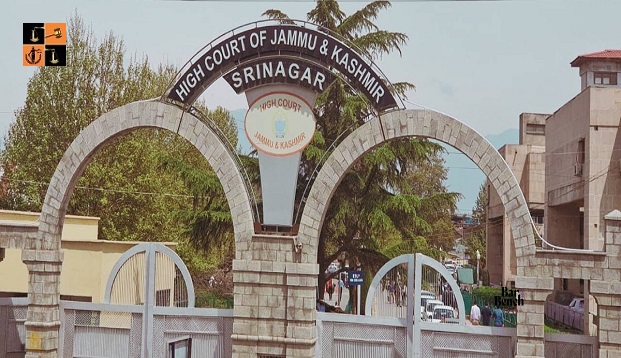
Recently, the Jammu & Kashmir and Ladakh High Court held that a borrower’s statutory right of redemption under the SARFAESI framework stands extinguished upon valid publication of the sale notice and does not survive until completion of the sale. The Court emphasised that the 2016 amendment has decisively curtailed redemption rights, leaving no scope for belated challenges once statutory compliance is met.
Brief facts:
The case arose from recovery proceedings initiated by a secured creditor under the Securitisation and Reconstruction of Financial Assets and Enforcement of Security Interest Act, 2002 (SARFAESI), after the borrower defaulted on a substantial cash credit facility secured by hypothecation, mortgage of immovable property, and third-party guarantees. Following persistent non-payment, the loan account was classified as a non-performing asset, leading to the issuance of a demand notice under Section 13(2) and a subsequent possession notice under Section 13(4) read with Rule 8 of the Security Interest (Enforcement) Rules, 2002. The secured assets were thereafter put to e-auction through multiple sale notices, culminating in confirmation of sale and issuance of a registered sale certificate in favour of the successful bidder. Only after the sale process was completed did the borrower invoke the writ jurisdiction of the High Court, challenging the auction primarily on the ground of denial of the statutory 30-day redemption period contemplated under Section 13(8) read with Rules 8 and 9 of the 2002 Rules
Contentions of the Petitioner:
The Petitioner argued that the entire recovery process was vitiated due to non-compliance with the mandatory redemption window. Relying heavily on Mathew Varghese v. M. Amritha Kumar and Ors., it was contended that the borrower must be afforded a full 30-day period prior to sale to tender dues, failing which any auction would be illegal. It was asserted that insufficient notice deprived the petitioner of a meaningful opportunity to redeem the mortgaged property, rendering the subsequent sale unsustainable in law.
Contentions of the Respondent:
The Bank resisted the challenge by contending that the legal position post the 2016 amendment to Section 13(8) of the SARFAESI Act stood conclusively settled by the Supreme Court in M. Rajendran and Ors. v. KPK Oils and Proteins Pvt. Ltd. and Ors. The Respondent argued that the borrower’s right of redemption is extinguished on valid publication of the sale notice and not upon completion of the sale, and that, on the facts, the petitioner had far more than the minimum statutory period to clear the dues but failed to do so despite repeated opportunities.
Observation of the Court:
The Court observed that the legal position governing a borrower’s right of redemption must be examined strictly in light of the amended Section 13(8) of the SARFAESI Act, noting that the 2016 amendment brought about a “radical change” in the statutory scheme. Relying on the Supreme Court’s authoritative interpretation, the Bench recorded that “the right of the borrower to redeem the secured asset stands extinguished… on the very date of publication of the notice for public auction issued under Rule 9(1) of the Rules of 2002.” The Court made it clear that redemption is no longer available till the completion of sale or issuance of a sale certificate.
The Court held that the expression “publication” under Section 13(8) of the SARFAESI Act carries a wide and composite meaning and is not confined to newspaper advertisements alone. Quoting the Supreme Court, the Bench reiterated that “the word ‘publication’ used in Section 13(8) of the SARFAESI Act has to be understood to mean and include the service, publication in newspaper, and the affixation and uploading of the ‘notice of sale’, as may be required under the SARFAESI Rules.” It further emphasised that all these modes collectively constitute a single composite notice of sale.
The Court noted that the statutory requirement of a 30-day period under Rule 9(1) is satisfied once the secured creditor complies with the applicable modes of notice, and the expiry of that period marks the extinguishment of the borrower’s redemption right. In this context, the Bench observed that “the expiry of thirty-days as required under Rule 9(1)… would be the date on which the secured creditor is said to have validly published the ‘notice of sale’ and it would be this date on which the right of redemption of the borrower would stand extinguished.”
The Court rejected the petitioner’s reliance on Mathew Varghese, holding that the said judgment operated in the pre-amendment regime when redemption rights were aligned with Section 60 of the Transfer of Property Act. The Bench clarified that “the position however underwent a change after the 2016 Amendment,” and under the amended law, the borrower’s right of redemption is “substantially curtailed” and cannot be stretched beyond the date of valid publication of the sale notice.
The Court concluded that on facts, the borrower had been afforded more than the minimum statutory opportunity to clear the dues and redeem the secured asset. Recording a categorical finding, the Bench held that “it cannot by any stretch of reasoning be said that the petitioner was deprived of an opportunity of 30 days to deposit the dues,” particularly when the borrower had over three months to comply but failed to do so.
The decision of the Court:
In light of the foregoing discussion, the Court dismissed the writ petition, upholding the recovery action and auction sale, and held that under the amended SARFAESI framework, the borrower’s right of redemption is extinguished upon valid publication of the sale notice, provided statutory notice requirements are met, the ratio decisively reaffirming creditor certainty and limiting dilatory challenges after compliance
Case Title: Nazir Ahmad Bhat v. Chairman and Managing Director, J&K Bank & Ors.
Case No.: WP (C) No. 654/2024
Coram: Hon’ble Mr. Justice Sanjeev Kumar and Hon’ble Mr. Justice Sanjay Parihar
Advocate for the Petitioner: Adv. Tariq M. Shah, Zahid Ahmad
Advocate for the Respondent: Adv. Insha Rashid, Taniya
Read Judgment@ Latestlaws.com
Picture Source : twitter.com



















