









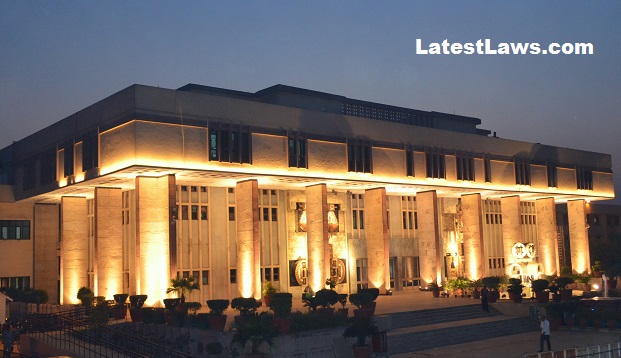
On 5th October, a bench of Delhi High Court consisting of Justice Subramoniam Prasad held that the Courts should adopt the rule of purposive interpretation while construing the provisions in social legislation and that the same must be done in a manner which advances the purpose for which the legislation was enacted. Therefore, the legislative intent, i.e. the purport and object of the Act, must be read in its entirety in order to ensure that the interpretation of the Court does not further the mischief that was sought to be curbed by the legislature in the first place.
Facts of the case:
This Application under Section 482 Cr.P.C. has been filed for seeking the review of the Order of this Hon’ble Court dated 14.06.2021 in Criminal Revision Petition 549/2021 wherein this Court had granted a sum of Rs. 15,000/- per month as interim maintenance to the revisionist/Petitioner No.1 till the Petitioner No. 2 completes his graduation or starts earning, whichever is earlier.
Contention of the respondent:
Mr. Digvijay Rai, Counsel for the Respondent, has put forth four grounds for recalling the Order:
- The learned Counsel for the Respondent has submitted that the impugned Judgement fails to deal with Amarendra Kumar Paul v. Maya Paul & Ors., wherein the Supreme Court had held that according to Section 125 of the Cr.P.C., an application for grant of maintenance is maintainable so far as the concerned children have not attained majority.
- It had been submitted by Mr. Rai that this Hon’ble Court has proceeded on the ground that the Petitioner No. 1 is an Upper Division Clerk in MCD earning Rs. 60,000/- per month, whereas in actuality she is an Assistant Section Officer (Gazetted) and her Gross Salary for the month of January 2020 was Rs.71,328/-.
- The learned Counsel for the Respondent has stated that impugned Judgement, granting a sum of Rs. 15,000/- per month as interim maintenance to Petitioner No. 1 for Petitioner No. 2 from the date of attaining majority till he completes his graduation or starts earning, whichever is earlier, is outside the scope of this Hon’ble Court as it could not have it have extended it for a period beyond the final adjudication of the case by the Trial Court.
- It has been submitted by Mr. Rai that this Hon’ble Court has erred in proceeding with the matter on the basis that Petitioner No. 1 has been denied maintenance whereas the case was that Petitioner No. 1 had only been denied maintenance at interim stage.
Observation and judgment of the court:
The following observation has been made by the hon’ble bench of the court:
- a closer look at Section 125 Cr.P.C. itself indicated that the Court after passing judgment or final order in the proceedings under Section 125 Cr.P.C. did not become functus officio, and that the Section itself contains express provisions wherein an Order passed under Section 125 Cr.P.C. could be cancelled or altered, and that this was noticeable from Sections 125(1), 125(5) and 127 Cr.P.C.
- Section 125 Cr.P.C. is a tool for social justice enacted to ensure that women and children are protected from a life of potential vagrancy and destitution. The statutory provision entails that if the husband has sufficient means, he is obligated to maintain his wife and children, and not shirk away from his moral and familial responsibilities.
- A father has an equal duty to provide for his children and there cannot be a situation wherein it is only the mother who has to bear the burden of expenses for raising and educating the children.
In the light of the above, it was held that the Court has erred in proceeding on the basis that maintenance has not been granted to Petitioner No.1 and that educational expenses are being footed by the employer of Petitioner No.1 cannot be taken into consideration as the duty of the Respondent to bear the responsibilities to raise his children and educate them cannot be extinguished at the end of the day.
Read Judgment @Latestlaws.com
Picture Source :



















