









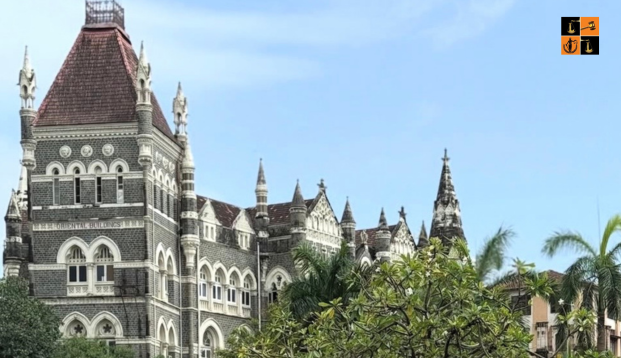
Recently, the Bombay High Court held that failure to examine forensic experts whose reports are relied upon during trial can vitiate the entire proceedings, emphasising that courts must ensure crucial scientific witnesses are examined to ascertain the truth. The Court observed that reliance on forensic reports without examining their authors deprives the accused of a fair opportunity of cross-examination and amounts to a failure of justice.
Brief Facts:
The case arose from the prosecution concerning the sexual assault and murder of a minor child, following which the accused were tried before a Sessions Court for offences under Sections 363, 302, 376(2), 376A, 376AB and 201 of the Indian Penal Code, along with Sections 4 and 6 of the Protection of Children from Sexual Offences Act, 2012. The trial court convicted the principal accused and imposed the death penalty for certain offences, while another accused was convicted under Section 201 IPC and Section 21 of the POCSO Act and sentenced to imprisonment. The conviction was primarily based on circumstantial evidence, including the “last seen” theory and forensic material such as chemical analysis and DNA reports. The matter came before the High Court through a death sentence confirmation case, along with criminal appeals, wherein the accused challenged the legality of the trial proceedings.
Contentions of the Appellant:
The Appellant argued that the trial stood vitiated because the Sessions Court relied heavily on multiple chemical analysis and DNA reports that were introduced during the evidence of the investigating officer without summoning the forensic experts who prepared them. The Counsel submitted that these reports were directly marked as exhibits without giving the defence an opportunity to cross-examine the authors of the reports. The defence further contended that the accused were only confronted with the existence of these reports during their Section 313 CrPC statements, without being informed of their contents or implications. The Appellant argued that failure to examine scientific experts whose reports form the basis of conviction violates the principles of fair trial and necessitates setting aside the conviction and remanding the matter for proper examination of such witnesses.
Contentions of the Respondent:
The State acknowledged that the forensic experts who prepared the chemical analysis and DNA reports were not examined during the trial. However, it was submitted that the accused had not raised any objection at the trial stage regarding non-examination of such witnesses. Nevertheless, the prosecution fairly conceded that the legal position laid down by the Supreme Court required that scientific experts should ordinarily be examined where their reports constitute crucial incriminating evidence. Accordingly, the State left it to the Court to pass appropriate orders in light of the governing precedents while also emphasising the gravity of the crime.
Observation of the Court:
The Division Bench of Justice Shreeram V. Shirsat and Justice Manish Pitale, found that the Sessions Court had indeed relied extensively on the chemical analysis and DNA reports while arriving at its conclusions against the accused. The High Court noted that the trial court committed a fundamental error by admitting these reports directly into evidence merely because the defence had not requested the examination of the experts.
The Court observed that such an approach runs contrary to established principles of criminal jurisprudence, particularly where scientific evidence forms a critical component of the prosecution’s case. Referring to the Supreme Court’s ruling in Irfan alias Bhayu Mevati v. State of Madhya Pradesh, the Bench reiterated that failure to examine the scientific experts responsible for forensic reports deprives the accused of the opportunity to challenge the evidence through cross-examination.
The Court held that “…the Sessions Court committed a grave error… that since the accused did not move any requisition for examining the chemical analysers… the reports… were being directly admitted in evidence without examining the chemical analysers.”
The Bench further observed that forensic experts must be examined as court witnesses if their reports are relied upon, even where the prosecution fails to summon them. It stated that the very purpose of criminal proceedings is to discover the truth, and courts must take every necessary step toward that goal.
The Court noted that “The whole purpose of the trial is to ascertain the truth of the matter and all steps in the direction of unearthing the truth ought to be taken by the Court.”
Accordingly, the High Court concluded that reliance on forensic reports without examining their authors amounted to a procedural irregularity serious enough to vitiate the trial.
The decision of the Court:
In light of the foregoing discussion, the Court set aside the judgment and order of conviction passed by the Sessions Court and remanded the matter for the limited purpose of summoning and examining the concerned forensic experts, permitting the accused to cross-examine them. The Court also directed that the statements of the accused be recorded afresh under Section 313 of the Code of Criminal Procedure, with separate questioning for each accused, after the additional evidence is recorded.
Case Title: State of Maharashtra vs. Tejas @ Dada Mahipati Dalvi, presently in Yerwada Central Prison, Pune & Abnr.
Case No.: Confirmation Case No.3 Of 2024
Coram: Hon'ble Juctice Manish Pitale, Hon'ble Justice Shreeram V. Shirsat
Advocate for the Petitioner: APP Shrikant V. Gavand, A
Advocate for the Respondent: Adv. Rebecca Gonsalvez, Adv. Sahana Manjesh
Read Judgment @Latestlaws.com
Picture Source :




















