









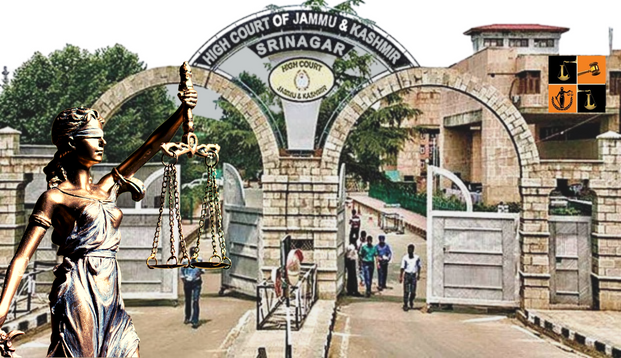
The Jammu & Kashmir and Ladakh High Court while upholding the constitutionality of the order passed by the Government of J&K vide which Rehbar-E-Taleem (“ReT”) Scheme was formally closed, expounded that an executive order unlike legislative enactment can neither be retrospective nor can it interfere with the vested or accrued rights of the persons affected. The present order issued by the Government does not affect any such rights and hence, cannot be said to be illegal. It was held that executive actions cannot be made applicable with retrospective effect, in the absence of any legislative mandate. Such powers only rest with the Legislature.
Brief Facts:
An order was passed by the Government of J&K to formally close ReT Scheme, against which the present petitions have been preferred and have been clubbed together.
Brief Background:
ReT scheme was promulgated by the Government of J&K to put in place a decentralized system of management and effective elementary education at the grass root level through community participation. The scheme provided for a teaching guide to be named ReT who was to be appointed by the village-level community. The eligibility for this post was a minimum qualification of 10+2 and one must belong to the village where there is a deficiency of staff.
Many candidates were selected for the position of ReT and were regularized as General Line Teachers. Many writ petitions started to come up concerning the scheme. Many challenged the appointment procedure and eligibility criteria as provided under the scheme. Hence, the Government decided to close the scheme. The order closing down the scheme is prospective and hence, would not take away the vested and accrued rights under the scheme.
Contentions of the Government:
It was submitted that a centrally sponsored scheme i.e., Sarva Shiksha Abhiyan was introduced to provide for teaching staff where there was a deficiency. Further, when the goal was accomplished, it was decided to close down the ReT Scheme.
It was also asserted that while achieving the goals as envisioned under the Scheme, it was found that merit was being compromised as the consideration zone was restricted to village/habitation. Therefore, the standard of education was affected.
Observations of the Court:
It was observed that since the objective of the scheme was fulfilled in 2003, there was no reason to extend the scheme beyond that. Further, the zone of selection of ReTs being restricted to the village resulted in a compromise with the merit and standard of education, which was realized by the Government. Moreover, the order issued is prospective and it has been specifically clarified that the candidates already appointed under the scheme shall not be disturbed.
Concerning the cancellation/withdrawal of all existing panels, the Bench noted that the mere placement of a candidate in the panel tentative/final does not grant the right to be selected and appointed. Therefore, there was no error in the order issued by the Government.
The High Court expounded that the executive order did not contain any promise regarding the continuation of the scheme at all times, and hence, it cannot be said that the candidate entertained a legitimate expectation. The government that issued the scheme can also withdraw it.
It was propounded that an executive order unlike legislative enactment can neither be retrospective nor can it interfere with the vested or accrued rights of the persons affected. The present order issued by the Government does not affect any such rights and hence, cannot be said to be illegal. It was held that executive actions cannot be made applicable with retrospective effect, in the absence of any legislative mandate. Such powers only rest with the Legislature.
Further, the Bench clarified the meaning of vested or accrued right. It was opined that for a right to be accrued or vested, it is imperative that the right holder can exercise the right at the time of its repealing away. A distinction was made between accrued or vested right and accruing rights. While in the case of the former, the right holder can exercise the right at the time of legislative change, the latter is when the ability to exercise the rights will arise in the future. It was ruled that the presumption of legislative intent is only for accrued or vested rights and not accruing rights.
In the present case, it was observed that the order of the Government was prospective in nature and did not take away any accrued or vested rights.
The Bench further ruled that the Executive is under an obligation to obey the judicial orders, unlike the Legislature which in certain circumstances may nullify a judicial or executive decision by enacting legislation. However, the Executive cannot be made to review, revise or sit over the decisions of the Judiciary as it is would be equivalent to interfering with the Judiciary. It was expounded that executive overrides are not permissible in law.
The decision of the Court:
Based on the aforementioned reasons, the J&K and Ladakh High Court upheld the constitutionality of the order issued by the Government and accordingly clarified the consequence of the same.
Case Title: Ruksana Jabeen v. State of JK & Ors. with other connected matters
Coram: Hon’ble Mr. Justice Sanjeev Kumar, Hon’ble Ms. Justice Moksha Khajuria Kazmi
Case No: SWP No. 3004/2018 with other connected matters
Advocates for Petitioner: Advs. Mr. Q.R. Shamus, Mr. M.A. Wani, Mr. Sheikh Manzoor, Mr. M.Y. Bhat, Mr. Furqan Yaqub, Mr. Jahangir Iqbal Ganai, Mr. Murfat Naseem, Mr. Aftab Ahmad, Mr. Mian Tufail, Mr. Arif Sikander, Mr.Bhat Fayaz Ahmad, Mr. Lone Altaf, Mr. Mir Majid Bashir, Mr. Saqib Amin Parray, Mr. Gulzar Ahmad Bhat, Mr. Aamir Latoo, Mr. S.N. Ratanpuri
Advocates for Respondent: Advs. Mr. Sheikh Mushtaq
Read Judgement @LatestLaws.com
Picture Source :



















