









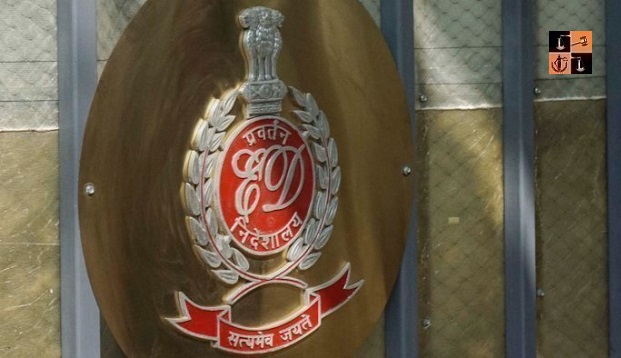
The Delhi High Court issued a significant ruling on Thursday, clarifying the powers of the Enforcement Directorate (ED) under the Prevention of Money Laundering Act (PMLA). The court emphasized that the ED's authority to issue summons under Section 50 of the PMLA does not include the power to arrest individuals and that these two actions are separate and distinct.
In a ruling delivered by Justice Anup Jairam Bhambhani, the court noted that Section 50 of the PMLA empowers ED officers to summon individuals to appear and record statements on oath. This section also grants them the authority to compel the discovery, inspection, and production of documents and records and to impound and retain records with written reasons. However, it was emphasized that the power to arrest is conspicuously absent in Section 50.
Section 19 of the PMLA, on the other hand, provides designated ED officers with the power to arrest individuals, but it does not naturally arise as a consequence of summons issued under Section 50. The court made it clear that the exercise of these powers cannot be restricted based on the apprehension that one action might lead to the other, as doing so would be contrary to the statutory scheme.
Brief Facts:
The case before the Delhi High Court involved Ashish Mittal, who had been issued summons by the Enforcement Directorate (ED) to appear before them on August 21, 2023. These summons were issued under Section 50 of the Prevention of Money Laundering Act (PMLA). Mr. Mittal expressed strong apprehensions that if he complied with the summons, he might be subject to illegal detention or arrest by the ED. He also raised concerns about being made a scapegoat to protect the interests of the primary promoters or beneficiaries of a company.
Mr. Mittal, however, was not named as an accused in the ongoing PMLA proceeding, and he sought the quashing of the Enforcement Case Information Report (ECIR) related to the Educomp case. His plea included a request for a court order restraining the ED from taking any coercive steps against him that might curtail his liberty. These facts prompted the court to consider the contentions of the parties involved.
Contentions of the Parties:
Mr. Mittal contended that he had been issued summons by the ED under Section 50 of the PMLA, which required him to appear before them for recording statements on oath and producing documents. He expressed a strong apprehension that if he complied with the summons, he might be illegally detained or arrested by the ED. He argued that he might be made a scapegoat to protect the interests of the main promoters and alleged main beneficiaries of the company under investigation. Mr. Mittal sought the quashing of the ECIR and requested that the ED be restrained from taking coercive steps against him that could curtail his liberty.
The ED's primary contention was not explicitly stated in the available information. However, it can be inferred that the ED issued the summons to Mr. Mittal under Section 50 of the PMLA as part of their investigation into the Educomp case.
Observations by the Court:
The court highlighted that a person who anticipates being arrested by the ED can file for anticipatory bail, even if they are not named as an accused in the agency's Enforcement Case Information Report (ECIR) or the prosecution complaint. This ruling aligns with the Supreme Court's verdict in V Senthil Balaji v State, which emphasized the importance of compliance with PMLA provisions related to arrests.
The court noted that Mittal was not an accused in the PMLA proceedings and thus found no basis to support his apprehension of facing coercive measures by the ED.
Case Name: ASHISH MITTAL vs DIRECTORATE OF ENFORCEMENT & ANR
Coram: Justice Anup Jairam Bhambhani
Case No.: W.P.(CRL) 2416/2023
Advocates of the Petitioners: Mr. Mohit Mathur, Senior Advocate with Mr. Shikhar Sharma, Mr. Mayank Sharma and Mr. Harsh Gautam, Advocates.
Advocates of the Respondent: Mr. Anupam S. Sharma, Special Counsel with Mr. Prakarsh Airan, Ms. Harpreet Kalsi, Mr. Ripudaman Sharma, Mr. Abhishek Batra and Mr. Vashisht Rao, Advocates for Respondents/ED.
Read Judgment @LatestLaws.com:
Share this Document :Picture Source :




















