









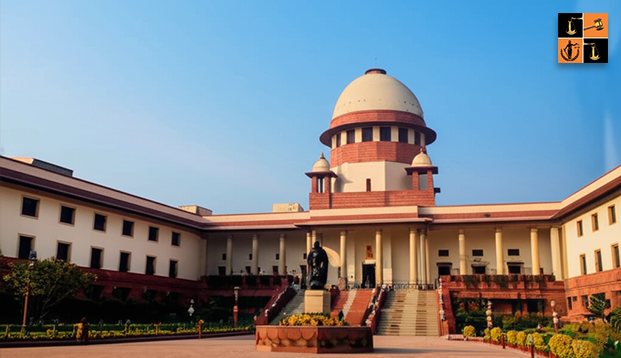
Recently, the Supreme Court dissolved a marriage that had existed only on paper for over two decades, holding that a long period of separation with no possibility of reconciliation amounts to cruelty and justifies divorce. Exercising its extraordinary powers under Article 142 of the Constitution, the Court emphasised a stark reality of matrimonial litigation, observing that “there is no sanctity left in the marriage and rapprochement is not in the realm of possibility”.
Brief facts:
The case stemmed from a marriage between two colleagues employed with the Life Insurance Corporation of India, solemnised according to Hindu rites in Shillong. Matrimonial discord surfaced soon after, resulting in the spouses living separately. The husband initially sought dissolution of marriage under Section 13(1)(i-b) of the Hindu Marriage Act, 1955, (HMA), alleging desertion, but the attempt failed at an early stage. After withdrawing his earlier challenge, he instituted fresh divorce proceedings, invoking Section 13(1)(i-a) and Section 13(1)(i-b) of the HMA, alleging cruelty and desertion. The trial court granted a decree of divorce, however, the High Court set aside the decree, holding that desertion was not established and that the wife had reasonable cause to live separately. Aggrieved by the High Court’s reversal, the husband approached the Apex Court, bringing the long-standing matrimonial dispute to final adjudication.
Contentions of the Appellant:
The Appellant argued that the parties had been living apart for several years, with no interaction despite working in the same LIC office, clearly demonstrating an irretrievable breakdown of the marriage. It was contended that the wife had admitted to receiving repeated communications requesting her to return to the matrimonial home, yet she neither responded nor made any attempt to resume cohabitation. According to the Appellant, the essential elements of desertion, namely, the factum of separation and the intention to permanently bring cohabitation to an end, stood fully established, and the trial court had therefore rightly granted a decree of divorce.
Contentions of the Respondent:
The Respondent submitted that she had not deserted the marriage, but was compelled to leave the matrimonial home due to persistent harassment and sustained pressure to resign from her employment, despite bearing financial responsibilities towards her family. The communications relied upon by the appellant were characterised as a mere “eye-wash,” lacking any genuine or sincere attempt at reconciliation. It was further contended that the Appellant’s undue haste in initiating divorce proceedings reflected a clear lack of intent to preserve the marital relationship.
Observation of the Court:
The Court recorded while, noting that matrimonial litigation had commenced within two years of marriage and had continued for over twenty-two years, that the Court recorded that the parties had been living separately for twenty-four years, with no children from the wedlock and no meaningful attempt at reconciliation after failed mediation in 2012. Against this backdrop, the Bench made a categorical finding that “long period of separation without any hope for reconciliation amounts to cruelty to both the parties.”
Further, the Court emphasised that where spouses have strongly held views and have refused to accommodate each other for a long period of time, their conduct itself constitutes cruelty. Importantly, the Court clarified that in such cases, it is not the role of courts or society to decide whose approach to matrimonial life is correct, holding that “it is their strongly held views and their refusal to accommodate each other that amounts to cruelty to one another.”
The Court observed, while referring to the case Naveen Kohli v. Neelu Kohli that “an unworkable marriage, which has ceased to be effective, is futile and bound to be a source of great misery to the parties. It was further observed that where there has been a long period of continuous separation, it can fairly be surmised that the matrimonial bond is beyond repair and in such cases, it would be unrealistic for the law not to take notice of that fact, and it would be harmful to society and injurious to the interests of parties.”
The Bench further reiterated that “no spouse can be compelled to resume life with a consort, and as such, nothing is gained by keeping the parties tied forever to a marriage which has, in fact, ceased to exist.” It further noted that in cases where the marriage is “wrecked beyond the hope of salvage,” public interest lies in recognising the breakdown rather than perpetuating suffering through endless litigation.
The Court held that where a marriage has irretrievably broken down due to prolonged separation, a sustained refusal to cohabit, and the absence of any realistic possibility of reconciliation, continuation of the marital tie serves no meaningful purpose. In such exceptional circumstances, the Court clarified, it may dissolve the marriage to do “complete justice,” even if the statutory grounds for divorce remain contested.
The decision of the Court:
In light of the foregoing discussion, the Court allowed the appeal, set aside the judgment of the High Court, and restored the decree of divorce granted by the trial court by exercising its powers under Article 142 of the Constitution.
Case Title: Nayan Bhowmick Vs. Aparna Chakraborty
Case No.: Civil Appeal No. 5167 of 2012
Coram: Hon’ble Justice Manmohan and Hon’ble Justice Joymalya Bagchi
Advocate for the Appellant: AOR Arvind Kumar Gupta
Advocate for the Respondent: AOR Chandra Bhushan Prasad, Advs. Bikas Kar Gupta, Azim H. Laskar, Nilkamal Chaubey,
Read Judgment @Latestlaws.com
Picture Source :




















