









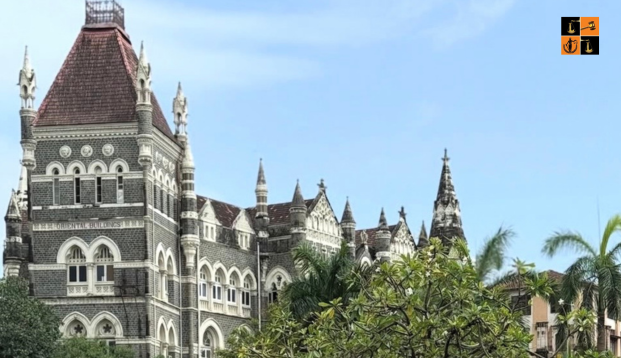
Recently, the Bombay High Court quashed a CBI FIR alleging cheating and corruption against GTL Infrastructure Limited, holding that criminal proceedings cannot be sustained where no offence is disclosed and the investigation itself rests on speculation. The Bench also cautioned against investigative overreach, observing that the criminal justice machinery “cannot be put in motion for making a roving inquiry.”
Brief facts:
The case arose from an FIR registered by the Central Bureau of Investigation (CBI) alleging offences under Section 120-B and Section 420 of the Indian Penal Code, along with Section 13(2) read with Section 13(1)(d) of the Prevention of Corruption Act, 1988, against a telecom infrastructure company, unknown public servants, and other unidentified persons.
The allegations stemmed from a Preliminary Enquiry into alleged financial irregularities in credit facilities obtained from a consortium of banks and financial institutions. According to the agency, the loans were restructured under the Corporate Debt Restructuring (CDR) framework and later through Strategic Debt Restructuring (SDR), converting part of the debt into equity.
It was further alleged that loan funds were routed through vendors and subsequently written off, resulting in losses when the outstanding debt was assigned to an Asset Reconstruction Company (ARC) at a reduced valuation. Contending that the allegations were based on assumptions and that the restructuring decisions were commercial decisions of the lenders, the company approached the High Court seeking the quashing of the FIR.
Contentions of the Petitioner:
The Petitioner contended that the FIR was based on assumptions and lacked evidentiary support. It was submitted that an independent forensic audit, along with reports of statutory and internal auditors, found no diversion of funds or abnormal transactions, confirming the legitimacy of the company’s financial dealings.
It was further argued that the alleged loss to banks arose from commercial decisions of the lending consortium, including assignment of debt to an Asset Reconstruction Company (ARC), in which the company had no role. The Petitioner also submitted that no public servant involved in the alleged conspiracy had been identified, attracting the statutory bar under Section 17A of the Prevention of Corruption Act.
Additionally, it was contended that the company had repaid amounts exceeding the original borrowing, with several lenders accepting settlements under One Time Settlement (OTS) schemes, demonstrating that the dispute was purely commercial and did not disclose offences such as cheating or conspiracy.
Contentions of the Respondent:
The Respondent submitted that the FIR was justified as the Preliminary Enquiry had revealed potential economic offences impacting the financial interests of the banking sector. It was contended that substantial loan advances were routed through vendor entities and later written off, resulting in alleged wrongful loss to public sector banks.
It was further submitted that the investigation was still in progress, during which statements of certain individuals, including directors of vendor companies and auditors, had been recorded. According to the Respondent, the FIR was necessary to enable a comprehensive investigation and identification of the persons involved in the alleged wrongdoing.
Observation of the Court:
The Division Bench of Chief Justice Shree Chandrashekhar and Justice Gautam A. Ankhad noted that despite conducting an enquiry for nearly two years, the CBI had failed to identify even a single accused involved in the alleged conspiracy. This absence of identifiable wrongdoing raised serious doubts about the legitimacy of the FIR.
The Bench stressed that a preliminary enquiry is intended to determine whether sufficient material exists to justify criminal prosecution. Yet, in this case, the FIR was registered against “unknown public servants and unknown others”, with no concrete evidence indicating collusion, fraud, or dishonest intent. The Court therefore concluded that the FIR appeared to have been lodged merely to facilitate a fishing expedition.
The Court also examined the Forensic Audit Report, which stated that review of statutory auditor reports, internal audit reports, and other independent assessments did not reveal any abnormal transactions or diversion of funds in the borrower’s accounts.
Highlighting the importance of distinguishing commercial decisions from criminal conduct, the Court observed that restructuring and assignment of debt by the banking consortium were business decisions taken after due deliberation and regulatory oversight. In such circumstances, the investigating agency could not substitute its own judgment for the commercial wisdom of lenders.
The Court stated that “The machinery of criminal justice system cannot be put in motion for making a roving inquiry. The CBI cannot be permitted to continue with the investigation in this matter in a hope that some day it may identify the offender where no offence is disclosed.”
The Bench also reiterated, while referring to Supreme Court precedents, including Hridaya Ranjan Prasad Verma and Ors. v. State of Bihar and Anr., that mere breach of contract or commercial failure cannot constitute the offence of cheating unless fraudulent intention existed at the inception of the transaction.
The decision of the Court:
In light of the foregoing discussion, the High Court held that the allegations in the FIR failed to disclose the commission of any cognizable offence and that the investigation appeared to be founded on mere speculation. The Court observed that permitting the criminal proceedings to continue in such circumstances would amount to an abuse of the process of law. Consequently, the Court quashed the FIR registered by the Central Bureau of Investigation and allowed the writ petition filed by the petitioner company.
Case Title: GTL Infrastructure Limited Vs. Central Bureau of Investigation & Anr.
Case No.: Writ Petition No. 3632 of 2024
Coram: Hon’ble Justice Mr. Shree Chandrashekhar, CJ., Hon’ble Justice Mr. Gautam A. Ankhad,
Advocate for the Petitioner: Sr. Adv. D. P. Singh, Adv. Sajal Yadav, Adv. Sonam Gupta, Adv. Apoorva Agrawal, Adv. Prasad Lotlikar, Adv. Essaji Vahanvati, Adv. Aparna Kulkarni, Adv. Suyash Gadre, Adv. Abhishek Thote i/b. Adv. Harsh Ghangurde,
Advocate for the Respondent: Adv. Kuldeep Patil, Adv. Sumitkumar Nimbalkar, Adv. Sanika Joshi, Adv. Anay S. Joshi, Adv. Saili Dhuru, Adv. M. M. Deshmukh, APP. S. V. Gavand,
Read Judgment @Latestlaws.com
Picture Source :




















