









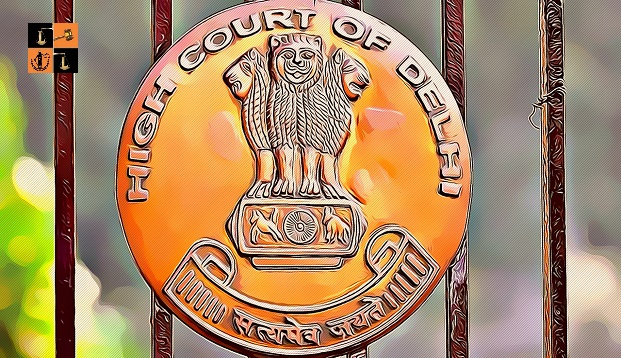
The Delhi High Court has noted that the accuracy of information furnished under the Right to Information Act, 2005, or any conflicting dispute, cannot be determined through proceedings under the said legislation. The judgment by a division bench comprising Acting Chief Justice Manmohan and Justice Mini Pushkarna dismissed an appeal challenging the dismissal of a writ petition and emphasized the limited scope of RTI proceedings.
Brief Facts:
The legal dispute in question unfolded when Mr. Narendra Tyagi approached the Delhi High Court seeking redressal under the Right to Information Act, 2005 (RTI Act). Tyagi, the appellant, had submitted an RTI application to the National Book Trust, seeking access to his service record. He alleged that the Central Public Information Officer (CPIO) had deliberately provided incomplete and inaccurate information. Dissatisfied with the response, Tyagi initiated legal proceedings, leading to a writ petition that was subsequently dismissed by the Central Information Commission (CIC).
Contentions of the Parties:
Mr. Narendra Tyagi, the appellant, contended that the information supplied by the CPIO regarding his service record was both incomplete and incorrect. He asserted that the CPIO had erroneously stated that he commenced employment at the National Book Trust from December 15, 2008, whereas, in reality, Tyagi had been working there since 2001. The crux of Tyagi's argument rested on the alleged deliberate misinformation provided by the CPIO.
In response, the Central Public Information Officer (CPIO) maintained that their obligation was solely to supply information within their access, as mandated by the RTI Act. The CPIO argued that the correctness of the information provided did not fall within the purview of RTI proceedings and that such disputes should be addressed through alternative avenues. The CIC upheld the CPIO's order, asserting that the RTI Act did not intend to serve as a platform for detailed adjudication on the accuracy of the information provided.
Observations by the Court:
The court held that the proceedings under the RTI Act are not meant for detailed adjudication of disputes regarding the accuracy of the information supplied. Citing the precedent set in Hansi Rawat & Anr. v. Punjab National Bank & Ors., the court stressed that RTI forums cannot adjudicate disputes raised by applicants concerning the correctness of the information provided.
"The short question which, therefore, arises for consideration is as to whether the forums under the RTI Act can adjudicate disputes raised by a person seeking information under the RTI Act regarding the correctness of the information supplied?" the judges stated.
The court underscored the purpose of the RTI Act, noting that it is designed to enable applicants to access information already in existence and accessible to the public authority under the law. Disputes regarding the correctness of the information, according to the judgment, should be addressed through other appropriate forums, and the RTI Act proceedings are not a platform for such adjudication.
The decision of the Court:
The court ultimately dismissed the appeal, affirming the decision of the learned Single Judge and stating that there was no merit in the present appeal.
Case Name: Narendra Tyagi Vs Assistant Director (CPIO)
Coram: Chief Justice Manmohan and Justice Mini Pushkarna
Case No.: LPA 764/2023 & CM APPL. 60986-60987/2023
Advocates of the Appellant: Ms. Nandini Sharma
Advocates of the Respondent: None
Read Judgment @LatestLaws.com
Picture Source :




















