









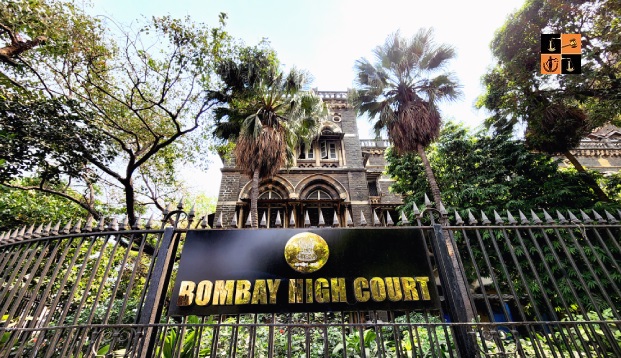
“The provision is intended to secure shelter to an aggrieved person, who has proved domestic violence, from being rendered without shelter.” – HC
In a significant ruling examining the contours of a woman's right to residence under the Protection of Women from Domestic Violence Act, 2005 (DV Act), the Bombay High Court delved into whether an under-construction, jointly owned flat, never occupied by either party, could be deemed a “Shared Household.” The case raised crucial questions about constructive residence, financial obligations under Section 19 of the DV Act, and the legal threshold for claiming protection over unpossessed property. Read on to see how the Court addressed these nuanced issues and clarified the limits of statutory protection in domestic violence cases.
Brief facts:
The Petitioner filed a domestic violence complaint against her husband (Respondent No. 2) under the DV Act, alleging abuse during their marriage since 2013. They initially lived in rented premises but in 2019, Respondent No. 2 moved to Seattle for work. In 2020, Respondent No. 2 jointly purchased an under-construction flat in Mumbai with the Petitioner before returning to the USA. He later stopped paying rent and maintenance, leading to a distress warrant after a court granted interim maintenance.
When the developer demanded the 7th installment for the flat in 2024, Respondent No. 2 refused payment, alleging infidelity and intending to sell the flat. The Petitioner sought to restrain the sale, claiming the property as a “Shared Household” under the DV Act. The Additional Chief Metropolitan Magistrate (ACMM), rejected this claim but barred third-party interests. The Sessions Court upheld the order, holding the flat was not a “Shared Household” as it was under construction. This led to the present writ petition before the Bombay High Court.
Contentions of the Petitioner:
The Petitioner contended that, being in an admitted domestic relationship with Respondent No. 2, she is entitled to relief under Sections 19(d) and (e) of the DV Act, including directions for him to pay the remaining installments for their jointly purchased flat, claimed as a "Shared Household." As a joint owner under a registered Agreement for Sale, she asserted her right, title, and interest in the nearly complete flat, which, under the broad definition in Section 2(s) of the DV Act, includes properties intended for future residence. Relying on Prabha Tyagi v. Kamlesh Devi, she submitted that actual residence is not essential, as constructive residence suffices. Since Respondent No. 2 has not pleaded financial incapacity, she argued the court could direct such payment under Section 19(6) of the DV Act, and that the lower courts erred in denying relief despite her lack of alternative accommodation.
Contentions of the Respondent:
The Respondent contended that the flat does not qualify as a "Shared Household" under Section 2(s) of the DV Act, as neither party has ever lived there, and it remains under construction. It was submitted that Section 2(s) requires actual or prior residence, which is lacking. The Respondent noted that the Petitioner’s original DV complaint did not claim the flat as a "Shared Household," but sought alternative accommodation or monetary relief. Relying on Manmohan Attavar Vs. Neelam Manmohan Attavar and Satish Chander Ahuja Vs. Sneha Ahuja, it was argued that cohabitation or possession is necessary to invoke Section 2(s). The reliance on Prabha Tyagi v. Kamlesh Devi was distinguished as factually inapplicable. It was further submitted that compelling payment of installments exceeds the scope of relief under Section 19.
Observation of the Court:
Justice Manjusha Deshpande observed, “The provision is intended to secure shelter to an aggrieved person, who has proved domestic violence, from being rendered without shelter. Both the provisions i.e. Sub – Section (d) and (e) of Section 19 of the DV Act ensures, continued residence of the aggrieved person in the premises, that is in existence and occupied by a person aggrieved.”
“In the present case, the possession of the alleged ‘Shared Household’, is not yet handed over, the installments are still not fully paid. In the circumstances, it would be stretching it too far to direct the Respondent to pay the remaining installments or direct the employer to deduct the installments from his salary and pay it to the Bank. None of the parties are occupying the said premises, they have never ever resided in that flat/house, nor do they intend to live”, added the Court
The Court critically examined the scope of "Shared Household" under the Protection of Women from Domestic Violence Act, 2005, and the applicability of Sections 17 and 19 in the context of the Petitioner’s claim. The court noted that the Petitioner’s application under Section 19(d) and (e) sought to secure her right to reside in a flat booked by Respondent No. 2, which she claimed as a "Shared Household."
The Court emphasized that for relief under Section 19, the existence of a "Shared Household" as defined under Section 2(s) is a prerequisite. The Court highlighted the meaning of Section 2(s) while defining a "Shared Household" as "a household where the person aggrieved lives or at any stage has lived in a domestic relationship either singly or along with the respondent," encompassing properties owned or tenanted jointly or individually, or where either party has a right, title, interest, or equity.
The Court acknowledged the broader interpretation of "Shared Household" provided by the Supreme Court in Prabha Tyagi v. Kamlesh Devi, which held that the right to reside includes "constructive residence" and does not necessitate actual residence. The Court quoted, “even when a woman in a domestic relationship is residing elsewhere and she has never resided in the ‘Shared Household’ either with her in-laws or with her husband on account of reasonable cause, she has right to reside in the ‘Shared Household’.” However, the court distinguished the present case, noting that the flat in question is under construction, not in possession of either party, and neither has ever resided there. The Court further observed, “None of the parties are occupying the said premises, they have never ever resided in that flat/house, nor do they intend to live.”
The Court held that the relief sought by the Petitioner, to direct Respondent No. 2 to pay the remaining installments or have his employer deduct them, falls outside the ambit of Section 19(d) and (e), which are designed to prevent dispossession or alienation of an existing "Shared Household" where the aggrieved person resides or has a right to reside. Since the flat is not habitable and not in possession, it does not meet the criteria of a "Shared Household." The court also noted that divorce proceedings initiated by Respondent No. 2 in 2020 further undermine the intent to reside in the flat jointly.
The Court found no perversity in the lower court’s orders, which rejected the Petitioner’s prayer for payment of installments while granting restraint against alienation of the flat. It concluded that the DV Act, as a social welfare legislation, aims to protect victims from eviction from an existing household or provide alternative accommodation, but “the kind of relief claimed by the Petitioner, unfortunately does not fit under any of the reliefs provided under Section 19 of the DV Act.”
The decision of the Court:
In the light of the foregoing discussion, the Court dismissed the Writ Petition, finding no case for interference with the orders of the Sessions Court and the Additional Chief Metropolitan Magistrate under Article 227 of the Constitution of India. The rule was discharged, and the Petitioner’s prayer to compel payment of the remaining installments for the flat was deemed not maintainable under the DV Act.
Case Title: Srinwati Mukherji Vs. State of Maharashtra and Ors.
Case No.: Writ Petition No. 424 Of 2025
Coram: Justice Manjusha Deshpande
Advocate for Petitioner: Advs. Archit Jaykar and Bhoomi Upadhyay
Advocate for Respondent: APP Dhanlakshmi S. Krishnaiyar, Advs. Raghavendra S. Mehrotra, Irfan Shaikh, Maddhat Shaikh, Mohini Tekale and Legal Consultants M/s.Lawkhart Legal
Picture Source :



















