









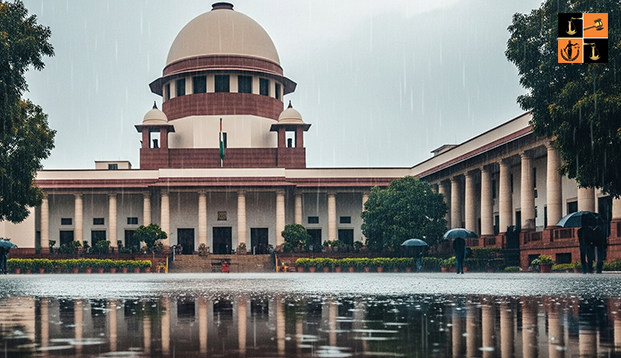
Recently, the Supreme Court dealt with a case involving the Karnataka Housing Board (hereinafter referred to as “KHB”) where a delay of nearly 11 years in filing a second appeal, linked to a land dispute, raised critical questions on the interpretation of “sufficient cause” under Section 5 of the Limitation Act, 1963.
Brief Facts:
The case arose from a long-standing dispute over a parcel of land originally owned by the appellant’s father, measuring approximately 9 acres and 13 guntas. After his demise, a partition suit was filed. During the proceedings, 4 acres were donated to the Government and came under the possession of the KHB in 1979 for the development of a housing colony. In 1989, a compromise decree declared the appellant as the absolute owner, including the 4 acres occupied by KHB.
Despite this decree, KHB continued to occupy the land, prompting the appellant to file a suit for title and possession, which was dismissed in 1997. On first appeal in 2006, the appellant’s claim was allowed in part, granting monetary compensation instead of possession. Execution proceedings were initiated in 2011. However, KHB filed a second appeal only in 2017, accompanied by an application seeking to condone an inordinate delay of over 10 years, triggering scrutiny under Section 5 of the Limitation Act, 1963.
Contentions of the Appellant:
The counsel for appellant contended that KHB failed to demonstrate any sufficient cause for such an enormous delay, attributing it to gross negligence and lack of due diligence by its officers. Notices in execution proceedings were ignored for years. The Appellant relied on precedents holding that delay caused by State lethargy and inefficiency cannot be routinely condoned under Section 5 of the Limitation Act. It was urged that condoning this delay would frustrate justice, prejudice the appellant’s rights, and undermine public policy embodied in limitation laws.
Contentions of the Respondent:
The counsel for the respondent submitted that Section 5 permits condonation of delay if sufficient cause is demonstrated, and the High Court rightly exercised discretionary powers to condone delay. It relied on established jurisprudence that some latitude is to be accorded to States due to bureaucratic complexities and delay being unintended. The respondent emphasised substantial justice and public interest, contending the delay was due to administrative lapses by specific officers, for which disciplinary action was initiated. It argued that the appeal challenged a flawed compensation order and was necessary to protect public exchequer interests.
Observations of the Court:
The Court observed that the phrase “sufficient cause” in Section 5 of the Limitation Act is crucial and must be understood in a manner that does not encourage negligence or laxity. It stated, “The expression ‘sufficient cause’ signifies that the party who failed to file the appeal within the prescribed period must demonstrate that the failure was not due to negligence, lack of diligence or vigilance, nor the result of indolence or inactivity.” The Court emphasised that the entire period from the start of the limitation period until the date of filing must be explained with a satisfactory cause.
Crucially, the Court held, “Mere administrative negligence or delay on the part of public authorities cannot be accepted as sufficient cause.” It warned against routine indulgence of delays caused by bureaucratic inertia, declaring that such complacency harms the integrity of judicial processes.
Highlighting the policy behind limitation laws, the Court explained, “The law of limitation is founded on public policy. The object is to put a quietus on stale and dead disputes. A person ought not to be allowed to agitate after long delay.” It anchored this position in well-known maxims, stating, “The bedrock of the law on limitation is the maxim ‘interest reipublicae ut sit finis litium’, the interest of the state that litigation be brought to an end and ‘vigilantibus non dormientibus’ law aids the vigilant, not those who sleep over their rights.”
The Court clarified the judicial approach, “Courts must adopt a liberal yet disciplined approach. The discretion to condone delay is not unbounded. It cannot be exercised when the explanation is bereft of bona fides or calls for leniency in the face of gross negligence.” It further stated, “The power to condone delay should not become a source of abuse, allowing habitual procrastination to hamper the administration of justice.”
Importantly, the Court said, “The merits of the case cannot be considered while deciding an application under Section 5.” The inquiry is restricted to whether there is a genuine “sufficient cause” for the delay.
The Decision of the Court:
The Court held that the Karnataka Housing Board’s 11-year delay did not constitute “sufficient cause” under Section 5 of the Limitation Act, setting aside the High Court’s order condoning the delay. The judgment highlights that the limitation applies equally to state entities, and condonation of delay is a discretionary remedy not to be used to reward administrative negligence. It reinforces the public policy of timely dispute resolution and protection of the parties’ rights.
Case Title: Shivamma (Dead) by LRs v. Karnataka Housing Board & Ors.
Case No.: Civil Appeal No. 11794 of 2025 (Arising out of Special Leave Petition (C) No. 10704 of 2019)
Citation: 2025 Latest Caselaw 875 SC
Coram: Hon’ble Mr Justice J.B. Pardiwala and Hon’ble Mr Justice R. Mahadevan
Counsel for the Appellant: AOR Akshat Shrivastava
Counsel for the Respondents: Sr. Adv. Kiran Suri appeared along with AORs E. C. Vidya Sagar and D. L. Chidananda, and advocates Subhash Chandra Sagar, Hemant Kumar Sagar, Shailendra Singh, and S J Amit.
Read Judgement @Latestlaws.com
Picture Source :




















