









About Centre for Development of Intellectual Property and Research (CDIPR)
The Centre for Development of Intellectual Property and Research (CDIPR) is a premier institution established as India’s First Non-Governmental Research Organisation dedicated to Intellectual Property Rights (IPRs). Operating under the Naovina Development of Intellectual Property and Research Foundation as a registered Non-Governmental Organisation (NGO), CDIPR is dedicated to promoting and protecting Intellectual Property Rights (IPRs) within India, thereby fostering a conducive environment for innovation and creativity.
In today’s global landscape, where intellectual property serves as a cornerstone for economic growth, technological advancement and cultural development, CDIPR plays a pivotal role in driving forward-thinking policies, research and education. CDIPR is a community, Connecting 2200+ Members & 12,300+ Global Academicians on Intellectual Property Rights.
About the Conclave
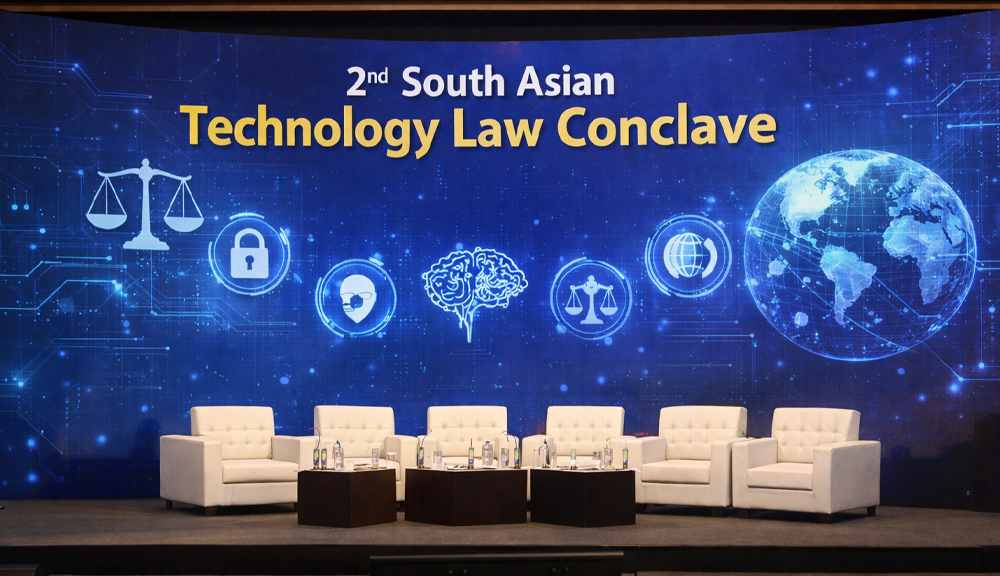
The 2nd South Asian Technology Law Conclave, 2026 is a flagship international academic–policy forum under the 3rd South Asian Global Intellectual Property Summit, 2026, organised by the Centre for Development of Intellectual Property and Research (CDIPR), Naovina Development of Intellectual Property and Research Foundation, in collaboration with the Meta Blueprint and Cambridge – Teachers of Tomorrow. Powered by the Community for Academic Research and Development Foundation.
Conceived as a high-impact platform for interdisciplinary engagement, the Conclave seeks to examine the evolving intersections of technology, law, governance, and society across South Asia and the Global South. At a time when digital transformation is rapidly reshaping economies, governance structures, and social interactions, South Asian jurisdictions are confronted with complex challenges including data governance, AI regulation, cybersecurity risks, platform accountability, digital inequality, and emerging technology disruptions.
The Conclave aims to foster critical dialogue on how legal systems can effectively respond to these transformations while ensuring innovation, human rights, and inclusive development. Bringing together legal scholars, policymakers, technologists, industry leaders, international organisations, and emerging researchers from across the globe, the Conclave offers a truly international platform to bridge legal theory, technological advancement, and policy design.
It situates South Asian experiences within broader global debates on digital governance, technological ethics, and regulatory futures, while emphasising context-sensitive and regionally grounded approaches.
Conclave Objectives
- To critically analyse the evolving role of law in regulating emerging technologies
- To promote comparative and interdisciplinary dialogue on technology governance in South Asia
- To examine intersections between law, technology, society, and public policy
- To explore regulatory frameworks addressing digital rights, innovation, and accountability
- To provide a platform for scholars, practitioners, and young researchers in technology law
Conclave Date & Format
- Dates: 30th April 2026
- Format: Virtual Mode
Key Themes and Sub-Themes
Participants are invited to submit papers engaging with the following thematic tracks:
1. Artificial Intelligence, Ethics and Legal Accountability
- Regulation of AI systems and algorithmic governance
- Bias, fairness, and transparency in automated decision-making
- Liability frameworks for AI-driven actions
- Ethical AI and human-centric technology governance
- AI in public administration and legal implications
2. Blockchain, FinTech and Digital Economies
- Regulation of crypto-assets and decentralised finance (DeFi)
- Legal status of smart contracts
- Financial inclusion and blockchain innovation
- Cross-border regulatory challenges in digital finance
- Central Bank Digital Currencies (CBDCs) and law
3. Data Protection, Privacy and Digital Rights
- Comparative data protection regimes in South Asia
- Cross-border data transfers and localisation policies
- Privacy rights in digital ecosystems
- Surveillance, state power, and civil liberties
- Data governance and accountability mechanisms
4. Cybersecurity, Cyber Warfare and International Law
- Legal frameworks for cybersecurity governance
- State responsibility and cyber-attacks
- Cyber warfare and international humanitarian law
- Critical infrastructure protection
- Regional cooperation in cybersecurity
5. Metaverse, Web3 and Virtual Jurisprudence
- Legal recognition of virtual assets and property rights
- Jurisdictional challenges in virtual environments
- Taxation and regulation of digital assets
- Consumer protection in immersive technologies
- Governance of decentralised digital ecosystems
6. Digital Identity, Inclusion and Access to Justice
- Legal implications of biometric and digital ID systems
- Access to justice in digital governance frameworks
- Inclusion and exclusion in digital public infrastructure
- Identity, citizenship, and digital rights
- Technology-enabled legal services
7. Platform Governance and Intermediary Liability
- Regulation of digital platforms and social media
- Content moderation and freedom of expression
- Fake news, misinformation, and legal responses
- Liability of intermediaries and safe harbour provisions
- Competition law and platform economies
8. Technology, Labour and the Future of Work
- Gig economy and labour law reforms
- Algorithmic management and worker rights
- Remote work and digital employment frameworks
- Workplace surveillance and privacy concerns
- Social security in digital labour markets
9. Emerging Technologies and Future Legal Challenges
- Quantum computing and post-encryption regulation
- Internet of Things (IoT) and liability frameworks
- Autonomous systems and legal accountability
- Biotechnology, AI in healthcare, and legal ethics
- Anticipatory regulation for disruptive technologies
10. Technology, Environment and Sustainable Development
- Legal frameworks for green and sustainable technologies
- Digital technologies in climate governance
- E-waste regulation and environmental accountability
- Technology for sustainable development goals (SDGs)
- Climate justice and innovation policy
11. Regional Cooperation and Technology Law Harmonisation
- South Asian approaches to technology regulation
- Comparative legal frameworks and policy convergence
- Regional cooperation in digital governance
- South–South collaboration in technology law
- Institutional mechanisms for harmonisation
Format and Presentation
The Conclave will be conducted entirely in virtual mode, ensuring wide participation across regions of the Global South. Selected authors will present their papers in moderated academic panels before an international audience of scholars, practitioners, and policy experts.
Recognition & Awards
Selected contributors will receive:
- Publication in the International edited Volume titled, “Technology, Law and Society: Law, Policy and Emerging Technologies in South Asia” with ISBN 978-81-998939-3-1. To be published and distributed across 15 nations, with international editorial and institutional collaboration.
- International Certificate of Presentation
- Best Papers to be Featured in the Special Special Technology Law & Policy Review Edition, 2026 by the Cambridge – Teachers of Tomorrow
- Top 15 Presenters to receive the Technology Law Research Fellowship by the Community for Academic Research and Development
- Technology Policy Innovation Award for impactful and forward-looking research in emerging technologies
- Emerging Scholar Award for students and early-career researchers demonstrating academic excellence
- Opportunities for publication in policy briefs, international blogs, and partner platforms
- Invitations for future international collaborations, conferences, and research initiatives
- Selected works will be highlighted through international academic blogs, policy briefs, and partner platforms
Call for Papers Timeline
- Abstract Submission Deadline: 20th April, 2026
(Abstracts should be between 250–300 words, clearly indicating the research question, methodology and relevance to the Conclave themes.) - Notification of Abstract Selection: 22nd April, 2026(Selected authors will be notified via email and invited to submit full papers.)
- Full Paper Submission Deadline: 27th April, 2026(Full-length papers should be 3,000–4,000 words and follow the Conclave’s Submission Guidelines.)
- Presentation Confirmation by Authors: 28th April, 2026(Selected participants must confirm attendance and complete registration.)
- Date of Conclave: 30th April, 2026
Submission Guidelines
Categories:
- Research Article: 3,000 to 6,000 words
- Policy Paper / Legislative Analysis: 3,000 to 5,000 words
- Case Studies / Legal Commentaries: 2,000 to 4,000 words
Format and Structure:
- Font: Times New Roman
- Body Text: 12pt, Justified Alignment
- Headings: 14pt, Centre Alignment
- Subheadings: 13pt
- Footnotes: 10pt, Left Alignment
- Citation Style: Bluebook 21st Edition
- Spacing: 1.5
- Language: English only
Abstract: Each submission must include a concise abstract not exceeding 300 words summarising the core ideas of the paper with 5 keywords.
Originality:
- Submissions must be entirely original and unpublished.
- Plagiarism should not exceed 10%, and AI-generated content is not allowed. Submissions violating these guidelines will be rejected.
Co-Authorship: Papers may have up to two authors.
Review Process:
- A two-stage internal review will assess submissions.
- Authors may be required to revise their papers based on feedback regarding content, structure, or formatting.
Why Participate?
- Present your research at a premier international conclave dedicated to technology law, policy, and emerging technologies in South Asia and the Global South.
- Engage with leading scholars, policymakers, technologists, industry experts, and international organisations shaping the future of digital governance.
- The 2025 edition witnessed participation from 65 countries and over 120 institutions and research centres across South Asia, reflecting its global reach and academic impact.
- Be published in an International Edited Volume titled, “Technology, Law and Society: Law, Policy and Emerging Technologies in South Asia”, Co-curated with Meta Blueprint and Cambridge – Teachers of Tomorrow.
- Contribute to critical debates on AI governance, data protection, cybersecurity, digital rights, and emerging technology regulation.
- Gain recognition through international presentation certification, awards, and global publication opportunities.
- Build meaningful connections and expand your academic visibility, policy engagement, and global professional network in the field of technology law.
How to Submit?
Interested candidates can submit abstract via the link given at the end of the post.
Contact
For direct communication, email us at events@cdipr.ac.in.
Click here to Submit.

Picture Source :


















