









The Author, Akshita Khanna is a 2nd Year, BA.LLB student at University School of Law and Legal Studies, GGSIPU. She is currently interning with LatestLaws.com.
Introduction:
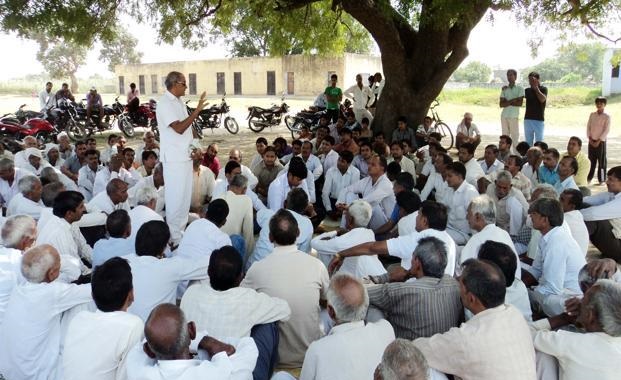
As Indian citizens, we are familiar with the institution of Gram Panchayat. This institution of self governance has been an integral part of our nation and has played a pivotal role in promoting economic development and social justice. The eleventh law commission report in 1986 suggested judicial reforms and the need to establish a forum in villages for the administration of justice at the doorsteps of the litigants. Gram Nyayalayas Act, 2008 provides for a structural framework of judiciary in villages. With the aim of establishing Gram Nyayalayas or village courts to provide speedy justice which is easily accessible in rural areas of India, this Act was drafted by the Parliament of India in the year 2008. It came into force on the October 2, 2009.
Q1. What is the purpose of Gram Nyayalaya Act?
Besides providing speedy justice which is accessible to the residents of villages, it also aims to provide cost-effective justice. One of the primary aims is also to reduce the backlog of cases in the Judiciary at district level. A poor person loses a lot of time, energy and money in accessing the district courts from his village. To some extent, it would fulfil the objects underlying Article 39A of the Constitution of India.
Q2. Who is the presiding officer of a Gram Nyayalaya and how is the appointment done?
The Gram Nyayalayas are presided over by Nyayadhikari. They are public servants within the meaning of section 21 of the IPC. Their appointment is done by the State Government in consultation with the High Court.
Q3. Who is qualified to hold the post of a Nyayadhikari?
A Judicial Magistrate of first class is qualified to hold the post of Nyayadhikari.
Q4. What is the territorial jurisdiction of Gram Nyayalaya?
The state government in consultation with the High Court of that respective State establish Gram Nyayalaya for group of contiguous Panchayats of villages. They shall decide the extent of territorial jurisdiction of every Gram Nyayalaya accordingly.
Q5. What is the jurisdiction of Gram Nyayalaya with respect to criminal cases?
The Gram Nyayalaya may take cognizance of an offence on a complaint or on a police report.
- They have jurisdiction to try offences of theft (under section 379, 380 or 381 of Indian Penal Code), offences of receiving stolen property (under section 411 and 414 of Indian Penal Code). In both these cases, the value of the property should not be more than rupees twenty thousand.
- They shall try offences of house-trespass or house-breaking (under section 454 and 456 of Indian Penal Code).
- They also have jurisdiction to try offences of criminal intimidation and insult (under section 504 and 506 of Indian Penal Code).
- They shall try all the offences which are i) not punishable with death, ii) imprisonment for life, or iii) imprisonment for a term of more than two years.
- They shall also try the abetment or attempt of any of the above stated offences.
- They shall try all offences and grant relief, in cases related to payment of wages, cattle-trespass, protection of civil rights, bonded labour abolition Act, Domestic violence cases and order for maintenance of wives, children and parents according to Code of Criminal Procedure, 1973.
Q6. What type of trial procedure is followed in criminal cases before a Gram Nyayalaya?
Gram Nyayalaya follow the procedure of summary trial. The provisions of sub-section (1) of section 262 and sections 263 to 265 of Code of Criminal Procedure shall apply to such trial. If the Nyayadhikari deems the summary trial procedure undesirable for a specific case, the case shall be re-heard in the suitable manner according to the provisions of Code of Criminal Procedure, 1974.
Q7. In which court does the appeal of criminal cases of Gram Nyayalaya lie?
An appeal shall lie in the Court of Session. From the date of filing of the appeal, it shall be preferred and disposed of within the period of six months. No appeal or revision shall lie thereafter. Needless to say that the person can in all circumstances approach the high court or the Supreme Court to avail judicial remedies under Article 32 and 226 of the Constitution of India.
Q8. What is the jurisdiction of Gram Nyayalaya with respect to civil cases?
The Gram Nyayalayas have jurisdiction to try all suits or proceedings of civil nature. Civil disputes, property disputes and other disputes related to payment of wages, money lending etc. are within the ambit of their jurisdiction.
Q9. What is the procedure to institute a civil dispute in a Gram Nyayalaya?
Section 24 of the Act lays down a special procedure to follow in cases of civil disputes in a Gram Nyayalaya. Firstly, an application should be made to the Gram Nyayalaya with a fee which is not more than rupees one hundred. After a suit, claim or dispute is instituted, summons are issued to the opposite party to answer the claim. Then, the opposite party writes his written statement. Gram Nyayalaya then hear both the parties and thereafter, pronounce their judgement in open court within fifteen days of conclusion of hearing.
Q10. In which court does the appeal of civil cases of Gram Nyayalaya lie?
An appeal shall lie to the District Court. From the date of filing of the appeal, it shall be preferred and disposed of within the period of six months. No appeal or revision shall lie thereafter. Needless to say that the person can in all circumstances approach the high court or the Supreme Court to avail judicial remedies under Article 32 and 226 of the Constitution of India.
Q11. In case any conflict arises in the provisions of the Act and the Code of Criminal Procedure, 1973 or Code of Civil Procedure, 1908 or any other law as the case may be, which one would apply?
Notwithstanding anything contained in Code of Civil Procedure or Code of Criminal Procedure or any other law, the provisions of the Gram Nyayalayas Act shall apply to the proceedings before a Gram Nyayalaya. The provision of both of these procedural codes shall apply in so far as they are consistent with those of the Act.
Q12. What is the procedure followed in Gram Nyayalaya with respect to the evidences in any suit or proceeding before it?
A memorandum of substance of what the witness testifies shall be recorded by the Nyayadhikari. It is not necessary to record the evidence of witnesses in full detail. Notwithstanding the admissibility and relevance of a document or report according to Indian Evidence Act, 1872, according to section 30 of the Gram Nyayalayas Act, a Gram Nyayalaya is empowered to receive that document or report as evidence.
Conclusion:
There is also section 21 in the Act which provides for legal aid to parties with the help of the State Legal Services Authority to the accused who is unable to engage an advocate. Section 16 of the Act talks about the transfer of civil or criminal cases from the District Court or the Court of Session to the Gram Nyayalaya. Stress has also been laid upon the Gram Nyayalaya to put in efforts to resolve civil disputes by way of conciliation and settlement. The Nyayadhikari can also hold mobile courts periodically in villages that fall under his jurisdiction.
We need to understand that the fabric of a rural society is different from that of a urban society. For the purpose of resolving cases that arise there, a legislation that provides for slightly different procedure that facilitates the access to justice is very appropriate. Some relaxations such as those with regard to the admissibility of evidences are the needs of that society. Hence, it can be said that it is a well drafted legislation of the Parliament of India and does not leave scope for any ambiguity with respect to powers or procedure of officials, employees or institutions concerned.
The way ahead:
There have been problems in the implementation of this Act. Let us try to have a quick overview of the challenges and the way forward to overcome them. The enactment came into force on October 2, 2009 and in the year 2019, the reports tell us that there are only 208 village courts in 9 states of India which are functional as against 2,500 courts estimated to be required by the 12th five-year plan. Many States did not issue notification and in the February of 2020 the Supreme Court had to direct them to notify and impose a fine of rupees one lakh for their failure. Inadequacy of funds to establish an infrastructure is cited as the major reason for this dismal situation. Besides finance and political will, lack of coordination between high courts and state governments has also delayed setting up of Gram Nyayalayas.
Infrastructure should be the priority to establish permanent Gram Nyayalayas in India. Training of Nyayadhikaris keeping in mind the social fabric of rural India should be done. We have a long way to go but with a proper approach, cooperation between the Government and High Courts and utilizing the already established infrastructure like taking help from Legal Service Authorities’ lawyers, encouraging young lawyers to take up pro-bono cases for poor people of villages and spreading awareness regarding Gram Nyayalayas, the path would become a little easier.
Picture Source :



















