









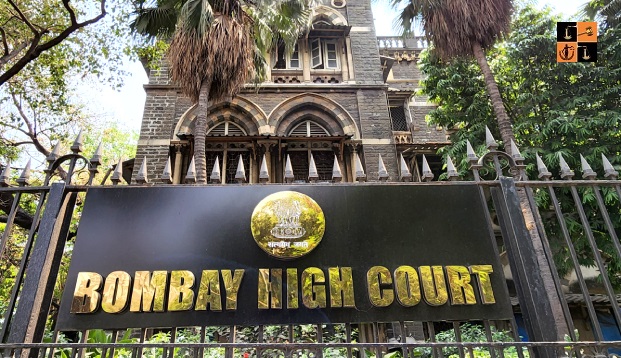
Recently, the Bombay High Court set aside a District Court order refusing to refer a development dispute to arbitration, holding that the lower court had misdirected itself on the mandatory requirements of Section 8 of the Arbitration and Conciliation Act, 1996.
Brief Facts:
The appeal was filed by Om Swayambhu Siddhivinayak Developers, whose Section 8 application was rejected in a suit by landowners seeking specific performance of a 2011 Development Agreement and cancellation of a 2021 Supplemental Agreement. The District Court had concluded that since the Supplemental Agreement contained no arbitration clause, the dispute was not arbitrable.
Contentions of the Appellant:
The developer argued that Clause 30 of the 2011 Development Agreement contains a “wide and all-encompassing arbitration clause” covering any dispute arising “out of or in relation to the development.” It was submitted that the Supplemental Agreement does not replace, rescind, or novate the original agreement but merely records additional consideration, and therefore cannot nullify the arbitration clause.
Contentions of the Respondent:
The landowners contended that the Supplemental Agreement is a separate and independent contract without any arbitration clause, and therefore issues relating to its cancellation cannot be referred to arbitration. They maintained that allegations of fraud, misrepresentation, and manipulation of saleable area require civil court adjudication, and that reliefs such as specific performance fall exclusively within the jurisdiction of civil courts.
Observations of the Court:
The High Court delivered a pointed criticism of the reasoning adopted by the District Court. It held that the foundational 2011 Development Agreement contained a binding arbitration clause, and that the District Court failed to appreciate that Clause 30 was couched in the widest terms, leaving no doubt that any dispute arising from the development arrangement was referable to arbitration. The Court observed that the Supplemental Agreement merely introduced additional terms of consideration, remarking that “the absence of a fresh arbitration clause in a subsequent supplemental document does not efface the arbitration clause embedded in the principal contract.”
The Court further noted that under Section 8, a trial court must conduct a prima facie examination of the existence of an arbitration agreement and whether the subject matter of the suit falls within it. The Court held that the District Court had failed to undertake this mandatory inquiry, stating that “the Court below has completely misdirected itself and refused reference without undertaking the necessary prima facie inquiry mandated by Section 8.”
On the issue of fraud and specific performance, the Court clarified that such allegations do not bar arbitration. Relying on established Supreme Court precedents, the Court held that allegations of fraud within a purely contractual setting remain arbitrable and that “merely because the plaintiffs have framed the relief as one for specific performance, the dispute does not cease to be arbitrable when the foundation rests upon the Development Agreement containing the arbitration clause.”
The decision of the Court:
The Court held that the dispute squarely arises from the 2011 Development Agreement and is therefore arbitrable. It declared that the District Court’s refusal was legally unsustainable, set aside the impugned order, and directed the civil court to refer the parties to arbitration in accordance with Section 8 of the Arbitration Act.
Case Title: Om Swayambhu Siddhivinayak Vs. Harischandra Dinkar Gaikwad and Ors.
Case No.: Arbitration Appeal No. 21 of 2025
Coram: Justice Somasekhar Sundaresan
Advocate for Petitioner: Adv. Pulkeshi Gaikwad, Antony Parel, E. Siddiqui, Dinesh Tiwari
Advocate for Respondent: Adv. Uday Warunjikar (Senior Advocate), Sumit S. Kate
Read Judgment @Latestlaws.com
Picture Source :



















