









A recent judgement by the Supreme Court of India, addressed yet another case of excessive judicial interference in Arbitration. The Apex Court was dealing with an Appeal filed against the judgement of the Punjab and Haryana High Court wherein the latter had transgressed its powers under Section 37 of the Arbitration and Conciliation Act, 1996.
The facts of the case were that the parties had entered into a contract for supply of batons and the supplier had made a security deposit with the purchaser. Upon finding many of the supplied batons to be of poor quality and not in accordance with the specifications, the purchaser forfeited the security. Aggrieved by the forfeiture and non-payment, arbitration was invoked by the supplier. The Arbitrator concluded that the material supplied was defective and that the forfeiture of the security deposit was valid.
The award of the arbitrator was challenged under Section 34 of the 1996 Act before the District Judge. Finding no substance, District Judge rejected it. The judgment of the District Judge was challenged before the High Court under Section 37 of the 1996 Act. The High Court held that the award was liable to be set aside as it lacked reasons and the reasons which were assigned were arbitrary and erroneous. Further, the High Court went on to award the claim of the suppliers, together with interest.
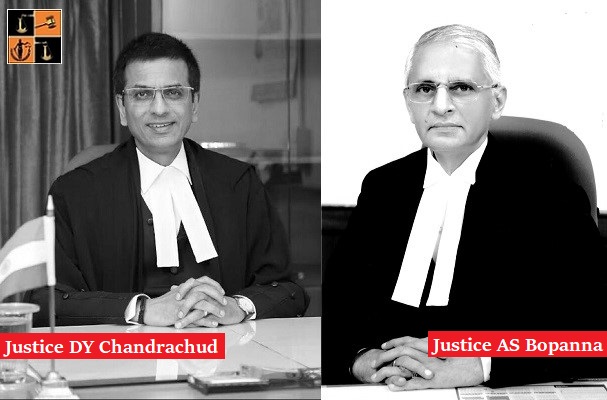
Hence, the appeal was filed by the purchasers before the Supreme Court. The Division Bench comprising Justice DY Chandrachud and Justice AS Bopanna noted that it was on the basis of the evidence that the sole arbitrator rightly upheld the defence of the appellants.
The bench expounded that, " While considering a petition under Section 34 of the 1996 Act, it is well-settled that the court does not act as an appellate forum. The grounds on which interference with an arbitral award is contemplated are structured by the provisions of Section 34. The District Judge had correctly come to the conclusion that there was no warrant for interference with the arbitral award under Section 34. The High Court seems to have proceeded as if it was exercising jurisdiction in a regular first appeal from a decree in a civil suit. The jurisdiction in a first appeal arising out of a decree in a civil suit is distinct from the jurisdiction of the High Court under Section 37 of the 1996 Act arising from the disposal of a petition challenging an arbitral award under Section 34 of the 1996 Act. "
The High Court was required to determine as to whether the District Judge had acted contrary to the provisions of Section 34 of the 1996 Act in rejecting the challenge to the arbitral award. Apart from its failure to do so, the High Court went one step further while reversing the judgment of the District Judge in decreeing the claim in its entirety. The Supreme Court held it to be ‘clearly impermissible’. Hence, the bench set aside the impugned judgment of the Single Judge of the High Court.
Case Title: Punjab State Civil Supplies Corporation Ltd & Anr v. M/s Ramesh Kumar and Company & Ors.
Bench: Justice Dhananjaya Y Chandrachud, Justice AS Bopanna
Date: 13th November 2021
Read the Judgement:
Picture Source :




















