









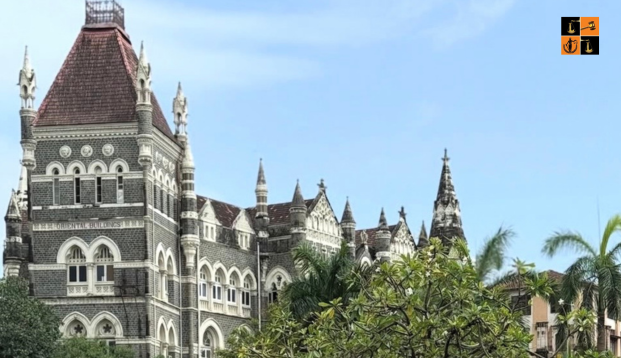
Recently, the Bombay High Court upheld the wide discretion of an Arbitral Tribunal under Section 31(6) of the Arbitration and Conciliation Act, 1996, affirming that it possesses the power to cure procedural defects and pass interim awards during the arbitral proceedings. The Court observed that substantive rights of litigants should not be defeated on mere technical irregularities, holding that procedural lapses capable of rectification cannot invalidate arbitration.
Brief Facts:
The dispute arose out of arbitral proceedings between two companies wherein the petitioner questioned the authority of an officer who had signed pleadings on behalf of the respondent company, alleging absence of a valid and quorate Board Resolution. The Arbitral Tribunal, while considering this objection, declined to non-suit the respondent and deferred the issue for final adjudication, noting that the matter required evidence. Aggrieved by this interim view, the petitioner approached the Bombay High Court under Section 34 of the Arbitration Act, challenging the Tribunal’s order as being without jurisdiction.
Contentions of the Petitioner:
The petitioner contended that the impugned order was in the nature of a final determination, as the Tribunal had conclusively ruled on the issue of corporate authority. It was argued that in the absence of a valid and quorate Board, the respondent company lacked the “corporate mind” necessary to authorise litigation, thereby rendering all subsequent acts invalid. The petitioner asserted that the Arbitral Tribunal had exceeded its jurisdiction by entertaining proceedings without ensuring proper authorisation from the respondent company. Hence, the petitioner sought to set aside the order, contending that the defect was fundamental and went to the root of the matter, not merely procedural.
Contentions of the Respondent:
The counsel for the respondent countered that the Arbitral Tribunal had only taken a prima facie and interim view, leaving all issues open for consideration at a later stage. It was submitted that under Section 31(6) of the Arbitration Act, the Tribunal enjoys wide powers to pass interim orders at any stage of the proceedings, including orders allowing parties to cure procedural irregularities. Relying on United Bank of India v. Naresh Kumar and Srei Infrastructure Finance Ltd. v. Tuff Drilling (P) Ltd., it was argued that procedural defects such as the absence of a Board Resolution are curable and cannot defeat a just cause. The respondent maintained that the petition under Section 34 was premature and misconceived since no final adjudication had taken place.
Observations of the Court:
The Court observed that the language of Section 31(6) is “extremely wide” and empowers the Arbitral Tribunal to make any interim award in respect of matters on which it could ultimately make a final award. Referring to the Division Bench’s findings, the Court held, “It could never be said that the Arbitral Tribunal would not have the power to cure a defect to ensure that injustice is not done.”
The Court emphasised that even where pleadings are signed or proceedings initiated without a formal Board Resolution, such actions can subsequently be ratified by the company, either expressly or impliedly. Quoting United Bank of India v. Naresh Kumar, the Court reiterated that, “Procedural defects which do not go to the root of the matter should not be permitted to defeat a just cause. There is sufficient power in courts under the Code of Civil Procedure to ensure that injustice is not done to any party who has a just case.”
Accordingly, the Court found no fault in the Tribunal’s decision to defer the question of corporate authorisation, holding that the Tribunal had acted within its discretion and in accordance with settled legal principles.
The decision of the Court:
Holding that the impugned order was not an arbitral award but an interlocutory determination, the Court dismissed the petition under Section 34, terming it misconceived. The High Court concluded that the Arbitral Tribunal’s approach was lawful and that no interference was warranted.
The Court further imposed costs of ₹2,00,000 on the petitioner, noting that the premature challenge had impeded the smooth conduct of arbitration and consumed judicial time that could have been better utilised in advancing the arbitral process.
Case Title: Master Drilling India Private Limited Vs. Sarel Drill & Engineering Equipment India Private Limited
Case No.: Interim Application No. 3682 of 2024
Coram: Justice Somasekhar Sundaresan
Advocate for Petitioner: Adv. Anirudha Mukherjee, Aviral Sahai, Shreya Som, Sushil Jethmalani, Soumya Dasgupta, Shivam Tiwari, Aanya Anvesha i/b Cyril Amarchand Mangaldas
Advocate for Respondent: Adv. Chirag M. Bhatia, Rakesh K. Taneja, A.R. Shaikh
Read Judgment @Latestlaws.com
Picture Source :




















