









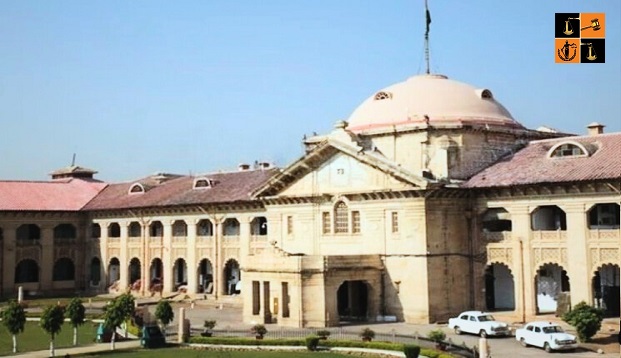
Recently, the Allahabad High Court held that it lacks jurisdiction to extend the mandate of an arbitrator under Section 29A of the Arbitration and Conciliation Act, 1996, ruling that such power vests only in a “Court” exercising ordinary original civil jurisdiction. Declining to intervene through writ jurisdiction, the Court observed that “the legislative intent is clear and unambiguous” and that jurisdiction conferred by statute cannot be assumed by judicial discretion.
Brief Facts:
The case stemmed from land acquisition carried out for the widening and expansion of a national highway under the National Highways Act, 1956 (NH Act). The petitioner, whose land in Gorakhpur district was acquired pursuant to statutory notifications, disputed the compensation determined by the competent authority, alleging that it was fixed arbitrarily and without disclosure of the valuation basis. Invoking the statutory remedy available under Section 3G(5) of the NH Act, the petitioner approached the designated authority acting as arbitrator for redetermination of compensation.
However, with the arbitral proceedings remaining pending for a prolonged period, the petitioner, along with other similarly situated landowners in connected matters, invoked the writ jurisdiction of the High Court under Article 226 of the Constitution, seeking directions for time-bound disposal of the arbitration. This brought into focus a narrow but determinative issue: whether such writ petitions were maintainable in light of the statutory timeline and the specific remedial mechanism prescribed under Section 29A of the Arbitration and Conciliation Act, 1996.
Contentions of the Petitioners:
The Petitioner argued that prolonged inaction by the arbitrator amounted to a denial of speedy justice, infringing Article 14, Article 21, and Article 300-A of the Constitution. The Counsel contended that once arbitration had been invoked under Section 3G(5) of the NH Act, the arbitrator was under a statutory obligation to decide the claim within a reasonable period. Emphasising that the petitioners had no effective alternative remedy, it was submitted that the High Court’s writ jurisdiction could be invoked to compel expeditious adjudication, particularly where administrative delay had caused continuing prejudice to landowners deprived of compensation.
Contentions of the Respondent:
The Respondents argued that by virtue of Section 3G(6) of the NH Act, arbitral proceedings were governed by the Arbitration and Conciliation Act, 1996, including Section 29A which provides a complete mechanism for extension of an arbitrator’s mandate. It was submitted that the definition of “Court” under 2(1)(e)(i) of the Arbitration and Conciliation Act is exhaustive and excludes High Courts not exercising ordinary original civil jurisdiction. Reliance was placed on Supreme Court precedents to contend that writ jurisdiction cannot be used to bypass the statutory forum designated by Parliament.
Observation of the Court:
The Division Bench of Justice Mahesh Chandra Tripathi and Justice Kunal Ravi Singh
emphasised that Section 29A of the Arbitration and Conciliation Act, 1996 expressly vests the power to extend an arbitrator’s mandate in the “Court” as defined under Section 2(1)(e)(i) of the Arbitration and Conciliation Act. The Court held that “The High Court of Judicature at Allahabad does not exercise ordinary original civil jurisdiction and therefore does not fall within the definition of ‘Court’ under Section 2(1)(e)(i) of the Arbitration Act, 1996.”
The Bench emphasised that the statutory timeline under Section 29A of the Arbitration and Conciliation Act, 1996 is not merely procedural but carries substantive legal consequences. Once the prescribed period expires without extension by the competent civil court, “the mandate of the arbitrator stands exhausted”, rendering the arbitrator functus officio. The Court cautioned that issuing a writ of mandamus in such circumstances would amount to indirectly extending the mandate through a route expressly barred by statute.
The Court clarified that even where the statutory period has not expired, parties must approach the civil court designated under the Act. It concluded that “the existence of a specific statutory remedy under Section 29A(4) before the competent civil court bars the maintainability of writ petitions seeking mandamus for expeditious disposal of arbitration proceedings”, reaffirming judicial restraint where Parliament has created a complete remedial mechanism.
The decision of the Court:
In light of the foregoing discussion, the Court dismissed all the writ petitions, holding them to be not maintainable. The Court clarified that it expressed no opinion on the merits of the compensation disputes and left it open to the petitioners to approach the competent civil court under Section 29A of the Arbitration and Conciliation Act, 1996.
Case Title: Suryadev Pathak v. Union of India and Ors
Case No.: Writ-C No. 28215 of 2025
Coram: Hon'ble Mr. Justice Mahesh Chandra Tripathi and Hon'ble Mr. Justice Kunal Ravi Singh
Advocate for the Petitioner: Adv. Vishveshwar Mani Tripathi
Advocate for the Respondent: ASGI; Anuj Agrawal, C.S.C. Mahendra Pratap, Advs. Pranjal Mehrotra, and Rajesh Kumar Jaiswal
Read Order@ Latestlaws.com
Picture Source :




















