









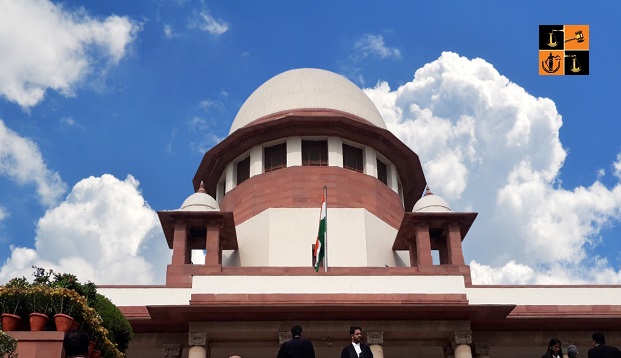
Recently, the Supreme Court examined whether an unconditional stay of a money decree could be granted in execution proceedings arising out of an arbitral award. The Court clarified that even while courts must have “due regard” to the CPC under Section 36(3) of the Arbitration Act, they are not rigidly bound by it. In a significant observation, the Court held that unconditional stay can be granted only in strong and exceptional circumstances such as fraud, corruption, or an egregiously perverse decree.
Brief Facts:
The dispute arose from an arbitral award directing the respondents to pay a sum of ₹4 crore. The respondents (award debtors) approached the High Court under Section 34 of the Arbitration Act challenging the award and simultaneously sought a stay on its execution. The High Court granted an unconditional stay of the award without requiring the respondents to furnish security. Aggrieved, the award holder approached the Supreme Court challenging the grant of such unconditional stay.
Contentions of the Petitioner:
The appellant argued that the High Court erred in granting an unconditional stay since such a stay can only be granted when exceptional grounds like fraud, corruption, or glaring perversity are established. It was contended that the Arbitration Act is a self-contained code, and the High Court was required to exercise discretion in accordance with Section 36(3), not by mechanically applying Order XLI Rule 5 of the CPC.
Contentions of the Respondent:
The respondents contended that the High Court possessed discretion to grant unconditional stay under Section 36. They argued that a prima facie case against the award was made out and therefore the High Court rightly exercised its discretion without insisting on security.
Observations of the Court:
The Supreme Court, while examining the impugned High Court order, emphasized the importance of interpreting Section 36 of the Arbitration Act in its true spirit. The Court observed that the phrase “having due regard to the provisions of the CPC” cannot be understood to mean that the CPC provisions are mandatory in arbitration proceedings. As the Court explained in Pam Developments, “In the present context, the phrase used is ‘having regard to’ the provisions of CPC and not ‘in accordance with’ the provisions of CPC. In the latter case, it would have been mandatory, but in the form as mentioned in Rule 36(3) of the Arbitration Act, it would only be directory or as a guiding factor.”
This clearly indicates that while the CPC serves as a guideline, the primary and controlling provisions are those of the Arbitration Act itself. The Court further clarified that the Arbitration Act is a self-contained statute and its provisions must be first applied by the courts. The CPC will only guide the court when its provisions do not conflict with the Arbitration Act. Consequently, the Supreme Court held that the High Court could not rigidly rely on Order XLI Rule 5 to insist on conditional stay in every case of a money decree arising from an arbitral award.
The Court also referred to Sepco Electric to highlight the approach taken in granting or refusing unconditional stay. In Sepco Electric, the Court had held that although unconditional stays are primarily contemplated under the second Proviso to Section 36(3) in cases involving fraud or corruption, the Court also examined the award on a prima facie basis to decide whether conditional stay was justified. The Supreme Court in the present case emphasized that this reasoning illustrates that even beyond the specific grounds of fraud or corruption, the court exercises a discretionary power, which must be guided by the merits of the case but cannot be used to automatically grant unconditional stay.
Importantly, the Court laid down a high threshold for granting unconditional stay in cases involving money decrees. It held that the award-debtor must demonstrate that the decree is egregiously perverse, riddled with patent illegalities, or facially untenable, or there exists some other exceptional cause analogous to fraud or corruption. As the Court noted, “If fraud or corruption or something analogous to the same is only to be seen for the purpose of granting benefit of unconditional stay of execution of money decree then in such circumstances, the decree holder may argue that although there may not be a valid service of summons to the defendant/judgment-debtor yet, the same by itself would not be sufficient to grant the benefit of unconditional stay of execution of money decree. This would lead to nothing but serious miscarriage of justice.”
Through these observations, the Supreme Court clarified that mere filing of objections under Section 34 of the Arbitration Act or a prima facie challenge to the award does not entitle a party to unconditional stay. Granting such relief without satisfying the stringent criteria would amount to serious miscarriage of justice, as it would effectively allow the judgment-debtor to indefinitely delay execution.
In essence, the Court’s reasoning strikes a delicate balance: it recognizes the discretion of courts under Section 36(3) to grant stay, ensures that the CPC is considered as guidance, but reinforces that unconditional stay can only be granted in rare and exceptional circumstances where the integrity of the award itself is fundamentally flawed. The Top Court thus reaffirmed that the primary objective is to prevent miscarriage of justice while respecting the statutory framework of the Arbitration Act.
The decision of the Court:
The Court struck down the preventive detention order, holding that reliance on juvenile conduct and vague allegations violated constitutional safeguards and principles of natural justice.
In the arbitration matter, the Apex Court set aside the High Court’s order granting an unconditional stay. The Court directed the award-debtors to deposit ₹4 crore before the Bombay High Court within eight weeks. The deposited amount is to be placed in a fixed deposit and the Section 34 petitions must be decided within six months. The stay on execution of the award will continue only subject to the deposit of the principal amount.
Case Title: Popular Caterers vs. Ameet Mehta & Ors.
Case No.: SLP(C) Nos.17231-17233 of 2025
Coram: Justice J.B. Pardiwala, Justice K.V. Viswanathan
Advocate for Petitioner: Adv. Pramit Saxena
Advocate for Respondent: None
Read Judgment @Latestlaws.com
Picture Source :



















