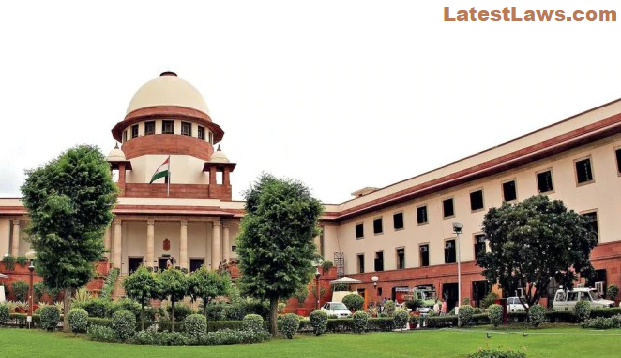
On 19th Aug’ 2020, the Supreme Court of India in the case of Mohd. Anwar v. The State (NCT of Delhi) comprising of 3 Judge Bench Justice N.V. Ramana, Justice S. Abdul Nazeer and Justice Surya Kant in its findings stated that the refusal to participate in the TIP proceedings and the lack of any reasons on the spot, undoubtedly establish the appellant’s guilty conscience and ought to be given substantial weight.
Facts
The case of the prosecution is that the victim-complainant, Tabban Khan was riding his motorcycle on the main road near Shahdara around 11:30 PM on 17.05.2001 when he stopped to ease himself near a fishpond.
Suddenly, three boys (including the appellant) caught hold of him and started assaulting him. They were armed with a knife and revolver. Upon extortion, the complainant handed over a bundle of five-hundred rupees notes totaling around thirty thousand to the boys, who then contemplated murdering him by stabbing, so that he would not report the matter to the police. The hearing commotion of passers-by, the three boys left the complainant and ran towards a warehouse. The complainant then returned to his home and reported the matter to the jurisdictional police the following evening.
Trial Court
The trial court, thus, held all three accused guilty of robbery with an attempt to cause grievous hurt and sentenced them to seven years rigorous imprisonment under Section 397/34 of IPC, five years rigorous imprisonment under Section 392/34 of IPC, two years rigorous imprisonment under Section 25 of the Arms Act and fine of rupees five thousand.
High Court
The High Court in its judgment specifically noted that no animosity or motive for false implication had been preferred by him and that there were no contradictions in the testimonies of the witnesses as regards his role in the crime. The minor delay in lodging of the FIR was considered insignificant, for it was a late time occurrence and the victim could therefore not be expected to visit a police station in such terrorized mental state of mind. The use of a revolver was considered an improvement for it had not been mentioned in the FIR. Considering the absence of any specific weapon being attributed to the appellant, charges of robbery with grievous hurt or attempt to murder were dropped.
The Appellant raised new arguments before the High Court that the Mohd Anwar was merely 15 years at the time of occurrence and was undergoing treatment for a mental disorder at a government hospital. This was supported through a copy of an OPD card and the testimony of the appellant’s mother who stated that he sometimes had to be kept chained at home to prevent harm to himself and others. The High Court took notice of the appellant’s age is 21 years at the time of recording of his Section 313 Cr.P.C. statement in March 2004 and concluded that the appellant would, therefore, have been an able-minded major at the time of the incident in May 2001.
Appellant Contentions
- Assailing the judgments of the High Court and the trial Court on the charge of robbery, he urged that the prosecution failed to discharge its burden of proof beyond a reasonable doubt.
- He asserted that lack of independent witnesses, absence of injuries on the person of the complainant as well as the inconsistency in the complainant’s version regarding his knowledge of co-accused Mohd Aslam, all together evidenced that no incident of robbery ever took place.
Additional Solicitor General Contentions
Additional Solicitor General buttressed the judgment of the High Court by highlighting the various pieces of evidence and consistent testimonies of the twelve witnesses. He maintained that the belated defences of juvenility and insanity were an afterthought and that the High Court had already taken a lenient view by reducing the sentence from seven to two years.
Supreme Court Findings and Order
The Supreme in its Findings stated that:
- the testimonies of the witnesses are indeed impeccable and corroborative of each other.
- The refusal to participate in the TIP proceedings and the lack of any reasons on the spot, undoubtedly establish the appellant’s guilty conscience and ought to be given substantial weight.
- The three-day delay in registration of FIR, as projected by the appellant, is devoid of a factual basis. The original record shows that the complaint was, in fact, registered within a few hours of the incident
- Pleas of unsoundness of mind under Section 84 of IPC or mitigating circumstances like juvenility of age, ordinarily ought to be raised during the trial itself. Belated claims not only prevent proper production and appreciation of evidence, but they also undermine the genuineness of the defence’s case.
- In order to successfully claim defence of mental unsoundness under Section 84 of IPC, the accused must show by a preponderance of probabilities that he/she suffered from a serious-enough mental disease or infirmity which would affect the individual’s ability to distinguish right from wrong.
The Supreme Court in its Judgment stated that the Given such inability of the appellant to establish juvenility or insanity, raise any doubt regarding guilt; and considering the detailed reasons accorded by the High Court, the reliable testimony of twelve witnesses as well as the leniency shown in sentencing, we see no reasons to interfere with the impugned order(s). The appeal is accordingly dismissed. The appellant’s bail bonds are canceled and the respondent-State is directed to take the appellant into custody to serve the remainder of his sentence.
Read Judgment @Latestlaws.com