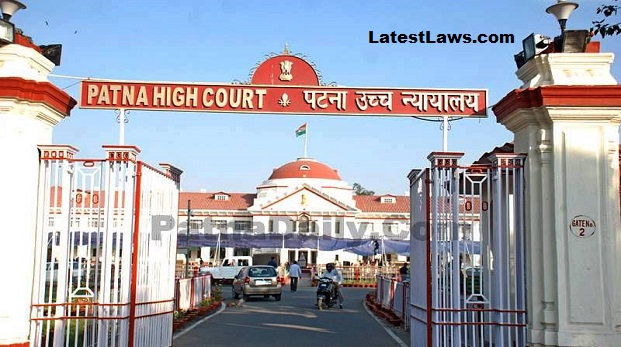
Recently, the Patna High Court quashed criminal proceedings initiated under the SC/ST (Prevention of Atrocities) Act and various IPC provisions after finding that the prosecution appeared to be a retaliatory measure arising out of an earlier matrimonial dispute. The Court examined whether the allegations genuinely disclosed offences under the SC/ST Act or were merely intended to pressure the accused family following a dowry harassment complaint filed by one of the appellants in Jaipur. Significantly, the Court observed that “Merely stating the caste name or using simple abusive language, especially if not in full public view, does not automatically constitute an offense” under the SC/ST Act.
Brief facts:
The case stemmed from an FIR registered under Sections 341, 323, 354, 504, 506 read with Section 34 of the IPC and Sections 3(r), 3(s), 3(w) and 3(2)(va) of the SC/ST (Prevention of Atrocities) Act, wherein the informant alleged that she was abused by caste name, assaulted, dragged on the road, and threatened to vacate the premises where she worked as a caretaker. It was further alleged that the accused persons assaulted her husband and criminally intimidated her with a firearm. After cognizance was taken by the Special Court under the SC/ST Act, the accused approached the High Court seeking quashing of the proceedings, contending that the prosecution was malicious and had been instituted as a counterblast to an earlier dowry harassment case lodged under Sections 498A, 406 and 323 IPC arising out of a matrimonial dispute.
Contentions of the Appellants:
The Appellants argued that the prosecution was a malicious attempt to harass the accused family after one of the female members had lodged a dowry harassment case against her husband and in-laws. The Counsel contended that the family had been residing in Jaipur for several years and was not present at the alleged place of occurrence. Reliance was placed on CCTV footage, biometric attendance records, and other official documents to establish their presence in Jaipur on the relevant date. The Appellants further submitted that the FIR was a “counterblast” intended to pressure the family into withdrawing the earlier matrimonial case.
Contentions of the Respondent:
On the other hand, counsel appearing for the informant contended that the complainant had no connection with the matrimonial dispute involving the accused family. The Respondent argued that the allegations in the FIR clearly disclosed caste-based humiliation, assault, and outraging of modesty in a public place, and that the witnesses examined during investigation had supported the prosecution case. The Respondent further submitted that sufficient material existed for proceeding against the accused under the provisions of the SC/ST Act as well as the IPC. The Counsel further contended that the High Court should not interfere once the allegations prima facie disclosed commission of cognizable offences.
Observation of the Court:
The Court observed that merely alleging use of caste-based words was not sufficient to attract offences under Sections 3(r) and 3(s) of the SC/ST (Prevention of Atrocities) Act unless the allegations clearly disclosed intentional humiliation in full public view. The Bench clarified that ordinary abusive language or casual reference to caste would not automatically constitute an offence under the Act unless the essential statutory ingredients were specifically made out. The Court further emphasised that in cases alleging malicious prosecution, courts must examine not only the FIR but also the surrounding circumstances and attending materials to determine whether the prosecution is genuine or motivated by personal vengeance.
The Court further held that the electronic and documentary evidence produced by the appellants, including CCTV footage, biometric attendance records, educational documents, and Aadhaar details, constituted unimpeachable documents showing that the accused family had been residing in Jaipur and were not present at the alleged place of occurrence. The Bench also found the allegations doubtful because the alleged incident took place during the nationwide COVID-19 lockdown, when strict travel restrictions were in force, making it highly improbable for the accused to travel more than 1000 kilometres from Jaipur to Bihar.
The Bench ultimately observed that the FIR appeared to be a retaliatory measure arising out of an earlier matrimonial dispute after a dowry harassment case had been lodged against the husband and his family. The Court noted that the informant herself was working as a caretaker in the house of the husband’s family, thereby indicating a direct connection with the matrimonial dispute. Criticising the investigation as “routine and mechanical,” the Court concluded that the prosecution was malicious, instituted to harass the accused family, and amounted to an abuse of the process of law.
The Court ultimately reiterated that mere reference to caste name, without the essential element of intentional humiliation in public view, would not automatically attract offences under the SC/ST Act, particularly where surrounding circumstances indicate mala fide prosecution and abuse of criminal process.
The decision of the Court:
Holding that continuation of the criminal proceedings would amount to abuse of the process of law and result in miscarriage of justice, the Court quashed the cognizance order passed by the Special Judge under the SC/ST Act, along with the entire criminal prosecution arising out of the impugned FIR.
Case Title: Ankit Kumar Sharma & Ors. Vs. The State of Bihar Bihar & Anr.
Case No.: Criminal Appeal (SJ) No.1011 of 2024
Coram: Hon’ble Mr. Justice Anil Kumar Sinha
Advocate for the Petitioner: Sr. Adv. Chittranjan Sinha, Adv. Sanchay Srivastava, Adv. Sushant Srivastava, Adv. Sonali Priya
Advocate for the Respondent: Sr. Adv. Rama Kant Sharma, APP Sadanand Paswan, Adv. Baban Kumar
Read Judgment @Latestlaws.com