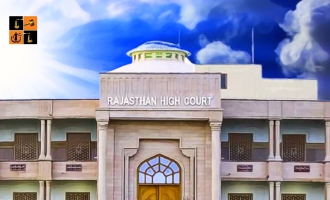
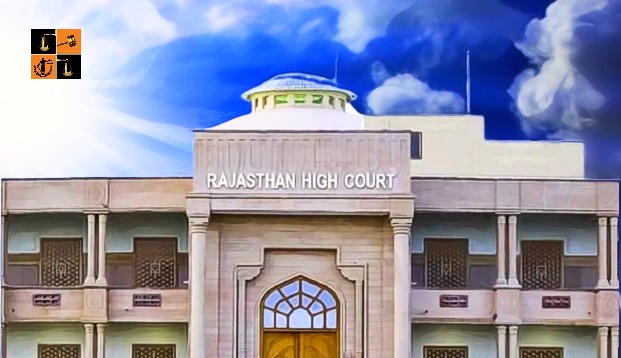
Recently, the Rajasthan High Court expressed serious concern over delays in criminal investigations caused by police officers handling both investigation work and law and order duties simultaneously. Observing that modern crimes require specialised and time-bound investigation, the Court examined a proposal submitted by the Rajasthan Police for creating separate investigation and law and order wings at police station level along with better manpower, technology and forensic infrastructure.
Brief Facts :
The case arose from criminal miscellaneous petitions pending before the Rajasthan High Court, during the hearing of which the Court noticed that investigations in several criminal cases were getting delayed because investigating officers were simultaneously assigned law and order duties. Taking note of the issue, the Court earlier directed the State authorities and senior police officials to examine the feasibility of separating investigation work from law and order functions. Pursuant to the Court’s directions, the Police Headquarters constituted a committee which studied policing models adopted in Delhi, Kerala, Punjab and Bihar. The committee proposed a pilot project in 20 police stations with a “Three Unit Model” comprising Investigation Unit, Law & Order Unit and Administrative Unit. The proposal also highlighted low conviction rates, pendency of cases, manpower shortage and lack of specialised forensic infrastructure in the State.
Contentions of the Petitioner :
The counsel for the Petitioners argued that assigning both investigation and law and order duties to the same officers was adversely affecting the quality and speed of investigations. It was submitted that delays in investigation and poor conviction rates were a direct result of this overburdened policing structure. It was further contended that fair and speedy investigation is a constitutional right and requires specialised investigation mechanisms and adequate infrastructure.
Contentions of the State :
The State submitted that, in compliance with the Court’s earlier directions, a committee had been formed to examine separation of investigation and law and order functions. Senior police officials informed the Court that the committee recommended creation of separate Investigation and Law & Order Units, specialised training, technological support, forensic assistance and additional manpower for effective implementation. The State, however, highlighted that shortage of police personnel remained a major challenge and implementation of the proposal would require substantial recruitment and increase in sanctioned strength.
Observation of the Court :
The High Court strongly emphasised that the existing policing structure was adversely affecting criminal investigations because investigating officers were continuously diverted towards law and order duties. The Court observed that modern criminal investigations require specialised skills, continuity and adequate infrastructure, which cannot be achieved when the same officers are burdened with multiple responsibilities.
The Court observed that “The Investigation function, which is intellectually demanding and is time-bound, is consistently subordinated to Law and Order duties, due to its emergent nature and huge public visibility. The result is poor quality of investigation, low conviction rates, and persistent pendency of cases under investigation.”
Highlighting the difference between investigation work and law and order management, the Court further noted that “Law and Order maintenance requires crowd psychology management, physical endurance, rapid response, engagement/persuasion skills, and liaisoning with local pressure groups. Modern investigation requires forensic literacy, use of digital apps like e-Sakshya, digital evidence tracking, legal acumen, and patience. A single officer rarely excels at both simultaneously.”
The Court also underlined the constitutional importance of fair investigation and observed that “The State is under constitutional obligation to provide adequate infrastructure for fair and speedy investigation as the delay in investigation, due to lack of adequate infrastructure for investigation, violates the right of fair investigation and speedy trial.”
Decision of the Court :
The High Court directed the State authorities and senior police officials to take necessary steps for strengthening the investigation mechanism in the State. The Court also directed establishment of modern investigation labs with adequate infrastructure for speedy criminal investigations and disposed of the matter with further monitoring directions.
Case Title: Prem Prakash Bidyasar v. State of Rajasthan
Case No.: S.B. Criminal Miscellaneous Petition No. 4784/2019 connected with S.B. Criminal Miscellaneous Petition No. 4672/2020
Coram: Hon’ble Mr. Justice Anoop Kumar Dhand
Advocate for the Petitioner: Adv. Jaswant Singh for Adv. Harendra Singh
Advocate for the Respondent: Mr. Rajesh Choudhary, GA-cum-AAG assisted by Mr. J.S. Rathore, Addl. GA; Mr. Gaurav Gupta, Asst. GA; Mr. Vinod Kumar Sharma; Mr. Anirudh Singh
Read Judgment @Latestlaws.com