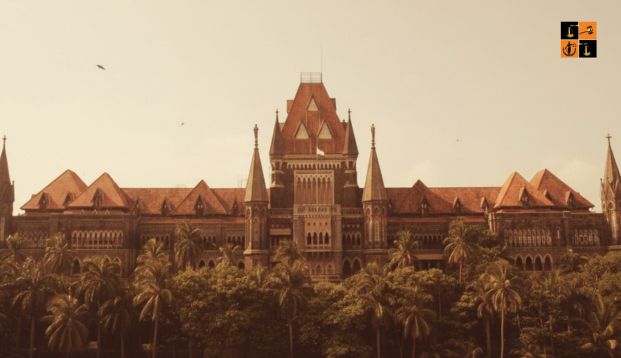
Recently, the Bombay High Court examined a matrimonial dispute arising from a short-lived marriage where allegations of cruelty, domestic harassment, and financial neglect were levelled by both spouses against each other. The case arose from cross-petitions filed under Section 13(1)(i-a) of the Hindu Marriage Act, 1955 seeking divorce on the ground of cruelty, and under Section 18 of the Hindu Adoptions and Maintenance Act, 1956 seeking maintenance and residential accommodation.
Brief Facts :
According to the husband, disputes started soon after the marriage as the wife allegedly behaved rudely with his parents, refused to perform household chores, frequently quarrelled, and eventually left the matrimonial home. He claimed that her conduct caused him mental cruelty.
The wife, however, alleged that she was subjected to harassment, humiliation, and dowry-related demands by the husband and his family members. She claimed that despite performing household work, she was constantly insulted and ultimately compelled to leave the matrimonial house. She also sought maintenance by asserting that she had no stable source of income.
Contentions of the Petitioner :
The Petitioner-Husband contended that the wife’s rude behaviour, refusal to perform domestic duties, disrespect towards elders, and frequent quarrels amounted to mental cruelty under Section 13(1)(i-a) of the Hindu Marriage Act, 1955. He further alleged that she voluntarily left the matrimonial home and later harassed him by filing complaints before authorities. He also opposed her maintenance claim by asserting that she earned through art and craft classes and was capable of maintaining herself.
Contentions of the Respondent :
The Respondent-Wife denied all allegations and contended that she was forced to leave the matrimonial home because of continuous harassment and ill-treatment by the husband and his family. She alleged dowry demands and claimed that the allegations regarding domestic work were falsely created to obtain divorce. She further argued that occasional art activities could not be treated as a stable source of income and that the husband, being a qualified Chartered Accountant, was legally bound to maintain her under Section 18 of the Hindu Adoptions and Maintenance Act, 1956.
Observation of the Court :
The Court observed that the allegations levelled by the husband largely reflected ordinary wear and tear of matrimonial life and did not satisfy the legal threshold of “cruelty” under Section 13(1)(i-a) of the Hindu Marriage Act, 1955. It noted that the parties had cohabited only for a very short duration and many of the complaints related to adjustment issues commonly seen in the early days of marriage.
While discussing the concept of cruelty, the Court observed that “The term cruelty as contemplated in Section 13(1)(ia) of the Hindu Marriage Act 1955, must be of such intensity that, it should make the cohabitation of other spouse impossible.”
The Court further remarked that “Thus, this ordinary wear and tear of marriage has been given undue weightage to treat it as cruelty.”
On the issue of domestic chores and household expectations from the wife, the Court made a significant observation that “Mere failure to perform domestic work such as cooking, cleaning does not automatically amount to cruelty as marriage is a partnership of equals and not a service contract and the wife’s are not ‘deemed maids’.”
The Court also held that trivial disputes and household disagreements cannot by themselves become grounds for dissolution of marriage, observing that “For grant of divorce on the ground of cruelty, the actions, complained of must be severe and causing extreme mental or physical violence rather than ordinary household disagreements.”
While considering the wife’s maintenance claim, the Court found that occasional art and craft activities could not be treated as proof of a stable source of livelihood. The Court observed that “It is well settled that mere possession of a skill or sporadic engagement cannot be equated with a stable source of livelihood.”
Decision of the Court :
The Bombay High Court allowed both appeals, set aside the Family Court’s judgment, dismissed the husband’s divorce petition under Section 13(1)(i-a) of the Hindu Marriage Act, 1955, and allowed the wife’s claim for maintenance and residential accommodation under Section 18 of the Hindu Adoptions and Maintenance Act, 1956.
Case Title: ABC Vs WXY
Case No.: Family Court Appeal No.159 of 2010 with Family Court Appeal No.161 of 2010
Coram: Hon’ble Ms. Justice Bharati Dangre and Hon’ble Ms. Justice Manjusha Deshpande
Advocate for the Appellant: Ms. Aditi Naikare
Advocate for the Respondent: Mr. Vaibhav Jagdale
Read Judgment @Latestlaws.com