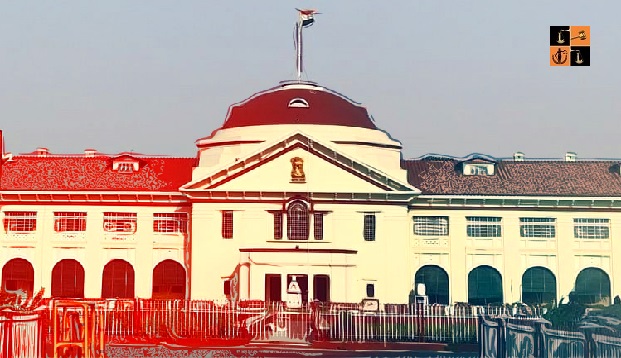
A labour dispute before the Patna High Court raised important questions regarding back wages after reinstatement and the scope of recovery proceedings under labour law. The Court examined whether an employer could deny back wages despite an unchallenged Labour Court award granting reinstatement with consequential benefits.
Brief Facts :
The workman, employed as a Conductor in the Bihar State Road Transport Corporation, was dismissed after allegations of collecting fare without issuing tickets. The dispute was referred under Section 10(1)(c) of the Industrial Disputes Act, 1947, and the Labour Court set aside the dismissal order, directing reinstatement with full back wages and consequential benefits. Although reinstated, the employee was denied back wages. He thereafter moved an application under Section 33C(2) of the Industrial Disputes Act, 1947, and the Labour Court computed dues of Rs. 11,70,990 with interest. Later, recovery proceedings initiated under the Bihar & Orissa Public Demands Recovery Act, 1914 were stalled after the Certificate Officer recalled the warrant issued against the Corporation without payment being made.
Contentions of the Appellant :
The counsel for the Appellant contended that the Labour Court’s award granting reinstatement with full back wages and consequential benefits had attained finality because the Corporation never challenged the original award before the High Court. Therefore, the Single Judge could not indirectly nullify the effect of that award while deciding the challenge to the order passed under Section 33C(2) of the Industrial Disputes Act, 1947. It was further argued that there was no material on record showing that the employee had voluntarily waived or surrendered his claim to back wages at the time of rejoining service. The Appellant asserted that mere reinstatement could not deprive him of benefits already granted by the Labour Court award. The Appellant also challenged the action of the Certificate Officer in recalling the warrant issued during recovery proceedings, contending that such recall was wholly without jurisdiction since the dues had not been paid by the Corporation.
Contentions of the Respondent :
The counsel for the Respondent argued that after reinstatement, the employee accepted the joining order without objection despite a specific condition that he would not receive wages for the period he remained out of service. According to the Corporation, this amounted to waiver of his claim for back wages and consequential service benefits. It was further contended that the Corporation was undergoing severe financial hardship and therefore could not bear the burden of paying huge amounts towards back wages. The Respondent also relied on the principle of “No Work, No Pay” and argued that the employee was not entitled to wages for the period during which he had not actually worked. The Respondent additionally submitted that the Labour Court exceeded its jurisdiction under Section 33C(2) of the Industrial Disputes Act, 1947 while computing back wages and consequential benefits.
Observation of the Court :
The Court observation that proceedings under Section 33C(2) of the Industrial Disputes Act, 1947 are in the nature of execution proceedings and once the foundational award granting reinstatement with full back wages had remained unchallenged, the same could not be indirectly nullified. The Court further observed that financial hardship or procedural technicalities cannot be used to deprive a workman of lawful dues.
The Court strongly remarked that “Labour law is not merely an adjunct of the law of contract; it is a charter of human rights at the workplace. The Government cannot be permitted to play hide and seek with its own employees. To deny a workman his lawful dues by juggling with procedural niceties is to negate the very rule of law.”
The Bench also criticised the conduct of the recovery authorities and observed that “By recalling the warrant without the satisfaction of the debt, the Certificate Officer acted ultra vires his statutory powers, effectively granting ‘administrative mercy’ to the detriment of a decree-holder where the legislative intent commands strict execution.”
Further emphasising employer liability towards workmen, the Court stated that “The liability of any employer towards its workmen arises from the very nature of the employment relationship and cannot be shaken off by the employer through make-believe arrangement, or claims of financial hardship.”
Decision of the Court :
The High Court set aside the order passed by the learned Single Judge, restored the employee’s entitlement to back wages and consequential benefits, allowed the employee’s writ petition, dismissed the Corporation’s writ petition, and allowed both the Letters Patent Appeals.
Case Title: Siya Singh v. The State of Bihar & Ors.
Case No.: Letters Patent Appeal No. 827 of 2025 with Letters Patent Appeal No. 829 of 2025
Coram: Hon’ble The Chief Justice Mr. Justice Sangam Kumar Sahoo and Hon’ble Mr. Justice Harish Kumar
Advocate for the Appellant: Mr. Raj Shekhar, Advocate
Advocate for the Respondent: Mr. Yogendra Pd. Sinha, AAG-7; Mr. Rakesh Ambastha, AC to AAG-7, Mr. Prabhat Kumar Verma, Senior Advocate; Mr. Jainendra Kumar Sinha, Advocate; Mr. Lakshmi Kant Tiwary, Advocate
Read Judgment @Latestlaws.com