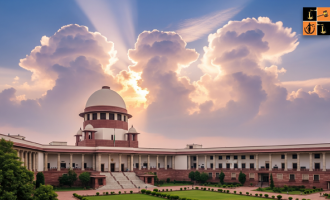
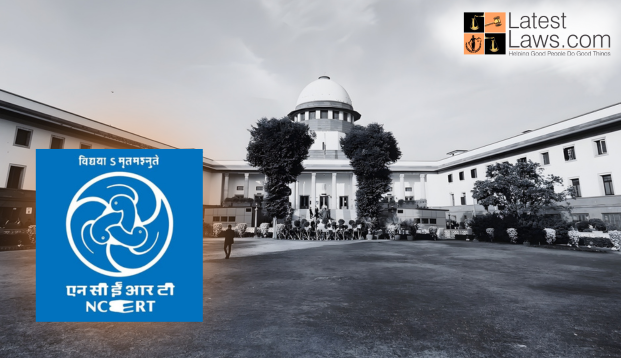
The Supreme Court restrained the publication of a revised chapter in an NCERT Class 8 Social Science textbook dealing with alleged “corruption in the judiciary,” holding that the explanation offered by the National Council of Educational Research and Training (NCERT) regarding its revision lacked transparency. A bench led by CJI Surya Kant directed the Union government to constitute an independent expert committee to scrutinize the rewritten content before it can be included in school curriculum, underscoring the Court’s concern about how sensitive institutional issues are presented to students.
The controversy arose over the textbook Exploring Society: India and Beyond (Class 8, Vol. 2), which contained a section discussing corruption in the judiciary as part of a chapter on the role of courts in society. After the issue surfaced, NCERT stated that the contentious portion would be withdrawn and rewritten following consultation. During the proceedings, the NCERT Director informed the Court through an affidavit that the chapter had already been revised and would appear in the next academic session. However, the bench questioned the absence of details regarding the identities of experts who drafted the revision or the authority that approved it.
The Court was also told that Professor Michel Danino, along with Suparna Diwakar and Alok Prasanna Kumar, had contributed to the earlier draft that triggered the controversy. Meanwhile, the Union government submitted that NCERT had issued an unconditional apology and had begun reviewing textbooks across different academic levels.
Examining the affidavit filed by the NCERT Director, the bench expressed dissatisfaction with the lack of clarity about the authorship and approval process behind the revised chapter. The Court observed that educational material addressing constitutional institutions requires careful scrutiny by credible experts. In a pointed remark, the bench stated that the affidavit was “disturbing” as it merely asserted that the chapter had been rewritten without identifying the experts involved or explaining the approval mechanism.
Consequently, the Court ordered that the revised chapter must not be published unless cleared by a newly constituted expert panel comprising a retired judge, a noted academician, and a distinguished legal practitioner.
The Union government was directed to form the committee within one week and consult the National Judicial Academy for academic inputs on legal education. The Court further directed that individuals involved in preparing the earlier version should not be engaged in curriculum development funded by public resources unless they seek modification of the order before the Court.