Thursday, 23, Apr, 2026


Expand O P Jindal Global University
 

Mere membership of Board Of Directors without Active Role in Business cannot attract NI Act liability, clarifies Supreme Court


NI Act.png
09 Apr 2026
Categories: Latest News

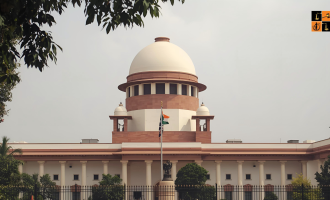
On Tuesday, the Supreme Court stepped in to examine whether a company director can be prosecuted merely for signing a Board Resolution, raising serious concerns about the routine arraignment of directors without proof of their role in day-to-day business affairs. The case brought into focus a recurring legal question: what threshold must be met before criminal liability can be fastened on individuals within corporate structures.

The controversy began when a company issued three cheques aggregating significant sums towards payment for iron and steel, which were later dishonoured due to discrepancies in signatures and alterations. Following statutory notice, criminal proceedings were initiated under Sections 138 and 142 of the Negotiable Instruments Act, and summons were issued not only against the company but also its directors, including the appellant. Counsel for the appellant argued that her implication was mechanical, pointing out that she had no operational role in the company’s affairs and was sought to be prosecuted solely because she was a director who had signed a Board Resolution. However, both the revisional court and the High Court declined relief, treating her designation and participation in board decisions as sufficient to infer responsibility.


The Division Bench of Justice Sanjay Karol and Justice Augustine George Masih dismantled this reasoning, reiterating that liability under Section 141 of the NI Act requires specific averments demonstrating that the accused was “in charge of, and responsible for the conduct of business of the company” at the relevant time. The Court observed that “a Board Resolution… does not in any manner mean that each and every member of the Board of Directors is aware of all decisions taken in the everyday transactions,” making it clear that policy-level involvement cannot be equated with operational control. It further noted the complete absence of any direct allegation against the appellant in the complaint, terming this deficiency fatal to the prosecution. The Court also rejected the High Court’s view restricting recourse to Section 482 of the CrPC after revision, affirming that inherent powers remain available to prevent miscarriage of justice.


Consequently, the proceedings against the appellant were quashed, with the Court clarifying that the trial against other accused persons would continue unaffected.


Case Title: Saroj Pandey Vs Govt. of NCT of Delhi and Ors

Case No.: SLP (Crl.) No. 21322 of 2025

Citation : 2026 Latest Caselaw 261 SC

Coram: Hon’ble Mr. Justice Sanjay Karol, Hon’ble Mr. Justice Augustine George Masih

Advocate for the Petitioner: AOR Shyamal Kumar, Adv. Apoorva Pal, Adv. Kaushal Kumar

Advocate for the Respondent: AOR Swati Ghildiyal, AOR Sriram P., Adv. Aditi Agarwal, Adv. Alok Sharma, Adv. Syed Faraz Ali, Adv. Pawan Kumar, Adv. Babita, Adv. Susmita Singh, Adv. Vishal Vishwadheesh, Adv. Shailendra Kumar Singh, Adv. Velmurugan T, Adv. P Raja

Read Judgment @Latestlaws.com


Download the LatestLaws.com Mobile App
 
 
Latestlaws Newsletter
 

Publish Your Article


Campus Ambassador


Media Partner


Campus Buzz


LatestLaws Guest Court Correspondent

LatestLaws Guest Court Correspondent Apply Now!
 

LatestLaws.com presents: Lexidem Offline Internship Program, 2026


LatestLaws.com presents 'Lexidem Online Internship, 2026', Apply Now!


LatestLaws Partner Event : IDRC


LatestLaws Partner Event : IJJ


Latestlaws Newsletter