The Bombay HC, while rejecting a plea by an insurance company challenging the order of the ombudsman to make an ex-gratia payment of ₹10.39 lakh to a Pune resident, held that as the firm had failed to verify if the litigant had put all the material facts on record at the time of issuing the policy, it couldn't refuse to pay him the amount on the grounds of non-disclosure of material facts later.
The company had challenged the ombudsman’s order on the grounds that the man, who was being treated for acute ischemic heart disease (IHD), had concealed information regarding pre-existing diseases such as hypertension, at the time of buying the policy, & hence the company wasn't bound to pay compensation.
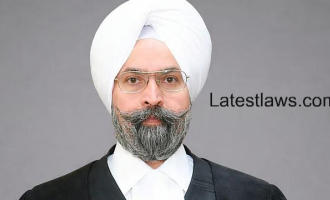
The bench of justice CV Bhadang was hearing the petition of National Insurance Company, challenging the Mar 20, 2015, order of the insurance ombudsman, in which the insurance firm was asked to pay a compensation of ₹10.39 lakh as ex-gratia payment to Virendra Joshi. The bench was informed that Joshi had failed to disclose in the data form that he was under medication for hypertension when the policy was being drawn up.
The company, through advocate Asim Vidyarthi, said the failure to answer a material question of a pre-existing disease in the proposal-cum-policy proved that Joshi had suppressed facts & hence the order of the ombudsman should be set aside.
The company further argued that the ombudsman could only grant a certain amount by way of token compensation but had granted the bill amount of the risk covered under the policy, & hence the order should be set aside so that the parties could resort to appropriate remedy.
Joshi had suffered from acute ischemic heart disease (IHD) during his travel in Australia & on his return had claimed the compensation for the expenses incurred for his treatment. However, as the company refused to pay, he approached the insurance ombudsman.
Joshi’s advocate Vijay Bhadkamkar submitted that the allegation by the company that his client had suppressed material fact was incorrect, as he had left the column blank. Bhadkamkar said that Joshi hadn't replied to the question in the policy, & hence it couldn't be construed against his client. He further submitted that the ombudsman’s order was based on the fact that the pre-existing ailment had nothing to do with the episode of acute ischemic heart disease (IHD) which was corroborated by a certificate issued by Dr Shrirish Hirimath from Pune.
After hearing the submissions, the court held, “It is necessary to note that if at all a particular question which was material before the petitioner [company] could have issued the medical policy wasn't answered either in the affirmative or in the negative, it was for the petitioner [company] to have verified the same.”
In light of this observation & the fact that the pre-existing disease had no relation with ischemic heart disease (IHD), the court said that it wouldn't interfere with the ombudsman’s order & allowed the payment of the ₹10.39 lakh to Joshi within six weeks.
Source Link