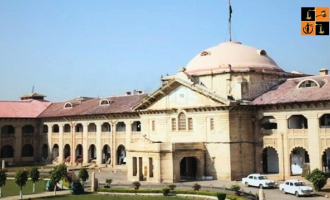
Recently, the Kerala High Court refused to reopen a final decree granting 12% interest with yearly compounding, holding that the powers under Section 151 and Section 152 of the Code of Civil Procedure cannot be used to undo findings rendered on merits. Drawing a clear procedural boundary, the Court underscored that inherent and correctionary powers are not substitutes for appeal or review.
Brief Facts:
The dispute traces back to a suit for partition in which the defendants were directed, under a preliminary decree, to pay past and future profits. During final decree proceedings, the trial court awarded interest at 12% per annum on such profits and further ordered that the interest accrued each year would be added to the principal for the succeeding year, effectively permitting compounding. Aggrieved by this direction, the defendants approached the trial court by filing applications under Sections 151, 152 and 153 CPC, seeking deletion of the compounding component on the ground that the plaint had originally sought only simple interest. The Sub Court rejected the applications, prompting the defendants to carry the matter in civil revision before the High Court.
Contentions:
The counsel for the petitioners contended that the award of 12% interest with yearly compounding was legally impermissible and travelled beyond the pleadings, as only 6% simple interest had been claimed in the plaint. It was argued that the direction was manifestly erroneous, caused grave prejudice, and ought to be corrected by invoking the court’s powers under Section 151 and Section 152 of the Code of Civil Procedure to prevent injustice and undue hardship.
On the other hand, the counsel for the respondents submitted that the impugned direction was not a clerical or accidental mistake but a conscious determination made by the trial court after assessing the materials on record. It was emphasised that Sections 151 and 152 CPC have a narrow compass, confined to correction of slips or arithmetical errors, and cannot be pressed into service to alter a judgment on merits. If the petitioners were dissatisfied, their remedy lay only in appeal or review.
Observations of the Court:
Analysing the scope of Section 151 and Section 152 of the Code of Civil Procedure, the Court reiterated that Section 152 is attracted only where the judgment does not reflect the court’s true intention due to “clerical or arithmetical mistakes” or “accidental slips or omissions.” The Court stressed that the decisive test is not whether the decision is right or wrong, but whether it suffers from inadvertence.
Referring to settled precedent, the Court cautioned that “a court cannot, under the guise of Section 152, modify or alter a judgment on merits.” On facts, the Court found that the award of 12% interest with yearly compounding was supported by specific reasoning and was deliberately granted, ruling out any suggestion of accidental error. It further clarified that while Section 151 preserves inherent powers to secure the ends of justice, those powers cannot be invoked to review, recall, or rewrite a concluded adjudication in the absence of a clerical mistake.
The decision of the Court:
The Court dismissed the Civil Revision Petitions, affirming that the applications under Section 151 and Section 152 of the Code of Civil Procedure were an impermissible attempt to reopen a decision on merits. The Court held that the only lawful remedies available to the petitioners were appeal or review, and not correction proceedings, thereby reinforcing the principle that correctionary and inherent powers cannot be used to circumvent finality of judgments.
Case Title: Venkatramana Bhat Vs. Anantha Bhat
Case No.: CRP NO. 800 OF 2001
Coram: The Honourable. Justice Sathish Ninan, The Honourable.Justice P. Krishna Kumar
Advocate for the Petitioner: Adv. Venkatramana Bhat, Adv. K.M.Subramanya Bhat, Adv. K.M.Srikrishna Bhat, Adv. K.M.Ganapathi Bhat, Adv. K.M.Sakunthala, Adv. Bagyarathna, Adv. Revathi,
Advocate for the Respondent: Adv. MADHAVA BHAT, Adv. K.M.SUBRAMANYA BHAT, Adv. ISHWARA BHAT, Adv. KALANIDHI, Adv. JAGADEESHA N.S. Adv. RAMESH N.S, Adv. BHARATHI Adv. JYOTHI K. Adv. NAINA U,
Read Judgment @Latestlaws.com